Enigma/Phase I

In which one travels to Noon.

Solved: 2018-06-02

Details

The athenianmurders page of Phase I.

Each hint in this phase works in isolation, though the second reinforces the first:

  • At noon: Should be read as “@noon”, which is a reference to the email address for the newsletter, noon@weatherfactory.biz. “noon” presumably also refers to Port Noon in this context. The fact that the last clue is not capitalized can also help make the “At” stand out.
  • We Await S.T.E.: A reference to The Crying of Lot 49, in which the phrase “We Await Silent Trystero’s Empire” is featured prominently. Not a necessary clue, but a useful one as the book focuses on a secret postal service called Trystero, indicating mail is relevant to this phase.
  • ‘somoza’: The password that must be sent to noon@weatherfactory.biz to get the appropriate response. The quotes indicate that it must be sent verbatim.
  • indicate your choice: Not really a hint, since the choice is rather clear when it is presented.

To solve this phase one need only send an email with the word “somoza” in either the subject or the body to noon@weatherfactory.biz. The reply should be instant and is detailed on the next page.

The hints from the in-game elements of the previous phase can also be used to solve this phase. notaworm points to We Await S.T.E., and thus to email. boarwords and worldbull can be combined to read “The title At the beginning”, and Cultist Simulator was originally titled “noon”. The sentence then becomes “noon At”, which is functionally equivalent to the “At noon” of the /athenianmurders/ page.

History

  • 2018-05-16: /athenianmurders/ is discovered by the Discord.
  • 2018-06-02: Phase I is solved by the Discord.

Enigma/Phase 0

In which the eidesis is presented to the sky.

Solved: 2018-05-17

Details

There are two paths to solving this phase, one of which was added much later: the Bird/Worm slider, and the hidden elements in the game files. The two are presented below.

Bird/Worm Slider (Recommended)

Toggling the Bird/Worm slider in the Options menu of the game at least once will add this entry to the save file:

“WeAwaitSTE”: “Hello, Seeker. If you’re here to decipher enigmas, familiarise yourself with the eidesis in which were presented the Lion, the Boar and the Bull, and present it in turn to the sky.”

The value is identical for Worm and Bird.

The eidesis refers to the The Athenian Murders, by José Carlos Somoza. The novel describes a book which supposedly employs a fictional literary device called an eidesis to evoke the Twelve Labors of Heracles, in which Heracles must slay the Nemean Lion and capture both the Erymanthian Boar and the Cretan Bull.

The sky refers to the Weather Factory website, since a “weather factory” is conventionally called a sky. In a throwback to Ambition: Enigma from Fallen London, the URL of the website must be changed to https://weatherfactory.biz/athenianmurders/ to access Phase I (note the lack of “the”, in contrast to Ambition: Enigma’s first step).

WeAwaitSTE is not relevant to this phase, and is detailed on the next phase’s page.

Hidden Elements

Before the Bird/Worm slider was updated to add a hint to the save file, the only hints to enigma were in the game files, which contained five relevant elements with comments:

  • fragmentglory (“A Recollection of Glory”): “Hello, Seeker. If you’re here to decipher enigmas, familiarise yourself with the eidesis in which were presented the Lion, the Boar and the Bull. – AK.”
  • lionweb (The Lion in the Web): “Information lives in the sky.”
  • boarwords (The Boar in the Words): “Titles are criminal.”
  • worldbull (The World in the Bull): “The crime At the beginning”
  • notaworm (Possibly a Bird): “We Await S.T.E.”

It is now generally considered that these were an early attempt at providing clues for Phase I and Phase II, and these files are rarely referenced anymore.

fragmentglorylionweb and notaworm are equivalent to the combined hint provided by the Bird/Worm slider. See the above section for an explanation.

lionweb also points to the “web” being relevant, in the form of the Weather Factory website.

boarwords also indicates that the title of the eidesis is relevant to solving this.

notawormboarwords and worldbull can also be construed as hints for getting to Phase II; this is detailed further on the next page.

History

  • 2017-12-15: /athenianmurders/ page created.
  • 2018-02-09: fragmentglory is first discussed in the Discord.
  • 2018-05-16: The Bird/Worm slider is updated to add a relevant hint in the save file. Phase 0 is solved by the Discord. A message at the bottom of the page reads: “[It is politely requested that you do not share this URL directly, to allow others to find their own way here.]”
  • 2018-05-18: The message at the bottom is changed to: “[It is politely requested that until Monday 21st May 2018 you do not share this URL directly, to allow others to find their own way here.]”
  • 2018-07-06: /athenianmurders/ page is updated to its current state.

Enigma/Lyros’ Introduction

Hello, Seeker.

Perhaps you have come across a mystery while playing Cultist Simulator. Perhaps you wish to learn more. Read on.

This website is now archived, and will no longer be updated. [And First Enigma is dead, dead as diamonds]

Cultist Simulator is host to a small semi-secret, ARG-like series of puzzles collectively referred to as Enigma. In the developer’s own words, “[i]t serves as a treasure hunt challenge for a minority of very engaged players, it provides additional snippets of fictional lore and teasers about upcoming game content, and it allows [him] to have fun with the fourth wall”. This website is an effort to document this puzzle, both for new players through a series of hints and grizzled veterans keen on revisiting the solutions.

The puzzle is organized in a number of phases taking place across multiple locations. No particular lore knowledge [was] required to begin with, though no such guarantees [could be] made about the later phases.

If you are interested in participating, you are warmly invited to join us on the Cultist Simulator Discord, in the #introduction-to-enigma channel, where we will be happy to assist you with more targeted hinting in private.

Phases

There are currently 22 phases to the enigma. You will need to have reached Phase XXII in order to access all the content on this website. Each phase’s information is locked behind a question that can only be answered once the phase has been solved.

Hints

The higher I rise the more I see.

For an optimal experience, I recommend joining the Cultist Simulator Discord and asking for help in #introduction-to-enigma. Somebody is sure to come along sooner rather than later to help you. You will be able to join the existing Enigma-solving community and partake in lore discussion, live solvings, and general nonsense.

If the path you walk is a lone one, however, you may refer to this page for some gentle nudges in the right direction. And always keep in mind the two cardinal rules of Enigma:

  • Rule #1 – Don’t overthink it: With some exceptions in the later phases, the simpler answer is usually the correct one. If you are confronted with a lot of text, most of it will be fluff and red herrings.
  • Rule #2 – Google and Frangiclave are your friends: The enigma requires some external knowledge you are unlikely to have at the start. Be sure to refer to your favourite search engine for general knowledge queries and Frangiclave for lore look-up (or the wiki, though it contains less of the in-game text).

Per-phase hints are provided below. Reading a later phase’s hints will not help you solve it accidentally early-on:

  • Phase 0: Choose between Bird and Worm, and seek the effected change beneath.
  • Phase I: Who, how and what are all that matters.
  • Phase II: No hints provided.
  • Phase III: No hints provided.
  • Phase IV: Worms before birds, yet both are of equal import.
  • Phase V: Recall earlier phrasing.
  • Phase VI: When is water invisible?
  • Phase VII: No hints provided.
  • Phase VIII: Poe wrote of the woman dreamt.
  • Phase IX: The club prefers its own web of intrigue.
  • Phase X: Repeat the club’s name.
  • Phase XI: Bring them together, and ask yourself who is talking, and under what name.
  • Phase XII: Yes. You exist. What else exists?
  • Phase XIII: Re-enact what happened. Lines were drawn. Animals, recalled.
  • Phase XIV: What are they responsible for? What are their responsibilities for?
  • Phase XV: The god, without origin. The error, of greater significance than first assumed. The month, ended with Caesar.
  • Phase XVI: Of worms and saintly spiciness.
  • Phase XVII: No harmony, aloud.
  • Phase XVIII: No hints provided.
  • Phase XIX: As instructed. As written.
  • Phase XX: Not yet available.
  • Phase XXI: Not yet available.

Enigma, First Circle/The Mirror of Glory

“You could waste your life that way and never touch the truth.”

Thos. Pynchon, The Crying of Lot 49

The First Circle of the Enigma of Secret Histories was an alternate-reality game which began with clues embedded within the code of Cultist Simulator, and which revealed hidden lore concerning many things, including a conflict between immortals which might have figured prominently in the cancelled PROCOPIUS. The great schism of 2019, sometimes called the Time of Troubles, put an end to this first golden age of community collaboration and collective obsession, and the Enigma itself closed several months later; still, a record was preserved by Lyrositor, one of the luminaries of the community in those days, who hosted it on his website. The security certificate for the Enigma-specific page (/enigma) has now expired, and the Library Serpentine now provides a mirror, so that the details of the early seekers’ efforts might not be forgotten.

Lyros stopped updating the Enigma of Glory website past Phase XIX. The final three stages (at least, the ones that were reached: there were more remaining to be found when the curtain abruptly fell on the venture) are not yet documented; but a slightly expurgated lore compilation (also originally from Lyros, and also preserved here lest Winter take it) gives some particulars of what was found there. The present author has access to the public discussions among the Enigmatics of the day and hopes to reconstruct the details of Phases XX-XXII to the standard of Lyros’ document eventually.

The first Enigma is a haunting piece of writing– haunting, in part, because grimly, unconsciously prophetic of the end that would come for it. It begins with a reference to Pynchon’s Crying of Lot 49 and ends abruptly in an auction-hall, the auctioneer’s gavel frozen moments before it falls, frozen forever. All that is now possible is to settle back and await the crying of the last, the very last, the world’s last dragon.

A. Winifred Lockwood
Christmas Night, 2022

Lyrositor’s Original Guide to the Labyrinth
Introduction, and Hints.
LOre Compilation: Boart Your Name, Boart Your Skin.
Phase 0: At what?
Phase I: Remember our what?
Phase II: Remember our what?
Phase III:
Remember our what?
Phase IV:
One may speak of F., or of what?
Phase V: There was insufficient what?
Phase VI:
Where is Ornithelmous?
Phase VII: Of whom do you furiously dream?
Phase VIII:
Sometimes there is what?
Phase IX:
For whom who lost his crown?
Phase X:
There have always been what?
Phase XI:
N. aren’t, any more than s., or what?
Phase XII:
She called her what?
Phase XIII:
The wrong what?
Phase XIV:
Old man, you’re what?
Phase XV: It must be who?
Phase XVI:
They passed where?
Phase XVII:
Await your what?
Phase XVIII: Await your what?
Phase XIX: There will be a what?

Lockwood’s Continuation –
Harmony’s Final Failure Before the Division
Phase XX: Awaiting its Exegesis
Phase XXI:
Awaiting its Exegesis
Phase XXII:
Awaiting its Exegesis
Phase XXIII,
and After: Only to Be Imagined, Or Mourned.

All things cease; but all nights end.

The Skeleton Scores (S1E8): An Inheritance of Stones

An unofficial transcript of the podcast episode by Alexis Kennedy and Lottie Bevan.

LB: Hello and welcome to Skeleton Songs!

AK: Hello!

LB: You have printed notes, um, which means this episode is gonna be very serious and you’re gonna read off a fact sheet and there’ll be a test at the end.

AK: Fuck yeah.

LB: (chuckles)

AK: I just, I, I want to marshal [my three?] witnesses for the prosecution.

LB: I was [wondering if you?] have already put off all the Americans listening to this, with swearing in the first twenty seconds.

AK: Do you know, I’ve got a feedback, um, form for my GDC talk a couple of years ago that said it’s a really great talk, there’s just too much profanity, so I won’t be coming to the speaker’s talks again.

LB: To be fair, you did have an entire slide dedicated to the f-word.  So it wasn’t…

AK: Skeleton Songs!

LB: (laughs)  So yeah, this episode—well, I mean— people who’ve listened to this, um, series before might have listened to an episode, um, a couple podcasts ago, um, about women, and menstruation, and that episode primarily consisted of me getting cross about anti-feminist things.  So this episode is AK’s turn, and he’s gonna get cross about… 

AK: Ah, I’m not gonna get cross about it, I’m just gonna get cross about the name of it: worldbuilding.

LB: Mm.  So, um, it’s quite an interesting discussion, this, because I am a English lit student, um, and to me…

AK: I mean, you’re not, you’re an English lit graduate.

LB: (chuckles) That’s true, yeah.

AK: You impostor. 

LB: I’m not young anymore.  Um, but to me, the idea of worldbuilding does not sound anger-inducing, or even the name does not sound annoying.  But you have a bit of a bee in your bonnet about it.

AK: A whole f—

LB: As an award-winning—

AK: Heh.

LB: Narrative designer…

AK: So that’s the thing, is, is, is I— ah, people come up to me, or have come up to me, you know, if, if not literally, figuratively, at cocktail parties, and said, so, you’re, er, known for your worldbuilding, and I spill a drink down my front and cry.  Er, and while I’m mopping it I explain that I don’t object to inventing a setting, or setting a story somewhere imaginative, all that stuff is great, what I object to is, is all the baggage that comes with the term.  And I think I said in a column long ago that what worldbuilding sounds like is sort of vogons in reverse.  It’s not about making a myth, it’s about, um, trying to sort of move big blocks together and worry about the plumbing.  And I think it’s particularly prevalent in game design because of course when you’re making a game you’ve making a really big complicated device.  Especially if it’s something sort of indie-sized, or, or, um, guerrilla game sized.  You need a world, you need to make sure the world’s the right shape and it’s got the right geometry and it’s got the right entities in it spawning in the right way and [all the physics interact?]…

LB: It’s very rules-based.

AK: It’s very rules-based.  So you, you need to think about how to develop the world and build the world and you think about the writers who come and, you know, essentially put a layer of plaster over the top of it.  And then you sell, er, novels based on, on the setting, and people [pen?] them out, but it’s, it’s— well, let me put it this way.  There’s a, um, er, a gent who wrote about what he called secondary creation, which will give the game away to a bunch of folks right away, it’s Tolkien, talked about secondary creation or sub-creation as, um, what he was doing, and what other people were doing, when they wrote fantasy.  And Tolkien of course wrote fantasy and designed a setting and built a goddamned world in a way nobody ever had before.  Ah, but he said, and I love this quote, ‘part of the attraction of The Lord of the Rings is, I think, due to the glimpses of a large history in the background.  An attraction like that of viewing a far-off and unvisited island, and seeing the towers of a distant city gleaming in the sunlit mist.  To go there is to destroy the magic, unless new unattainable vistas are again revealed.’  And he’s bang on, he knew what he was talking about, and he was writing a letter about his concerns about doing The Silmarillion.

LB: Well, I was gonna bring The Silmarillion in to [our topic?].

AK: There you go. [inaudible]

LB: For people who haven’t, ah, heard of this, firstly, why are you under a rock?  But mostly, um, The Lord of the Rings is the kind of narrative story side of it that is basically user-facing and user-friendly, and The Silmarillion, as far as I understand, is the sort of complicated backstories and rules and lineologies [sic] and genealogies that explain a lot of the relationships and a lot more of the, kind of, world that isn’t necessarily relevant to the actual plot…

AK: Mm.

LB: But is interesting if you’re interested in the world more generally.  So the, the summary I’ve heard of it is, for super Tolkien nerds, fan— like, fantastic, er, source material…

AK: Mm.

LB: But to your average layman reader, really boring.

AK: And it didn’t ever enjoy anything like the success of, of Rings.  I can’t remember if it was published in the end, before or after Tolkien’s death— certainly it was filled out with, with unpublished material.  But… ah, he… Tolkien did not sit down to build a world because he was making a project.  He sat down to— famously, started out by inventing languages.  But even before that, when he was a kid, he was drawing maps and he was, um, ah, sketching stories, ah, which later developed into The Lord of the Rings, out of the pure joy of creation.  And, ah, somehow the idea has evolved from this, from this, this, ah, English lit nerd a century ago.

LB: Anglo-Saxon lit nerd, to you!

AK: Anglo-Saxon lit nerd.  Well, more about in a moment, actually.

LB: Represent!

AK: Ah, he, he, he did this, this thing that he loved doing, and, like, a hundred years later, you can buy books of worldbuilding that will say, menacingly, ‘start by writing a timeline’.  And that’s like, no, no, or, or…

LB: You see, I understand that!  I don’t know— so what you said so far, to me, sounds like it is not, um, a sort of existential problem with worldbuilding.  You have a problem with the implementation.  You find a lot of people’s approach to worldbuilding rules-based and unnecessary and lots of detail that isn’t actually relevant to making a good story.  So, so why is a timeline a bad place to start?

AK: Well, let me, well, OK, so first of all, um, I’ve, er, names, as a writer, um, I’m biased, but they’re important.  What’s the most delicious food I make?

LB: Ah, ooh, that’s a tough one, but your pulled pork.

AK: Right.  So, instead of making pulled pork, I said that I was, um, er, flesh spicing…

LB: (chuckles)

AK: Then…

LB: You have— damaged it, right?

AK: Right?

LB: I’m not gonna lie.

AK: There— there we go.  So worldbuilding is, is like this, when you talk about, about creating a myth.  Um, and a time— a timeline…

LB: What a waste of pigs!

AK: A timeline isn’t interesting.  A timeline, um, and this, this is a quote I stole from Bruce Garrick about something quite different, um, is homework, er, if you— if you’re given a story, you immediately go [coup gauche?].  If you’re given a timeline, you think, oh, there are gonna be questions on this.

LB: Mm.

AK: And when we get to Act 2, there might be a sort of multiple choice thing or if I don’t know, er, that King Bu ca—came from Queen Fa, then I’m going to lose some experience points.

LB: But isn’t, isn’t the timeline the sort of backbone of, of the narrative’s… work?  It’s not meant to be presented to the reader as the final thing, it’s meant—

AK: Absolutely!

LB: It’s meant to underpin…

AK: So, so, so you—

LB: …the coherency of the story.

AK: But if you’re Frank Gehry, and you’re, you’re building the, um, ah, the Guggenheim in Bilbao…

LB: Mm.

AK: I bet he didn’t start out by planning the toilets.  I bet before they started building it, they needed to work out the fucking timeline, and sure, if you are building a, a big multi-person IP, er, then, ah, you’re going to need to sit down and work out what happened when and why…

LB: Mm.

AK: But that’s not what makes the world interesting.  All worlds, once they get sufficiently complicated, all fictional worlds have timelines, all real ones, well, well, they do, because, you know, time and space… but if you start out with a timeline, then you start out by making it like everything else, and the whole point about Tolkien, the reason Tolkien is so successful and so memorable and had such an impact, is he was doing something that people hadn’t done before.  So trying to re-synthesise what Tolkien did is missing the point…

LB: Mm.

AK: It’s, it’s like people who want endless Batman content, when what people really want is not necessa— 

LB: (laughing)

AK: So I’m not being rude about Batman, for once, ah— what people really want is content that made them feel like Batman did when they first came across this… 

LB: Yeah.

AK: …dark [initiate?] of the night. 

LB: That’s interesting, ‘cause I know that as a c— so you are a, a writer, a creative director and a CEO, right, all of which I think you have, ah, done well, primarily because, well, you’re naturally talented, but because you always go top-down.  So your thing about being a CEO has been to teach everyone to [long for the Sea?], and have a clear, um, strategy for a company, your idea as a creative director has been to have the, a very clear set of themes that everything leads toward, so I know you made Sunless Sea

AK: Mm.

LB: Every bit of the story that was written by multiple different people, you kept saying there has to be some sort of reference to the main core themes of the game…

AK: Mhm.

LB: Which then resulted in this very coherent-feeling thing, which didn’t start off with a timeline…

AK: I told everyone that there needed to be some reference to home, or its absence, in every story written.

LB: Exactly, and what’s, what’s really nice about that, and, and when you talk about the Tolkien thing of, you know, you, er, it’s about um, giving people that vista of this distant land in the mountains and, and what might be, rather than saying ‘Here’s all the detail’, that’s, that’s your approach with your writing as well, so you’re saying that rather than building it up from minutiae, the thing is to start at the top of the mountain, see what the feeling is that you want to evoke, is that fair at all?  You’re giving me a face and I can’t tell.

AK: It, it, it, ah, it is, except I think it’s, um…

LB: Just ‘cause I know that theme is very important to you.

AK: It is, but, but, but I think… so every, every writer works differently, okay.  But, but lots of writers work, [erm, along different lines?]

LB: Listeners, he is giving me a face.

AK: Heh… the… I, I don’t think many writers start by sitting down and saying ‘Right,I, I want to evoke these themes, so here’s a five-point plan for how to do it.’

LB: Mm.

AK: What you start out with is an itch in your soul, an itch in your soul!, a great good itch that, ah, makes you want to write a certain kind of story or do a certain kind of thing.  In Tolkien’s case, you know, ‘In a hole in the ground there lived a hobbit’, or, or, um, what he said was that all human stories are ultimately about death, ah—

LB: Did he!?

AK: Yes, he did!  And he said that if—

LB: Oh my god.

AK: —elves have human stories the same way that we have fairy stories, um, our fairy stories are all about the escape from death, and their…

LB: It’s all about finding it.

AK: Human stories would be all about being the escape from deathlessness.

LB: Yeah. 

AK: But he—

LB: He’s a goth, isn’t he?

AK: He’s— he described a, a particular work in a couple of ways.  He said it was about, um, a man at war with a hostile world, and his inevitable overthrow in time, and he also described it as being like a work that was as if somebody had found an inheritance of stones in a field they owned, and they built a tower out of those stones.  So that the tower had an, a, a, a, roots back in the past…

LB: I know what this is!

AK: I suspected you might…

LB: It’s a famous essay…

AK: It is, about that D&D book you like.

LB: Urgh!!  This is the, the episode where you get cross, not me!  Ladies and gentlemen, he is clearly referring to Beowulf, um, one of the greatest bits of literature ever written, that AK hasn’t read, so he, um, he beats it up, every time he can, to make everyone think that he has read it, when he hasn’t.

AK: When I was nine I read the abridged version…

LB: Oh, the abridged version!

AK: That was adapted by Roger Lancelyn Green, yeah.

LB: (baby noises) And the dragon came, Diddy, and the big man had a fight!

AK: (laughing). Yeah, well, and that’s the, I know the plot now, it’s all just, you know, it’s…

LB: It’s not about the plot, isn’t it?

AK: It is, he has three fights, he—

LB: I think our next game should be ten words, just say—

AK: He fights…

LB: “Woman has library; you find a fish”.  There you go, see how well that goes.

AK: It’s— it’s— it’s boss battles.

LB: (giggles)

AK: Anyway, Tolkien thought it was more than boss battles.

LB: And I guess he wasn’t totally stupid…

AK: Yeah.  

LB: …was he?

AK: Well, he, he, so, he in the famous essay, that, ah, you, I— I thought you’d probably know about it, ah, somehow…

LB: (laughs)

AK: Um, the— he objected to a lot of the things that have been said about Beowulf, um, over the last however many hundred years.  And one of the things he objected to was that a lot of literary critics, stop me if this sounds familiar, pooh-poohed it for having monsters in it, and they thought thought, you know, it’s a serious work on serious themes [so I know?] the book [with?] dragons and things in is rubbish, and he, he, he disagreed with that, you’ll be amazed to hear.  But he said that one of the problems of Beowulf is that it’s picked apart and looked at as the sum of its…

LB: Mmmm

AK: …sources.

LB: Mm.

AK: Rather than as the…

LB: The sum of its sources?

AK: The sum of sour— well, this is the, the, the inheritance of stones thing, so, um, the, the unknown poet builds this tower in the field— he builds his Beowulf out of, ah, Germanic, er, myths and folk-tales and, um, Christian beliefs and poetic, poetic traditions.  Um, so it’s his work but it also relies on everything else, and then all the scholars come and they swarm over the tower…

LB: Gotcha.

AK: And they tear it to pieces looking for hidden inscriptions on the stones.  And he, he says, “Myth is alive at once and in all its parts, and dies before it can be dissected.”  So if you’re ‘worldbuilding’, rather than myth-making…

LB: Mm.

AK: Then what you’re building is, is, ah, here— here’s an analogy.  A human being is composed of, um, a lot of different trace elements, you know: a lot of us is water, ah, ah, some of us is potassium, ah, and so on— if you dump water, carbon, potassium, and what-all in a bucket…

LB: You make a golem!

AK: …and give it a good old stir, then a human does not step out of it.

LB: No, that’s true.  That is true.  I mean, I’m quite conflicted about that, really, ‘cause he, ‘cause of course he’s right, but on the other hand, you know, the, ah, my degree is in literary criticism.

AK: Mm.

LB: So I feel like there is a place, and there is something interesting that can come out of dissecting something with a particular lens.

AK: Mm.

LB: Because if someone said, you know, just, talk to me about Beowulf, I could talk about it, but I wouldn’t be able to have a particular focus but in detail, and unearth anything that you couldn’t get from reading the text itself.  But I understand from his point of view as somebody who was creating a world and was actually—

AK: Yeah.

LB: –writing, and, and, and evincing this, um, experience, the last thing you want is some idiot to come along and say, ‘Well, I think the way that you’ve treated, you know, the women in the context of how you were writing and, and, you know, is, is, is not really…

AK: But I mean, you know, Tolkien was himself a critic, obviously, and he wasn’t against critics, he was just against a particular, sort of, erm, non-synthesising approach, as I understand it.

LB: Mm.

AK: And I think— that, that’s the problem with, with, with worldbuilding, is, is, as a, as an approach and as a term, is you want to start out with, um, it encourages people, sorry, I should say, to start out by building up a series of bricks, and then you get something that looks like all the other things that are built out of bricks, and again, I really want to say this here, because I’m sure there are people listening who’ve, ah, worked on big AAA games… the kind of things you can do when you are an Oxford don working in the 1930s on your passion project on your own, or a couple of indie creators sitting in a London flat, putting together a game about a library, the constraints you’re under are very very different…

LB: Mm.

AK: …from the constraints you’re under when you’re working in an IP, ah, that is, is the product of literally thousands of minds working together.  So you have to take a more industrial approach…

LB: Mm.

AK: And there’s, there’s…

LB: And you do have to lay down rules so that other people can follow them and make sure that…

AK: Exactly.

LB: You know, you can [cohere?]

AK: And, and you know, you need to, obviously, from the beginning.

LB: Yeah.

AK: And I think, even within the, the, there, there’s room for more longing for the sea, and less analysing the precise, um, salt content of the seawater.  But—

LB: It’s funny you mention this, because, um, I was gonna talk about Gormenghast, which is one of my favourite books ever, as you know…

AK: I do.

LB: And, um, that is famous for creating such a believable and unusual world, so I was going to ask you about, you know, the worldbuilding in that.  Um, but I— I realised, reading about it, that, ah, he was heavily influenced by, erm, Charles Dickens.  He really liked a lot of what he did, and part—

AK: Dickens is great, isn’t he?

LB: I’m not a biggest— I’m not the biggest fan of Charles Dickens, as you know, she said, bravely not rising to the bait, um, but I was gonna say something he wrote, actually, er, in one of his novels, sounds a lot like Tolkien’s thing about, don’t…

AK: Mm.

LB: …build everything up from, from minutiae, and Hard Times, um, one of the, the opening scene, which ultimately sets up things that conclude the novel as well, um, is a teacher called…

AK: Gradgrind!

LB: Called Gradgrind.

AK: Right!

LB: Or Mr M’Choakumchild, I can’t remember which one.

AK: (laughs)

LB: Seriously, Mr M’Choakumchild.  Um, one of those two is teaching a lesson, and he asks, I think someone called, like, Flora, um, how to define a horse.  And she says something mimsy and feminine, like, ‘Oh, I have one, and they, they, I like their noses and they’re friends with me!’.

AK: Mm.

LB: And he sort of hits her on the head and says ‘Stupid child!’, and he goes to this other guy, who’s this sort of anaemic-looking blond guy, he’s the, he’s the sort of champion of the class, and he says, ‘Bitzer!  What, what, how do you define a horse?’, and this horrible child stands up and says, um, ‘Quadruped, graminivorous’, and that’s the correct answer.  Now, I believe this is what us professionals called satire, and it was not actually Dickens suggesting that this is the essence of a horse captured by a child…

AK: Mm.

LB: Um, but it’s exactly that same thing, that you cannot evince the true essence of something by describing it in very emotionless parts, and that sounds a lot like what you were talking about.  So I guess you writers do agree.

AK: Well, so, so, some days, sometimes.  But, but here—here—

LB: (chuckles)

AK: Gormenghast is a very good example, actually, because how many maps have you seen in Gormenghast?

LB: None.

AK: How big is Gormenghast?

LB: Really big.

AK: But how, how many, how many metres?

LB: I don’t care.

AK: There we go.

LB: That’s not important.

AK: How far is it from the nearest city?

LB: Well, that’s the—

AK: What’s it’s population?

LB: —see, again, that’s the thing, I, ah, so, so, one of my favouritest books, most favourite books, like, just, erm, famous much less than it deserves, honestly, ‘cause it’s just an astonishing feat, um, but what you remember is the fact that it’s, you know, you remember the characters…

AK: Mm.

LB: …because it’s brilliant at having these sort of, almost caricature-ish Dickensian creatures, that he has…

AK: Mhm.

LB: …(inaudible) around this weird place, you remember the castle, you remember certain events, like, you know, certain things that happen with owls and certain floods, and [yada and yada?].  But you don’t give a hoot about whether the craggy rocks are to the east or the west, or how far it takes you to walk to the mountain.

AK: Mhm.  

LB: What you care about are all the things I’ve just said.

AK: Exactly, and that’s the difference between myth-making and, and worldbuilding, and, um, as long as the myth feels consistent, or the setting feels consistent, it’s all fine— that’s the suspension of disbelief that Tolkien talked about, um, when he started talking about sub-creation and, er, where’s the quote, ah, “Inside it, what the subcreator relates is true: it accords to the laws of that world.  You therefore believe it while you are, as it were, inside.  The moment disbelief arises, the spell is broken, the magic, or rather art, has failed.”  So if you start out with all the numbers and all the details, then you can have a very consistent world— not an interesting world, it, it, it, and again, it, because… all the worlds which are built by a sort of worldbuilding first approach consist largely of numbers and details.

LB: Hm.

AK: It will end up like all those other worlds, but Gormenghast, what you get in Gormenghast, you get the Tower of Flints, you get owls, you get the, the Hall of Bright Carvers, you get all these things that [are unlike?]…

LB: Lovely sad Fuchsia!

AK: Lovely sad Fuchsia.  But here’s another thing.  So, when I first started putting together Fallen London, um, there were very specific rules I laid down for what could and couldn’t go in there.  Um, and, ah, I, not—not necessarily consciously, but, but there were three sort of classes of questions, erm, that were, that it could address.  Um, that conversations about it could address.  One is questions people really wanted the ans— answers to, like ‘Who are the Masters of the Bazaar?’, ‘Why does no one die down here?’.  Another one is questions that we had to, to answer to some extent, like, ‘Are the trees alive?’, or ‘What do people eat?’, and the answer is sort, of, um, ah, I think, I think we settled on parasynthesis, for the trees, ‘cause some of them were alive, sort of, though a bit scrubby and rubbish.  Um, and people eat mushrooms, because mushrooms grow underground and you get mushroom wine and mushroom bouquets and all the rest of it, [so it provides that?].  So, there’s questions that people want the answers to, and there’s questions that you need to answer, to make the setting feel real, and there’s the questions that nobody is interested in and you don’t want people to ask.

LB: Mm.

AK: So here’s a really important thing, that, um, certainly up until I left, was not addressed in Fallen London, I’d be quite surprised at it being addressed now, the city fell, I think, nine miles, was carried down by bats nine miles, and they set it down….how’s the, how’s the sewers work?  Sewers were a major preoccupation of Victorian Britain.  Without the, the big, um, the, the, the grand sewerage projects that occurred in the 19th century, the city would have foundered in its own filth.  So, so what, what happened— did the brick remain intact, how far down did it go, well— never addressed.  Nobody cares.  Nobody wants to talk about sewers.

LB: No, I wouldn’t want to play a story about the sewers, honestly.

AK: Yeah.  So that’s— unless, of course, you know, you pass—

LB: If it’s something you wanna talk about, yeah.

AK: —you’re passing through the sewers with a torch, and, and there, there’s a sort of, um, er, worm loose down there that, that thinks it’s a [jelly?] or something.

LB: Worm loose?

AK: Worm loose, yes.

LB: Yeah, I’m there for that.

AK: There you go.  But, but that’s the thing, there’s, there’s questions that you need to answer, there’s questions that you want to answer, and there’s questions that, if you engage with them at all, your answer probably should be some variation on ‘Look over there, it’s a worm loose’.

LB: (chuckles) Well, that’s good, ‘cause they actually got someone, um, tweeting at us earlier this week, he said, ‘I’ve created a Twitter account simply to ask you this:…’, and it was some complicated question about, um, ‘Did the Egg come from the Black-Flax, um, before or after the Intercalate occurred?’.

AK: Mm.

LB: Something like that.  And… that is exactly the sort of thing you’re asking, right, because, sort of, for people who don’t know what the hell I’ve just said, these are referencing, um, ancient pseudo-gods in Cultist Simulator, that you have created an entire pantheon, and, and, um, myth around…

AK: Mm.

LB: But you haven’t ever sat down and said, ‘Here is the true word of the Hours, and here’s everything that they did’.

AK: Not everything, so, but, er, but go on, there’s, I’m gonna row back from this in a moment.

LB: No, no, I was just, I was just saying, it’s interesting, ‘cause that sort of question that we were asked is not, is, is something that I know that we don’t answer.

AK: Mm.

LB: As a studio.  Because, firstly, we want to maintain mystery, and a lot of the fun of Cultist Simulator is, um, connecting the dots yourself…

AK: Mm.

LB: So if we connect it for people, it’s not fun, you get that immediate, kind of, boost of knowledge, but then you lose interest, and that’s the anathema to the whole project, but also, I mean I certainly don’t know the answer, because you haven’t written down a Bible of everything that occurred: I obviously know there is some deep lore that obviously does cohere and does have a narrative that we don’t talk about…

AK: Yeah.

LB: Openly.  Um, but… yeah, I think this is what you’re saying.

AK: So it, uh, it is.  But the thing is, I, I don’t want to push too far in the direction of just making it all up as you go along.  Because people can tell.

LB: Yes.

AK: And this is another favourite, um…

LB: Yes they can.

AK: Ah, hobbyhorse, is, is, especially in the age of the internet, you know, you might have got away with it in the 1970s, but, in, in, in an age when, when Reddit has put together the answers for the deep plot of Westworld, um, long before it’s revealed…

LB: Oh, I love the Reddit Westworld forums!

AK: But that’s the thing, you know.  The— if the clues are there and they’re fair clues, people will work it out.

LB: Yeah.

AK: So one of the answers to make things mysteries rather than puzzles— it’s not necessarily one answer so much as a set of answers— but I, as you know, I love David Lynch, and you don’t, because, um, somebody extracted a piece of your heart…

LB: Pfft.

AK: With a fish-hook, when you were young.  Ah—

LB: (chuckles) A fair summary.

AK: But like a lot of people my age I watched Twin Peaks first time around when I was, I don’t know, seventeen, nineteen, somewhere around that…

LB: Mhm!

AK: And a lot of us were very disappointed when it became apparent that…

LB: He didn’t really have a…

AK: No, he had a sort of idea of the kind of effect he wanted to achieve, but in terms of what’s actually going on and what is the (inaudible)…

LB: And that’s why I’d be sli— you know, that I res— you know that I respect him, you know that he obviously has immense talent…

AK: Mm.

LB: I’m not quibbling with that, but I do— I think my issue with him is, um, is an emotional one that stems from that realisation that he didn’t really have a plan.  ‘Cause I thought I was taken on for a bit of a ride.

AK: Well, he did have a plan, it’s just, I think, first of all, the plan maybe didn’t extend over two seasons of television, and second, the plan was to make the audience feel a particular way, rather than to give all the answers.

LB: Mm.

AK: And he was, you know, famously—

LB: Frustrated.

AK: BOB, ah, the, the scary grey-haired [possessing?] monster.

LB: Spoilers!

AK: Yes.  Twin Peaks spoilers, everyone.  Ah, the—

LB (to cat?): Hello (inaudible) [some yummins?]

AK: There will be, well, it’s time they, they learnt pain.  Ah…

LB: (laughs)

AK: Ah, BOB entered the Twin Peaks mythos when, um, ei—either Lynch or one of the actors saw, um, a cameraman with sort of dirty grey hair crouched, um, in, in a mirror, and he didn’t realise it was him for a moment, he was really frightened by him.

LB: It was scary, yeah.

AK: And that goes into, ah, the…

LB: That’s at the heart of the mystery.

AK: …the show, as, ah, ah, Laura Palmer’s mother’s, ah, vision, of BOB.  And that’s where it came from.  I mean there would have been, probably, a possessing spirit and, and what not, somebody killed Laura Palmer, but that came out of that.  So you wanna leave your framework open, because all the good ideas you have, um, in, in year zero, are, are not going to be as good as all of the ideas you’ll have over the next two, three years you might be working on something.

LB: Yeah.

AK: Even the next six months.  But at the same time, if anything goes, then nothing makes sense.

LB: Yeah, I mean—

AK: And—

LB: –like that 12-minute episode of a bomb slowly going off while some people in black and white look at the camera.

AK: Which is, which is genius, and it wasn’t, it wasn’t twelve minutes…

LB: I’m sorry, genius (inaudible).

AK: …you just didn’t want to watch it, but.  Anyway.  But the point is—

LB: It felt like twelve minutes.

AK: I—I’m not David Lynch, and I can’t get away with what he can get away with, because, like—

LB: You have similar hair, actually!

AK: …an actual genius…

LB: When you’re old and grey, your hair will be quite similar…

AK: That’s the, that’s the secret, we’re like Samson.  But, ah, but, but I was determined from that point that if anybody actually broke into my house— please don’t break into my house— ah, and, um, managed to, er, crack all my, my heavy duty military encryption on my spreadsheets, ah—

LB: (chuckles)

AK: They would find, basically, there is an answer to the question you mentioned…

LB: Yeah.

AK: …a while ago.

LB: Yeah.

AK: Now, it might be quite an elusive answer, or it might be an answer that doesn’t commit, but it’s something.  There are no, to the best of my ability, there are no answers to anything I’ve ever written that are just ‘Ooh, (inaudible) when I get there’.

LB: Yeah, I know (inaudible).

AK: It’s all, there’s, there’s, there’s something.  But at the same time, um, the world of Cultist or Sunless Sea, or anything else I’ve worked on, is, is inevitably a tiny tiny segment through what that world would actually be, because whether it’s one person working on it, or ten or a hundred people working on it, it’s still enormously less sophisticated than an actual whole world.  There’s gonna be a lot of stuff that you leave out, you know, the names of all the bit parts, and which species exactly— what stuff, you know, you don’t put that stuff in.  So it’s always gonna be a tiny segment, it’s gonna be a spotlight that flickers over the dark landscape of the world, and you wanna make sure…

LB: Ooh, nice!

AK: …that the spotlight lights on the interesting stuff.

LB: And that’s the metaphor for Sauron’s Eye!

AK: I used to have a, er,  [I’m trying to think of?] what this reminded me of.  I used to have an argument, erm, with a— [er, not an?] argument, um… a, er, er, a one-time friend of mine, who, ah, derided, um, goddamn it, what’s his name, mad German director… Herzog.  Uh, and, and I said, you know, one of the things about Herzog—

LB: He is mad and German…

AK: —is, is, he will just put the camera in front of something and leave it there for a bit.  He won’t, you know, like, you know, dart it around, you know, [and flicker through?] angles, and he, he’s not worried people are gonna get bored just as soon as you fucking, [stop pointing?] the camera at’s interesting.  Um, and, my interlocutor said, um, “Well, you know, I think, if you’re gonna do that, you’d better make sure something interesting happens in front of the camera”, and he suggested that Herzog doesn’t always do that, [instead that?] he relies too much on people’s patience.

LB: Nooo!

AK: Maybe, maybe he does, maybe he doesn’t, but I think that’s the thing, is, is…

LB: Definitely not!

AK: Is— um, whenever you’re making any kind of art, there, there’s a, a physical camera in film, um, or, or a, you know, viewpoint in theatre, there is a, er, a digital camera in games.  You know, there’s always a point of view in games.

LB: Mm.

AK: And there is a metaphorical camera in literature: you’re always looking at one thing rather than another thing.  Because that’s the way consciousness works.  So you can only focus on one thing at a time, and if you want to make it worth somebody’s while, then focussing on plumbing is probably not going to be where you want to point the spotlight.

LB: So that’s interesting, because I think we’ve mentioned before on this podcast, um, reader-response theory, which is something that really struck me…

AK: Mm.

LB: …when I was doing literature, which is basically that the reader has kind of an active role to play in, erm, literature: it’s not just s— some, some sort of brain in a jar gets given a text and the text is complete and the brain in a jar just has an experience of, of, of enjoying that complete text— it’s that the text is incomplete until it is in a process of being read by a, a, a monkey brain.

AK: Mhm.

LB: And that is interesting, ‘cause it basically, there’s every, there’s a unique interpretation of that text depending on that individual brain’s, um, attention and interests and context and yada di yada, which is why, you know, two people can read the same book and one of them can hate it, and one of them can love it, or why two people can read the same book and say “I think it was really talking about this theme”, and the other person can say, “No, for me it was all about, you know, dystopia”, or whatever.  And it, it, it’s that sort of nuance, because there’s so much in there.  And what you’ve just said sounds like, um, worldbuilding for you, for really high-quality stuff that makes a good narrative game, or a good, um, fictional world, whatever the medium, is about involving the reader in some way.  ‘Cause if you’re saying that Herzog puts a camera in front of something but doesn’t make sure that something interesting happens…

AK: Mm.

LB: You’re saying that he expects the reader to find something interesting and trust his framing.  Which actually puts me in a much more active role than, I don’t know, watching a Superman film where, at some point, there’s gonna be a fight scene and I just sit there and I eat my popcorn, because, you know what I mean?

AK: Mhm.  Mhm, mhm.

LB: And I’m not saying, you know, that’s a different type of experience, people can have that if they want, but it’s quite a passive… experience, whereas if Werner Herzog is saying, ‘I’m not gonna make something exciting and dramatic happen, to automatically capture attention, you have to work with me to make this experience worthwhile’, that’s— I think that’s quite interesting!

AK: I think it is, and I think…

LB: And it goes back to your thing about, you know, it’s not about laying down the rules of the world…

AK: Yeah.

LB: …before somebody, and saying, ‘Here’s my world.  Read all these logs and read all the history and read the timeline.’  You’re saying, ‘Work with me, feel something, experience this world as we go along, and, and kind of take part, rather than, you know, ‘Here’s The Silmarillion, go away and read it, when you’ve read it, come back and have a meeting”.

AK: That’s, that’s, that’s exactly it, I think, you know, any kind of, any kind of art, any type of, [kind of?], creative work, ultimately is about one person’s mind, um, overlapping with another person’s mind.  

LB: (chuckles)

AK: It’s about, somebody presents something, and then, [um?],

LB: A bit erotic!

AK: Yeah.

LB: (laughing)

AK: Well, yeah, but, but it can be, it can be, ah, ‘my mind is to your mind’…

LB: (keeps laughing)

AK: It can be…

LB: Sexy Vulcan erotica!

AK: It can be some real-time thing, it can be people watching theatre, or, or engaging in a, a tabletop role-playing session.

LB: Yeah.

AK: Or it can be that you read a ‘D&D book’ that somebody, um, wrote, um, ah, 1500 years ago.  When was Beowulf?  Was it 1500 years ago?

LB: Um, it was… 11th century?  Um, well, it’s hard to tell, right, because the story itself was an oral tradition that was passed down…

AK: Mhm.

LB: So the story, I think, is kind of, 800 AD?

AK: OK.

LB: Um, ah, I think the, um, Cotton Vitellius A XV, which is the, the one written copy we have…

AK: Mm.

LB: Um, I think, is 1100-ish?  I can’t remember, but kind of around that time.

AK: OK, so, a, a, a thousand-ish-year-old, um, poem, that, that touches somebody, ah, a, a thousand years on.

LB: Mm.

AK: But it’s, it’s that interaction that’s the point.  And this is, heh, this is one of the reasons that so much stuff that’s been said about interactive fiction, I used to think was a bit wrong-headed.  And now I realise it’s [howlingly?] stupendously wrongheaded…

LB: (chuckles)

AK: Because the idea that you have an advance from, um, linear texts that are presented to you, to, ah, cybertexts that provide a whole new basis of experience— obviously, in both cases, you are still interacting with the, with the creator…

LB: Mm.

AK: Whether they provide, is something algorithmic, or something in codex form, you’re, you’re, you’re still interacting with, with, what they provided, and you are placing your own spin and interpretation on it.

LB: Mm.

AK: Ah, even if somebody actually, um, plugged your brain into a bunch of, ah, er, put your brain in a jar and, and, and fed you information, you would still be having thoughts about what you were given.

LB: Mm.

AK: Your experience will still be different from other people’s…

LB: Mhm.

AK: …’cause you have different memories.  Anyway, so the, ah, when, when, when I’m not feeling, um, glum, I don’t think, ‘Oh, art is just an excuse for people who, um, can’t do heavy lifting…’

LB: (chuckles)

AK: ‘… to get money for food’.  Um…

LB: (laughing) Don’t take that away from me!

AK: Then, then I think, um, ‘Art is, is, is the thoughts of human beings touching the thoughts of other human beings, in a way that wouldn’t be possible otherwise’.  And so when you stick to worldbuilding it’s a bit of a shame.

LB: Well, I thought you were gonna get crosser and funnier about that, but actually you said something quite profound and beautiful—

AK: Yeah, I [care?], thank you, well, (inaudible) [glib?], but, ah, but I care too much about this to get cross about it, I guess is the answer.  And I don’t, I don’t want to tell people, ‘you’re wrong to want to do a worldbuilding’…

LB: Mm.

AK: I just want to tell people you don’t need to start with a timeline, you just need to make sure that, you know, if you, if you invent a bunch of kings or presidents or mythologies or whatever, at some point you have to make sure they don’t all crash into each other.  But ultimately, the itch that makes people want to do something that manifests as myth-making or setting design or worldbuilding or story-writing is the itch that all of us feel when we sit down, and we’re eight, and we start drawing a map.  And, ah, the itch that’s, uh, that, that we connect with somebody who opens a book and sees the map on the first page and thinks ‘Ooh, I wonder what’s there, and I’ll wonder why we’ll get there, and I wonder how that works out’, so, so, so that, uh, creative act and response is lovely and I’d like to see more of it in the world, and fewer toilets.

LB: (chuckles) Sponsored by Weather Factory!

AK: (chuckles)

LB: Well, I’m, I’m quite moved by that, honestly, I don’t think, I don’t think I should say something funny, but I think that’s just nice and we should leave it there, really.

AK: I can dig out another Tolkien quote?

LB: I mean, not, you don’t want to have an out-of-context Tolkien quote.  Doesn’t that, doesn’t that ruin…

AK: “Vivisection”, there you go.

LB: He didn’t just, you can’t just— a word isn’t a quote!

AK: [That’s not a quote?]. Have a spooky day.

The Skeleton Scores (S1E7): Top Hat, Flight Guy, and Tales

An unofficial transcript of the podcast episode by Alexis Kennedy and Lottie Bevan.

LB: Hello and welcome to Skeleton Songs!

AK: Spooky welcome.

LB: Ooooooooh!  Last time wasn’t spooky enough, actually— we did get some comments from people saying it was interesting, but you lied to me.

AK: Did I?

LB: Well…

AK: I was unreliable.

LB: Wa-hey!

AK: Well, today, er, is, uh, validated by both history and blood.

LB: Like all the best things.

AK: And… this is very loosely themed, er, a gothic podcast, and, uh, we were talking, Lottie and I, about some of our family background, and realised how many peculiar tales of death… buried secrets, strange hats…

LB: (chuckles)

AK: …and, erm, attempted murder…

LB: (chuckles louder)

AK: (chuckles as well) Or possibly successful murder, were involved in, in, in this.  Now, before we…

LB: I reckon that if you go far enough back…

AK: Tell some of the stories.

LB: Um, everyone has a successful murderer in their family history. 

AK: Ah, I— that’s—

LB: Think about that!

AK: —plausible, yeah.

LB: Right?

AK: I mean, Cain and Abel, right?

LB: I mean, if…

AK: The Bible says we’re all descended, so…

LB: And… we may not gainsay the Book.

AK: No.

LB: Do you want to go first, with yours?  ‘Cause your family, I’ve— I will warn listeners…

AK: (laughs)

LB: …that I’m slightly nervous about this episode, because Alexis’ family have a history of basically doing amazing things, and being really interesting.  And my family are totally obscure, and we have occasionally whimsical anecdotes that we occasionally mention to one another…

AK: So Lottie’s being typically modest, and I think it’s worth pointing it out…

LB: Well—

AK: …that…

LB: Listeners can judge.

AK: All, all our listeners will, will probably be able to think of at least one person in their family who’s done something interesting or bonkers or both. But, um, I, I guess the salient point here is that a lot of my family, up until my generation, were Armed Forces types, particularly but not exclusively the Air Force.  And, um, my great-grandfather, my great-grandfather Algernon…

LB: Was he really called Algernon?

AK: He was really called Algernon.  Um…

LB: You see, already he’s winning.

AK: And, er, my great-uncle Gilbert…

LB: It’s not as good as Algernon, but it’s still pretty good.

AK: Er, were both in the Royal Flying Corps, back when that was a thing.  So this is the First World War, this is 1914 to 1918, and there was no Royal Air Force yet, because there barely were any airplanes yet, but, er, at the outbreak of war, ah, the, it became apparent that aeroplanes were a big, good thing to be able to look down from, if you wanted to see where troops and trenches were.  And then, it became apparent that, um, if you had aeroplanes up there, and the other side had aeroplanes up there, they might want to shoot at each other in order to discourage that, and I think by the end of the War they were strafing people and bombing people, but initially it was the reconnaissance arm of the British Army, the RFC.

LB: And to be clear, I don’t think your family ever did any of the strafing or the bombing.  Did it?

AK: Ah, they might well have, I have no idea.

LB: Okay.

AK: So…

LB: But I was trying to give you an out.  But—

AK: Oh, no, I ended up…

LB: Now, now you’re compromised.

AK: Yeah, I’ve got another, another possible taint later.

LB: Okay.

AK: But, my grandfather and, um, great-uncle— great-grandfather, great-uncle, were, who were less posh than the names sound, I think, because…

LB: They sound really posh.

AK: They do, but they were sons of a dentist.

LB: Right.

AK: It wasn’t like, they were landowners.  It’s just, you know, this, this was the nineteen-teens.  And they both signed up, er, like good patriotic enthusiastic English lads, to the First World War, and fortunately for them, didn’t end up in the meat grinder, because, although they’d signed up for the Army, they, erm, volunteered very early on for the RFC, and the reason they volunteered for the RFC, ah, the Royal Flying Corps, is that, that one of the officers said, “Oh, you two, you’ve, you’ve got experience with aviation, haven’t you?”, and, and Algernon kind of went “Yeah, I do”, er, and what he actually meant was, that, er, he and his brother had been fans of aviation when they lived in Paris, when, with my (yawn) great-great-great-grandfather, um, great-great-grandfather, great-great-grandfather, was a dentist in Paris.  And, um, they’d gone out to the aerodrome in order to go up in, in fact, just one trip, ah, with er, I think Blériot, the guy who flew over the Channel, ah, because he was hired, when he was plain out, just to take people up for trips.  So that was the whole of their aviation experience, and that’s why they ended up in the RFC.  And, it probably helped them to survive the war.

LB: Brave British soldiery right there!

AK: But in fact, so you say, say, brave ironically, but one of the things that was (alarmsome?) about war was how fucking young everyone is.

LB: I was gonna say, I wasn’t actually going off on, like, the bravery, I think there probably are people in the Army who have also, ah, professed more experience than they have…

AK: Yeah.

LB: And maybe we shouldn’t give them guns quite as early as we do, but, but, I don’t want to take away any of the bravery it takes to go—

AK: No, well, my, my…

LB: (laughs)

AK: …Algernon, my great-grandfather, er, wrote a book about it— his experience.  In the beginning he says he, he went into a recruiting office and filled in the form and gave it to the recruiting officer, and the recruiting officer read it and gave it back and said, “I, I think you’ll need to make a small adjustment before we can take you”.  Because he was only seventeen, and he needed to be eighteen before he could sign up, so…

LB: That’s ridiculous, isn’t it?

AK: Anyway, so they both, they both, ah, got into these absurdly dangerous flying machines, which were still, I think, less dangerous than marching through mud into the teeth of machine-gun fire, and Gilbert, ah, did very well for himself— he, um, ah, he got shot down, which wasn’t doing well for yourself, but it, but it happened, um, and he landed, under fire, just inside the British lines, and the Germans, ah, objected to a British aeroplane being parked within shell range, so they demonstrated their…

LB: (chuckles)

AK: …objections by firing, apparently, about over the course of the night, a hundred and fifty shells.

LB: Oh my god.

AK: And, er, my great-uncle and his mechanic, ah, w—worked away through the night trying to repair the plane enough to get it back into the air, while all these shells are bursting around them.  But there were no direct hits, er, and, ah, by dawn they had the plane in good enough shape, that they managed to…

LB: That’s insane!

AK: …to take off and fly home.

LB: I felt heroic when I did an all-nighter for an essay at university…

AK: (laughs)  Well, we live in a, a gentler age, thank God.

LB: We do!

AK: But, ah, then he got the Victoria Cross for that, which is the, um…

LB: Which is huge.

AK: Which is, yeah, the highest British thing for gallantry, and then—

LB: I once worked with a gentleman who, um, was another, ah, Armed Forces, ah, heir, all of his family had been in, in the military, and I once casually mentioned something about the Victoria Cross, and he knew every single, um, person who had ever been awarded the Victoria Cross, because it is that to people, they respect it so much, if you get a Victoria Cross specifically, because it means that you have done something utterly badass—

AK: Well, some people get excited about, about medals.  But he got shot down again after that…

LB: (laughs)

AK: …because you know, the planes flew (quite alone?)…

LB: …and then they were like, “We’re taking the medal back!”

AK: Well, no, actually, (they gave him?) another one as well, and he got shot down, and he, um, and then while he was trying to repair the plane a, a German came up behind him with a pistol, ah, and, and so he, he surrendered, um…

LB: Sensible lad.

AK: And he and his mechanic got taken away, and during the being shot down a second time, he got a piece of— quite a large, apparently, sort of half a kilo, ah, shell, er, chunk, lodged in the base of his spine…

LB: What?

AK: So the Germans obligingly took it out for him, and gave it to him to keep as a souvenir…

LB: No, you’re getting this confused with Rimworld.

AK: (laughs)

LB: You’re always sorting out people’s spine in Rimworld, but this is the real world…

AK: So it didn’t, it didn’t actually damage his spine, it just, you know, it fortunately, the spinal column protected him.

LB: Oh my god!

AK: Ah, and then he, he, ah, tried to escape, er, and…

LB: (chuckles) Limping away, poor man…

AK: …er, the, it didn’t work, so he tried to escape again, ah, and it didn’t work, ah, and then he tried to escape a third time, and this time he came up with a plan!

LB: (hums a theme [To The Great Escape?])

AK: Well, it was, it was like this, although the previous war.

LB: (keeps humming)

AK: He modified his jacket…

LB: (humming intensifies)

AK: His flying officer’s jacket so that it looked, when turned round, like, I’m not really clear that it was the German officer’s uniform, or a, a civilian uniform, and he reversed it, and sort of walked briskly out the front gate…

LB: I mean this is… has so much, like, chutzpah, like, unbelievable!

AK: And then he, he, he managed to hike to Holland and, ah…

LB: Became Steve McQueen.

AK: Heh… and stayed there for the rest of the, the rest of the war, but they gave him the Military Cross, ah, for that.  And he stayed in the Air Force, and he got, um, er, ascended quite high in the end.  But the other random exploit is, he was— in, in 1925, the date, in fact, of the, ah, Cultist “Exile” DLC, I realised when I was doing this, he was flying over Salisbury Plain on an exercise, he was, um, squadron commander by then, and they’d actually turned the RFC into the RAF by that point, they combined the… it’s not interesting.  Anyway…

LB: (laughs)

AK: Ah, but, ah, and he noticed these peculiar pits in the ground, a formation of pits, and he took a photo, um…

LB: Moles.

AK: And…

LB: Dragons!

AK: Woodhenge.  

LB: He discovered Woodhenge!?

AK: He discovered Woodhenge.  Woodhenge, ah, as you might guess from its name, was made of a less durable material than Stonehenge, so…

LB: And then the wolf came and blew it down, and we had to build a Stonehenge instead.

AK: So it survives mostly as, as a series of pits in the ground, but yeah, he was a pioneer of, ah, aerial archaeology.

LB: You see what I mean, listeners?  About, like, it’s quite a hard act to follow.  And I think, before we move on from, from him…

AK: Yeah.

LB: His jacket, which is the reversible one…

AK: Yes!

LB: I believe is in, is, er, on display, in a London…

AK: In the Imperial War Museum, yeah.

LB: In a London museum about the war, Imperial War Museum.

AK: There’s, there’s a painting of him as well, looking very dashing…

LB: So you can verify that this is not always a total bag of hot air, as a podcast!

AK: Anyway, so that’s, that’s him— do you want to, do you want to do a story, or shall I move on to his son?

LB: Um, I think we should alternate.

AK: Then you go. 

LB: So, um, my family from, ah, either from, erm, they’re, they’re either Geordies, which is, for people who aren’t, erm, British, it’s basically north-east of England, and we have our, I have now learned, um, apparently the, ah, most beloved British accent in 2008…

AK: [Wow, yeah?]

LB: Everyone said ‘Geordies are the best’.  And unfortunately I have a very posh accent, so I don’t sound like a Geordie at all, and I’m not gonna impersonate one, because um, my ancestral ghosts will rise up and hit me round the head.  But, but it’s a lovely accent, think of Ant & Dec, if you’ve ever seen them, they’re probably the most famous Geordies, or the Hairy Bikers, um, ah, and the other side of the family…

AK: Your mother still sounds a bit Geordie when she gets cross.

LB: And my grandma, um, sounded very Geordie when she said certain words, she’d sort of speak like I speak, and then every so often she’d talk about a “bûk”.

AK: (chuckles)

LB: And that was very confusing.  Um, but that’s, um, mum’s side, and dad’s side, um, is, again, kind of posh-sounding but basically from Yorkshire.  And he was born in the, ah, brilliantly named town of Kirby Muxlowe.  So, he didn’t like that very much, and we left, and now we live in the posh south of England.  But as a result, my family are not military, or like I said, particularly exalted stock, they’ve just kind of been bumbling around all their live, and I had a…

AK: Doesn’t your name mean ‘sheep-stealer’?

LB: Yes, well, my, uh, (chuckles) Purdie, which is my mother’s…

AK: Yeah.

LB: Maiden name, literally does mean ‘sheep-stealer’.  Um, so maybe we were, you know, cat-burglar sheep-stealing infamous people, um, and Bevan, my actual surname, my father’s surname, simply means ‘son of Evan’.  (Tries to sound Welsh:) We come from the valleys, there’s Welsh stock in us.

AK: Whereas Kennedy, to my, ah, daughter’s lasting fury…

LB: (laughs)

AK: …means something like ‘ugly head’…

LB: ‘Big ugly head’, isn’t it?

AK: In Middle Irish.  Ugly head or helmet head or big head or something like that.

LB: Which we will actually come back to later on in this podcast.  Um, but yeah, so um, my great-great-grandfather wasn’t a dentist, he was a baker.  And his son hated it, and didn’t want to grow up and become a baker either, because he just didn’t fancy it.  So what he did, um, and this was, sort of, late 19th century, is he and his friends all got together and they all bought penny-farthings…

AK: (chuckles)

LB: And they all decided that, rather than, you know, sort of like a, early gap year I guess, rather than go straight into whatever, um, discipline that the Lord had decided for them, by who their parents were, they decided to essentially run away on their penny-farthings, and they cycled all the way up and down England, um, and, again, if this was, um, from, from Geordieland, which was kind of, Newcastle, Tyneside, that’s the north-east of England, all the way down to, you know, the Jurassic Coast at the south, um, and every so often they’d stop and they’d fly their kites…

AK: Cor!

LB: And they’d get on their penny-farthing again, and they’d trot along until the next kite opportunity.  And they did that for a, for basically a year, until they got back to reality and had to be bakers.

AK: I want to do that.

LB: It’s really sweet, isn’t it?  There is a slightly more apocryphal version of the story that I did try to research, and couldn’t find any evidence for, so I think it is apocryphal, that they actually tried to cycle on their penny-farthings to Africa and they all died…

AK: (laughs)

LB: But I haven’t seen any evidence of, you know, him living a long and happy life, so maybe they did that, and what a way to go!

AK: (long pause, then chuckles)

LB: That’s my story!

AK: So!  The second half of the, the Insall saga is David Insall, um, Gilbert Insall’s son, so this is, I, I’m never sure whether it’s, second cousin or something, my mum’s cousin anyway.  And, erm, that whole side of the family is eccentric in a good and slightly alarming way…

LB: You’re eccentric in a good and alarming way, dear…

AK: And, I mean, ah, just, I don’t have a patch on him, so David, um, sadly, um, he, he died a few years ago, but he was an astonishing guy.  He alternated between being a sheep farmer, um, near [Welsh name] in North Wales…

LB: Watch out for my mum!

AK: Yes!  Maybe, maybe we’re, we destined.  Um, and a, um, an environmentalist, um, or, or, um, and a, I believe the term he preferred is ‘contract officer’, um…

LB: I’m sorry?

AK: He was a mercenary for the Sultan of Oman, er, where he did a lot of his environmental work.

LB: I’m literally quitting this episode!

AK: (Chuckles) Well, you, you’ve got the hat story, haven’t you though?

LB: It’s not a story, it’s just lame!  But go on about your amazing contract killer story in Oman…

AK: He wan’t a con— excuse, no.  No, he was, as far as I can tell…

LB: He was James Bond. 

AK: So the thing is, my, my, er, Gilbert Insall, er, was posted to— again, it was weird seeing the, the history intersect: I was researching Mandatory Iraq, when, when, um, Iraq, after it, er, was, was broken off from the, er, defunct Ottoman Empire, became a League of Nations protectorate and was put under the mandate of Britain.  Um, and my great-uncle was posted there, towards the end of his career— fortunately, as far as I can tell, after the British government had stopped gassing and bombing the population, to try to impose the Hashemite King on them.

LB: Oh, what.

AK: And was involved mostly in the Ikhwan rebellion, which was a super-interesting thing on its own, but we’d need a whole episode on that.

LB: Britain!

AK: But, ah, so, so my family had this connection with the, er, Middle East, and my mum actually was in, er, Bahrain for a bit under completely different circumstances, she was an air, air hostess, who didn’t (inaudible).

LB: But David…

AK: But David, yes.  Um, he had this connection with Oman, he, he got hired, I think, basically to train the army, so although notionally a mercenary, he wasn’t being paid to go out and kill people, he was being paid to, to train troops and occasionally, um, blow up, erm, er, passes blocked by rocks.  Ah, and then got involved in conserving rare Omani animals.  And my mother was in Bahrain at the time, er, which isn’t far, so he, ah, visited her on occasion, and they got quite close, and on one occasion he was coming to a dinner party, ah, and she— he rang her up and said, “Can I bring an extra guest?”.  And she said, “Does he eat steak?”, and he said…

LB: I love that, as a first question.

AK: Yeah.  “Yes.”

LB: (laughs)

AK: So she said “Oh, okay, then I’ll just make sure we’ve got some extra”, and he turned up, and he brought a wolf.

LB: No he hadn’t.

AK: He brought an actual wolf.

LB: He had a dire wolf!  This is James Bond and a dire wolf!

AK: No, it was, it was, it w—

LB: I hate you.

AK: It was a wolf.  Because you know, ah, this—this was sort of rough and ready, er, wildlife eve…

LB: What do you mean, “It was a wolf, you know”?!

AK: He, it, it was some—

LB: Was it on a leash?

AK: It, ah, it was a baby wolf, apparently.  My mum said it was like a wolf cub, and was quite cute.

LB: But he just sort of found it?

AK: No, it was, it was some sort of environmental thing where they’d been preserved— but you know, like I say, I don’t think this had to be approved in terms of, of environmental protection, wildlife conversation, conservation: these days you can’t just pick up a wolf, but— either it was a foundling or [one he had imported?], and he brought a wolf.

LB: And it sat at the table and had a steak!

AK: I don’t know if it sat at the table, I’ll ask my mum, I suspect there might have been a plate on the floor.

LB: That’s ridiculous

AK: But that was, that was his thing.  Anyway, (inaudible), he spent the rest of his life alternating between collecting wolves and looking after sheep.

LB: And he didn’t get— I mean, firstly, that is a problematic… spread of interests, right there.

AK: Yeah.

LB: And secondly, he didn’t get eaten by wolves, did he?  That’s not how he died.

AK: No, no, no, no.  He lived a long happy life and died of, of whatever people die when, when they’re old.  

LB: OK, fine.  

AK: He tried, very briefly, to teach me to shoot, when my mother and I, um, we used to go up to, to, ah, the farm and stay with his family sometimes.

LB: And you being essentially Fotherington-Tomas, and, and wanting to talk about poetry…

AK: Yeah, this is, to put this big thing next to my ear and I had to pull the trigger and it went BANG, and went up in the air, and I didn’t hit anything and I hated it…

LB: (laughing)

AK: And I’ve, ah, never fired a gun again.

LB: (continues to laugh)

AK: What’s yours?

LB: Well you mentioned it!  Um, so, ah, you’ve got a cool contract killer and a wolf…

AK: He’s not a— no, don’t say the contract killer thing.  It’s actually a bit…

LB: (about to interject)

AK: A bit off.

LB: But I thought that’s what you meant, by calling him (inaudible).

AK: No.  Contract officer, as opposed to mercenary, but—

LB: It sounds very…

AK: I know it does!  But it’s not—

LB: Sinister.

AK: He wasn’t paid to kill people.

LB: Okay.

AK: He was paid to train people.

LB: Okay…. Um, heh, well I’ll slightly revise what I was gonna say then. 

AK: (Chuckles)

LB: Um, my family has, has no discernible, sort of, heirlooms or, or particular money or possessions to pass along, like, we’re, we’re fine but it’s not like we have, you know, the, the, the family mansion or, or, ah, fa— the sort of [Mon Aise?] or whatever it is.  But we do have one thing that is passed down generation to generation, um, and, ah, if you picture the scene, in a dark dark corner of a dark dark house, in a dark dark box is a small dark thing that can kill you.  And that’s what we pass down from generation to generation.  And that thing is…

AK: A hat.

LB: A poisonous hat!

AK: (chortles)

LB: Um, and I’m sure many people will have probably heard of, um, the Mad Hatter, from Alice in Wonderland, and this is actually erroneous, but a lot of people think that it was, ah, that Carroll called him the Mad Hatter because of the famous link between making hats— originally, making top hats, that is…

AK: Mmm.

LB:  And madness.  Um, and the reason for this is the process of, I’ve learnt this now, the process of felting, which is essentially taking the fur, usually from a rabbit, of, um, a small animal, and processing it, in a process that I now know is called carroting, which is great— stick here for more hat-making tips!— um, it, it used mercury.  Or, um, more specifically, erm, ah, mercuric nitrate…

AK: Mhm.

LB: And these would release fumes that would slowly but surely drive whoever was making the hat mad, and give them what is now called, um, what is it called—oh, I can’t remember, ere— ere—

AK: Hatter’s brain.

LB: Eretheum or something.  Um, erethism, that’s it.

AK: Right.

LB: Or, called mad hatter’s disease.  And, ah, now we don’t make top hats with mercury, because we all know that it’s super poisonous and it will definitely kill us and it’s a disaster, but we have the ignorant outcome of pre-modern medicine hat, and it’s firstly very small, I think everyone knows that people in the past used to be smaller than, than they are now, but it’s actually quite surprising when you find a sort of remnant from a, a bygone age and you realise, like, ‘If I put that hat on, I would look like a sort of steampunk beach ball.

AK: Have you put it on your head?

LB: It’s very small.  Well, I have actually put it on my head, my mum said ‘Don’t do that, it’s poisonous’…

AK: (laughs)

LB: And I took it off my head and put it back in the box, and I think every Bevan goes through that at some point in their life, um…

AK: Did it speak to you?

LB: (laughs) No, but it did put me in Slytherin.

AK: Right—

LB: So that was good.  Um— yeah, so it was very small, and then of course it is, it is totally poisonous and we can never really touch it, so we can’t look at it our touch it or open it or do anything with it, but we have it, and that’s fun.  Ta-da!

AK: Ta-da!

LB: (laughs)

AK: Well, I’ve shot my bolt.  So I’m gonna cheat— because you, you, you’ve been building up my family as this, um, hive of heroes.  And actually, you know, like most families, they only got a couple of, of notables in it.  And so I’m going to go on to friends of the family, who, ah, have a connection I’ll describe.

LB: Well, I was going to make some sort of tenuous discussion about the gothic, before we moved on to anything else.

AK: Yeah, go on.

LB: Well, just that— I think it’s interesting that, that, you know, we’re actually talking about roughly the right gothic period, which is…

AK: Mmm.

LB: …to, to remind people, kind of, what, 1880s to 1910s, maybe?  A kind of thirty-year period of high gothicness and, and… realistically it’s more end of 19th century than the start of the 20th

AK: Yeah.

LB: —but we can be lenient (inaudible).

AK: Well, you can go all the way back to, like, Radcliffe and her [inaudible], can’t you? [Inaudible]

LB: Yeah, yeah, so kind of, what, eighteen-, eighteen-, sort of, -thirties, -forties. 

AK: Yeah.

LB: But then, when people think of, like, Jekyll and Hyde and stuff, that’s kind of…

AK: [I think?] you’re right. 

LB: …fin-de-siecle, end of the 19th century, but, but you’re right, you know, it’s, it’s a long period of time, but, but, earlier than later.  Um, and… one of the stories that you’ve, both of the stories that you’ve told, all rely quite, quite heavily on machinery, which is something that you never really see in gothic literature at all, and it’s certainly something that came in later into literary consciousness— I mean, I know, famously, um, Tolkien, in The Lord of the Rings

AK: Mm.

LB: …there’s a lot of imagery that he puts in Lord of the Rings to do with, um, ah, you know, Mordor being full of all these, sort of, terrifying fiery machines, and a lot of people say this was because he was in the First World War…

AK: Mm.

LB: And it was rubbish, and machinery was used in an awful way, um, and therefore he was this kind of bucolic-minded writer who thought, ‘I love trees and I love bushes and I love shrubbery and England and I really hate big guns that shoot things and kill people, and are on fire’.  And that kind of became the imagery that, that, that warred with each other in Lord of the Rings.  And I think it’s interesting that, that there obviously was this kind of, ah, burgeoning of machinery going on in culture around the end of the 19th century and the early 20th century, but gothic literature didn’t seem to want to engage with that, seemed to want to, kind of, hearken back to an earlier age.

AK: You’re, you’re, you’re right, and I think, you know, the other side of that is, is family history and family legends.  One of the things that, that, that led us down this, this path.  Er, are fundamentally gothic tropes.  I was gonna mention, there’s, there’s one gothic story I can think of which does have a machine in it, which is, is unusual, and long past the period of high gothic (high gothic, or whatever).  Er, [inaudible] sex stuff.  And it’s L.P. Hartley who wrote The Go-Between and, um, Facial Justice, generally a sort of, erm, minor literary novelist.  But he wrote a bunch of gothic and ghost stories, which are pretty good.  One of them is called “The Travelling Grave”, and it’s about a device…

LB: (chuckling) That sounds amazing.

AK: It’s basically about a coffin that hides in the floor.

LB: (chuckles)

AK: Ah, but, I, I won’t spoil it any more than that.

LB: I love it.

AK: Ah—

LB: Do you think it’s interesting?

AK: Yeah, I do think it’s interesting, and I, and I guess…

LB: I wonder if it’s because there’s more— easier to hide the mystic side of life in something which doesn’t have machinery.

AK: I think a lot of of the impulse which, erm, entrained gothic literature, as well, sort of moved on into science fiction.

LB: That’s a good point.

AK: And that of course got—

LB: It kind of branched out.

AK: Yeah, it kicked off— so, Wells, obviously, was the, the great progenitor[, well, or?] the early progenitor, and, and, that is around the, the time when the overlap [came—?]

LB: And I suppose I mentioned Jekyll and Hyde, erm, and actually that is maybe the first…

AK: Yeah.

LB: …kind of, step on the branch, because that of course is all about, basically, alchemy and science…

AK: Mm.

LB: Changing these people, rather than, ah, if we step back a bit, we’ve talked previously on this series about, um, “Green Tea”, Sheridan Le Fanu’s story, which is basically, you know, you drink this um, exotic substance and it opens your inner eye, and now we’ve moved on a couple, you know, decade or so, and now it’s about, science has produced this substance that split this person into two different beings, and then we get into the science fiction side of it.

AK: Yeah.

LB: Well, then we’re good, we solved it!

AK: Hooray!

LB: Science fiction.

AK: Go us!

LB: You were saying.

AK: I was saying, um, Al Pollock— so, my, er, my father, as people who’ve read the extracts, ah, from the autobiography I’m publishing, was also in the Air Force, and, and had a, his own arc, which is sufficiently horrible that I don’t want to talk about it here.  Er, but, ah, he, he died a long time ago.  And I visited, um, with my mother, the squadron, ah, where he used to be stationed.  And they showed me the squadron diary that he’d been involved in, in keeping up, because there’s a sort of informal thing that goes alongside the log, which is, had sort of daft pictures of him being very young, getting drunk with other very young people.  And then there was this odd picture, er, the, he cut out a newspaper clipping with a cartoon on it, which was hung from— of a banner being hung from Tower Bridge in London, that said “No Hawkers”.  The sign you normally see on doors, you know what I mean, no people selling stuff.  And I looked around the people there and I said, “What’s, what’s that about?”  And they all looked at each other and laughed a bit uncomfortably.  And then they told me this story, ah, which I had a hard time believing, and actually when I first looked it up, was quite hard to find online.  It’s got a Wikipedia entry and everything now, so I, I guess it’s true.  And the story’s about a guy called Al Pollock, who was described as an extremely capable fighter pilot, he was a compatriot of my father’s in the squadron, and in 1968, ah, there was a, er, celebration, I suppose, of the, the fiftieth anniversary of the formation of the RAF, something like that, and, erm, they did a bunch of formation flying, but generally, Al Pollock felt, er, that the RAF had not been accorded sufficient respect, and not enough of a big deal had been made, and that their, you know, as often is the case, in peacetime, er, I think they were facing cuts.  So he, ah, peeled off and did some unusual things in order to make his point.  First of all he went and, the phrase is ‘beat up’, flew very low level over a couple of American air bases to annoy them, erm, and then he went and beat up the Houses of Parliament.

LB: (laughs)

AK: By which I mean, he flew, in his, um, Hawker Harrier, erm, er, I think it was, um, hence the “No Hawkers” sign, ah, over London and circled the House of Commons three times, ah, at extremely low altitude— low enough altitude, in fact, [lets you?] to drone out the debate in the chamber, which I swear to God was apparently on noise abatement laws at the time, and broke some windows, um, and having made his point, er, however slightly incoherent it was, he decided to head off home.  Erm, and, um, he headed off home, and if you know the geography of London, you know that if you sort of turn right at the Houses of Parliament as you come north, and go downriver, extremely quickly, especially if you’re flying in a fast fighter jet…

LB: (laughs)

AK: You come to Tower Bridge.  So he’s flying down the river, in a sort of, um, mood of fey belligerence, and he sees Tower Bridge ahead of him, and he says, you know, the idea immediately flashed into his mind, he wrote later, of flying under the upper span, because Tower Bridge is two bridges, and, or, two, two spans, and he said no fighter pilot worth his salt could have resisted it, so he flew under fucking Tower Bridge.  In broad daylight, in the middle of London.  And, um…

LB: (chuckles) Parliament decided to give lots more money to the RAF!

AK: (laughing) Well, ah…

LB: It was a huge success!

AK: In fact what happened is then he got, ah, got home, got out of his airplane, he got arrested.

LB: Court-martialled, yeah, exactly…

AK: Yeah.

LB: …’cause that’s insane and he should not be allowed near another machine…

AK: Well, funny you should say insane, because he got, um, er, invalided out of the Force on grounds of mental health.

LB: [Oh, now I feel?] bad.

AK: And he, he, he spent a, a lot of time, ah, fighting that, um, er, assessment— I can’t remember what happened in the end but he, he said, you know, ‘I did, um, a stupid thing but I wasn’t, erm…’

LB: Wasn’t crazy.

AK: ‘I wasn’t crazy.’

LB: Yeah.

AK: ‘I did it on purpose.’  And apparently only one person was hurt in the whole process, um, and that was a, um, ah, a gentleman who was cycling across the bridge, and Al Pollock…

LB: And fell over.

AK: …flashed overhead and he fell off his bike…

LB: (laughing)

AK: And tore his trousers…

LB: (continues to laugh)

AK: And Pollock later, later sent him the, the money to get his trousers repaired.

LB: (laughs)

AK: It’s an extremely British story.  But, um, the other story about Al Pollock my mother tells, is, is apparently he went into a casino in Gibraltar, ah, when his father and [mine?] were down there (sic), and he took his wallet out of his pocket, and threw it down, um, on the table, and said, ‘Put it on black’…

LB: (laughs). My god.

AK: [She?] didn’t tell me if he’d won or not.

LB: (laughs). I think you have to have that sort of mindset if you’re gonna be an RAF pilot.

AK: Yes.

LB: You know, you do have the, kind of, just, ‘let’s just go for the crazy thing!’.  Well then I think I will end, I think— ‘cause we’ve got— about to run out of time.  I think I will end, um, unless you have other stories…

AK: I have [no?] more.

LB: …with a, er, diplomatic story.

AK: I love this one.  I think I know the one you mean.  Go on!

LB: Well, which one did you think I want to tell?  The [nnnnnn?]…

AK: Is it Christmas?

LB: It is Christmas!  It is, I thought this one would be the best.  And there are many.  So my father was a diplomat, and, um, as far as I can tell, diplomacy is entirely responsible for the entire breadth of the English stereotype around the world, because all of it’s true.  Um, and there are lots of insider stories about, erm, ridiculous things going on, ah, in diplomatic circles.  Although I would like to confirm that in fact I have never been offered a Ferrero Rocher.

AK: (chuckles)

LB: Ever.

AK: I’ll get you one.

LB: Um, within the diplomatic remit.  I mean, I have eaten one.  And they’re, they’re frankly underwhelming, I mean, get me a Snickers.  If you’re gonna get me anything.  Um, but there is a story, which allegedly is true, according to my father, erm, which I think sums up, er, diplomacy pretty well.  So it’s the ambassador, erm, the British Ambassador to Mexico.  And, um, he’s, he’s out there doing his job, and it’s coming up to Christmastime, and he gets a phone call from the local, um, radio station.  And they say, er, ‘Mr Ambassador, um, we’d like to ask what you would like for Christmas’.  Now, when you’re a diplomat, certainly in the British diplomatic service, is— giving and, er, receiving gifts is a Big Deal.

AK: Mhm.

LB: Um, because on the one hand, er, giving someone a nice gift or receiving one is a great way to foster a relationship, and diplomacy is all about building great relations, so we can have wonderful conversations with people and be friends.  Um, to make up for the fact that we have been awful in the past.  And, erm, but it’s very important that this doesn’t bleed into bribery, because of course if, if, you know, Mexico decided to give the British Ambassador a Jaguar and then mysteriously, um, he made a nice deal with Mexico in the future, some people might point out that maybe that wasn’t cool.  So, um, there are very strict rules about how big a present you can ask for and receive and otherwise it all gets a bit complicated.  But of course you don’t want to just say no, ‘cause that’s rude and might damage the relationship, so this poor ambassador sort of said, “Oh, hold on a minute”, and he went back and had this sort of hurried conversation with his team, about what would be the most appropriate thing to ask for, because they wanted to ask for something and not be rude but it couldn’t be too big, and, ooh, what was it gonna be like, and eventually he came back and picked up the phone and he said, um, “Right, we’ve had a talk, um, and I’d like, um, for Christmas, a, um, a small box of fruit.”

AK: (chuckles)

LB: And the radio presenter said ‘Okay, thank you very much, Mr Ambassador, erm, we’ll be, you know, running a, a bit about this on Christmas Day, so tune in then’.  So the ambassador thinks, fantastic, and goes about his duties, and on Christmas Day, does indeed tune in to the radio programme, to hear this announcer, um, say that they have, ah, you know, ‘merry Christmas everyone’, and they asked a number of ambassadors what they would like for Christmas.  And the French ambassador has asked for world peace, the American ambassador says he would like a cure for cancer, and the British ambassador says he would like a small box of fruit.  And that—

AK: (laughs)

LB: in a nutshell…

AK and LB: (both laughing)

LB: …is British diplomacy at its best.

AK: What’s, what’s the phrase that your father says he’s, is the strongest terms you’re allowed to use if—

LB: Well, this is certainly— I, I don’t, I bet it hasn’t changed.  Um, when he was training to be a diplomat, or was a junior diplomat and was, was being schooled, um, this must have been, what, in the ‘80s, um, he was told that, in a, in a total crisis, and we’re talking essentially, you know, nuclear war…

AK: Mhm.

LB: You are stationed as number one ambassador in a foreign country that has just gone to war with Britain.

AK: Mm.

LB: So Britain generally is down on nuclear war, particularly when it’s against Britain, we don’t like that, and our ambassadors are told that they shouldn’t like it either, er, but of course we’re, we’re very polite, and we’re famous throughout the world as being, kind of, blundering and sort of polite and sort of, riff riff riff riff riff, um, and very repressed.  And we all are.  Um, so literally the strongest expression of condemnation my father was told he was ever allowed to make, in the face of actual nuclear annihilation…

AK: (chuckles)

LB: …was to go to whoever was in charge in the country where he was stationed and say: ‘This is a matter to which His Majesty’s Government— Her Majesty’s Government— cannot remain indifferent.’

AK: (chuckles)

LB: And that was, like, WHOA DEFCON 1!  ‘Not remain indifferent!’

AK: (chuckles)

LB: But yeah. 

AK: [That’s so—?]

LB: Be a diplomat.

AK: Good note to end on.

LB: Well, and, and I would like to, um, just before we do end, say, if anyone who’s listening, I’m sure you have stories similar to ours in your past…

AK: Yes.

LB: Everybody’s family is complicated and interesting and there’s always a, a sheep-stealer, and a hero, and, um, someone who has a wolf, and a poisonous artefact in the basement, so if you have any stories like that, please do share them with us.  Um, they’re fascinating.

AK: Please do.  And we will dig into them if you can follow… [inaudible]

LB: (giggling)

AK: …diggableness.

LB: (laughing) Alright, thank you very much for listening, everyone!  Um, I don’t think that was spooky at all, apart from the hat, really, so I’m not gonna…

AK: [But it won’t stop them?] having a spooky day.

LB: Okay.  In spite of us, have a spooky day. 
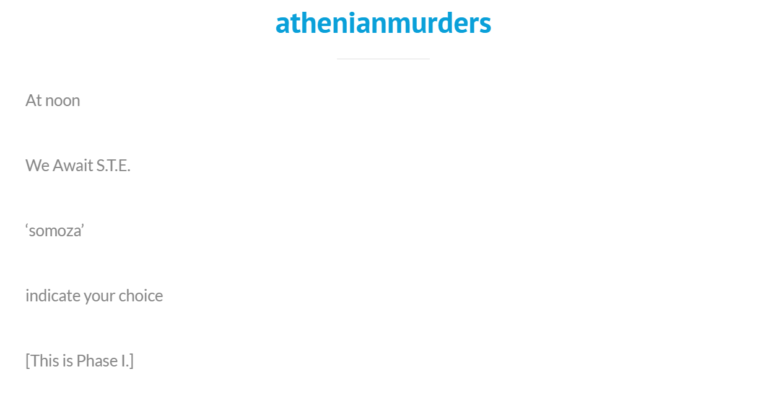
The Skeleton Scores (S1E6): (Un)Reliable Narrators

An unofficial transcript of the podcast episode by Alexis Kennedy and Lottie Bevan.

LB: Hello and welcome to Skeleton Songs.

AK: Spooky hello.  We were gonna talk about unreliable narrators today, but the more we set up for that, the more we realised it’s probably more interesting to talk about reliable narrators, because when you stop to think about it, it’s weird that you have reliable narrators in a novel, isn’t it?  Because we spend a lot of time saying, there’s two sides to every story, um, raise your hand if you’re not driving and believe there’s two sides to every story, and then keep your hand up if you believe there’s two sides to every story if it’s a fictional story.

LB: Why driving?

AK: Because I don’t want people to go off the road and die.

LB: Oh, okay, this— this is a safety-first podcast.

AK: Oh yes.

LB: It’s important.  Yeah, and I mean, I think it’s, it’s not so much, necessarily, the, the two sides to every story, although of course that’s true, I think it also depends how philosophical we want to get about it.  I mean…

AK: Mm.

LB: We, you know, you can get into the whole [ream?] of what is truth, and this Baudrillardian concept that if you don’t personally experience it, and even then it will only be a facet of the truth, there isn’t really a truth, um…

AK: And I think that’s…

LB: All that tends to end up in, in Reddit forums, right, maybe…

AK: Exactly, so, so this, this is why we want to talk about reliable narrators rather than unreliable narrators— because as soon as you start talking about the relativity of truth, there’s usually a pause for someone to take a hit from a bong, and…

LB: (laughs)

AK: And we, we— this is a bong-free podcast.

LB: I was just gonna say, I would like to confirm there are zero bongs— both you and I probably are not bong-friendly people.

AK: Apart from Big Ben, which to be clear is a UK landmark and not a particularly large bong.

LB: We’re also euphemism-free!  Although sometimes you might think otherwise…

AK: Reliable narrators.  It’s… very difficult to think of a circumstance  when you are telling an anecdote from your life and you put everything in, and it’s very difficult to think of a novel, where you know literally anything about what happened to the characters in the same way that you would if you had a camera running 24/7.  And it’s very difficult to think about a documentary or a reality show that has cameras running 24/7, that doesn’t still make editorial choices.  And it’s very difficult to, I forgot the, the last, oh, games, yeah— so…

LB: Oh yeah!

AK: If you think about really, really detailed simulations in games, uh, detailed simulations leave a lot out.  I wrote a piece about this to gamesindustry.biz, uh, years ago, and, I mean, toilets obviously.

LB: Oh my god.

AK: But this— but that’s the, exactly the thing, it’s ‘oh my god’, so…

LB: Literally less than three minutes in.

AK: Ah, a thousand pages of Lord of the Rings, and we don’t see anybody have a poo.

LB: No, ‘cause that guy has class.

AK: But that’s exactly the thing— they’re camping; when you’ve been camping, you know latrines are an issue…

LB: I’m not talking about my experiences of this!

AK: And my point is that you’re right, ah, Tolkien has class, so he doesn’t talk about Aragorn’s bottom, but…

LB: Oh my god, you see, I thought we were gonna go down the much more academic route of, you know, move this to its extreme and it’s the map that’s the size of the world, because it’s the only way to fully represent the world, is to make a facsimile that is exactly the same as the world, thus reducing the point of having a map.  But no, we went down…

AK: Well, that’s…

LB: …the latrines and bums route.

AK: that’s the same point.  But this is the thing, is, is, is Tolkien is right to leave out latrines.

LB: Mhm.

AK:  I don’t think it would add anything.  If you’re writing a gritty fantasy thing that reminded us how muddy the Middle Ages were…

LB: Mm.

AK: …then you would.  And similarly, I can think of a lot of simulations, erm, which, game simulations which include toilets and plumbing, and I can think of a lot which don’t, and I don’t think either one is better than the other, but for example, you know, Rimworld, the gritty survival sim, doesn’t have toilets.  Prison Architect, a gritty prison management sim, does have toilets.  Because we think more about toilets when we think about prisons.

LB: Some people don’t think about toilets!

AK: Did you know, um, that—

LB: Are we, [is this still the riff?]

AK: This is, this is the [riff?], but it’s relevant.

LB: Uh-huh.

AK: Um, in Prison Architect, female prisoners are modelled as having a, um, higher hygiene need than male prisoners.

LB: I think that’s a very interesting decision that the designer has made.

AK: Right?  And, designers, in fact, I believe, but, ah, both men, as far as I know, er, and so I think many people would expect that, um, women often have more exacting hygiene standards than men, and many people would say, maybe that’s sexist.

LB: I think peop— men just need to pull their socks up, frankly.

AK: Well, the particular reason that they…

LB: Letting their side down!

AK: Um, the, the, they wanted to represent women as having a higher hygiene need, is because menstruation’s an issue in women’s prisons.

LB: Hm. No, I’d, I’d understood that.

AK: Sorry, I’d better not, heh… the [half who are already into it?] are men, might not have, I mean it didn’t occur to me when I was [inaudible] this.

LB: Right.  Okay.  Fair enough.

AK: Or again, my other favourite example is that, that basically the London Marathon is always won, um, by Kenyans or Ethiopians.  Um, for genetic-environmental reasons.  Um, but if you put a, if you, if you built a marathon simulator, that represented, you know, it always being won by Kenyans and Ethiopians, then that would raise some complicated issues.  So there’s always editorialising, even when something looks like a simulation, and to take it back out to the old literature, there were decisions being made about what to put in, in a piece of fiction, all the time…

LB: Mmm. 

AK: Um, and, and, and it’s fine for us not to notice those decisions, but it’s interesting for us to notice them.

LB: Mm.  And even when you, I mean, there’s, there’s often a, um, distinction drawn between the type of narrator, whether it’s first-person, whether it’s, sort of, framed, whether it’s epistolary, and, and most people would probably say that the most believable, ah, narrator, the most trustworthy narrator is the third person omniscient narrator, which is essentially me saying, you know, ‘Alexis went over and did that thing’.

AK: Mm.

LB: And there’s no implication on the page that I am deliberately doing something cunning, or that you’re in any way likely to not be doing what I have just said that you were doing.

AK: Mhm.

LB: Um, but even that, as you say, because it is not representing everything, it’s not saying it was Tuesday the 31st of whatever and, and he had hair that looked a bit crazy and the wind was this degree.

AK: Mhm.

LB: So it’s, it’s actively, just by the act of streamlining, er, reality into a narrative, making it quite an interesting choice about how much you can actually trust it.

AK: It is, and it’s interesting you say that, because one of the things that games and interactive narratives do differently from traditional literature is, they tend to use the second person, which is not unknown in, er, traditional literature: I think…

LB: Not a fan of it.

AK: Yeah— I think, well, I think, er, a, a friend of ours actually just did it in her second book.

LB: Well, I take that back…

AK: (chuckles)

LB: It— it’s great, apart from when Jeanette Winterson does it, we’re still in a fight.

AK: Anyway.  Um, so, generally, if you’re reading a piece of interactive narrative, it will say ‘you’: ‘you fall down a pit’, ‘do you (a) bewail your plight, or (b), ah, play a jaunty tune on your harmonica?’.  But in… and in Fallen London, equally, we said, ah, ‘you’, in Sunless Sea everything I wrote said ‘you’, everything everyone else had wrote said ‘you’…

LB: Again, just a proviso for people who haven’t heard of those games, Fallen London and Sunless Sea are both games that Alexis developed, um, the gothic tradition, text-based but very much a video game.

AK: But, um, Machine Cares!, which is one of the other games that I worked on at Failbetter, although nobody’s ever heard of it because, ah, complicated story, um, and Cultist Simulator, which is obviously a, a game we built at Weather Factory…

LB: Wooo!  Represent!  Buy the game!

AK: Both of those use the first person.  Ah, al—although it’s the player, and what…

LB: They do, and it’s not annoying, actually!  I never really thought about that.  I really do find this sort of ‘you’ quite patronising in, in, in literature…

AK: Mmm.

LB: But there’s something about… it being used in your game which feels natural, and I have not grown up, um, I’m a bit younger than you, so I didn’t get a chance to experience the, the true kind of interactive fiction…

AK: Gamebook stuff.

LB: …parser experience…

AK: Oh, the parser stuff, yeah.

LB: …all, all the gamebook stuff.  So, so there’s never really been a, a fashion while I’ve been, you know, roughly conscious.

AK: Mhm.

LB: For having this sort of, ‘you do this’, ‘you do that’.  But for some reason in games it really works.  I don’t know why.

AK: I think… well, the, the interesting thing for me is that most people haven’t noticed, it’s, it’s not something that’s often remarked on.

LB: Yeah.

AK: But it’s something I’ve found quite tricky when I’m writing it, because it’s not unusual for me to… write a chunk of text for Cultist Simulator and then realise I’ve absent-mindedly written it in the second-person, and have to go through, and obviously the square bracket text, the metatext, in Cultist Simulator does say ‘you’, but the reason I did it is because we found, when we were making Machine Cares!, that to our surprise, using ‘I’ created a feeling of distance between the player and the text that wasn’t present when you said ‘you’.  Because it implies— who, who’s the I, it can’t be you, because you’re reading it and you’re not writing it.

LB: That’s really interesting!

AK: But it, it, so, it has to be somebody different, so even though it’s in theory more close, it, it provides a bit of safe, um, interval, and when I was writing Cultist

LB: I know what it is.

AK: Go on. 

LB: Well, I think it will be because ‘I’ implies an existence, it implies an I.

AK: Mm.

LB: Whereas ‘you’ doesn’t actually imply any existence outside of the person who is on the receiving end of ‘you’.

AK: Mmmm.  Mm.

LB: With the exception of, of, you know, there has to be somebody to say ‘you’, just, to address the person.  But that doesn’t seem to, to, sort of, snag in the mind.  But somebody says ‘I’ and you immediately think ‘Well, I didn’t write this book’.

AK: Yeah.

LB: So there has to be a sort of second entity, who, who wrote this narrative, who is distinct from me.  That’s interesting!

AK: So it is, but, but, ah, the reason I did this, specifically, because in Cultist there are a lot of things you do, um, which are, it’s reasonable to describe as morally questionable.

LB: (stifling a laugh)

AK: And, you know, that’s part of the point, is, is that it’s a game where you’re the antagonist, some of the time.  But I wanted people to feel a bit more distance, so that it’s more like reading a post-Lovecraftian diary of somebody who’s done weird things, than it’s about them actually deciding to, um, eat somebody from the skin down, or, or, whatever. 

LB: Well, ah, that’s pretty interesting you bring that up, because this isn’t gothic, it’s, it’s later than that, it’s 1950s, but, um, this makes me think very much of Lolita, Vladimir Nabokov’s infamous book.

AK: Mm.

LB: That certainly makes you, as a father of a ten-year-old girl, feel very uncomfortable.  And it’s slightly less uncomfortable reading for me, just because I don’t feel quite as, sort of, sp— specified.

AK: Mhm.

LB: But of course that does exactly what you said about Cultist, that deliberately places the reader in a slightly complicit…

AK: Mhm.

LB: …relationship…

AK: Mhm.

LB: …with the narrator, who’s very charming, and who totally isn’t trustworthy, um, and it makes the reader engage with his story, that most people in this world would say is the worst story of all, you know, abusing a kid, or, or, and sexually assaulting a kid and raping a kid, is, is, you know, most people think that’s actually bottom of the list.  And if he had done it in a way that used a much more trustworthy, ah, distanced narrative technique…

AK: Mm.

LB: If he’d said, you know, ‘Humbert Humbert did X’, most people’s response would be pretty simple, it would be, ‘Well, Humbert Humbert is a douchebag’, and ‘Humbert Humbert should go to prison’.  Because that’s the sort of stuff you read about in the newspaper.

AK: Mm.

LB: But the way that he, um, chose to make Humbert Humbert the narrator, you intrinsically get the sense of a slight kinship between the reader and the author.

AK: Mm.

LB: Because the, the, the person speaking through the text is taking the reader on their journey.

AK: There’s a sort of, what’s, what’s the word, it’s… it’s like, it’s like he’s, he’s confiding in you, that’s the, the sense of it.

LB: Yeah, I think, I think he, you know, we, we talk a lot when we hear people, er, celebrities or people we don’t know terribly well on, on, on some form of media, talking the truth about themselves, we talk about it as sort of opening up and being vulnerable, and there’s definitely a vulnerability about Humbert Humbert that you wouldn’t normally get from coverage of, of a man doing really awful things.  Um, and I, I think it’s just brilliantly clever, because it doesn’t say “Humbert Humbert’s a great chap, apart from all of this stuff”, but it also allows you to engage with a really difficult topic in a way that most people are just like, ‘nope, that’s (inaudible) for me, and I’m not gonna do it’.  And that’s why it’s so controversial, obviously, because lots of people just feel like it’s not comfortable to take…

AK: So my, my, my experience with it, I, I think we talked about this, my experience of Lolita was, ah, so, I, I love Nabokov, there— there you go, hot take, Nabokov is a good auth— a good writer…

LB: (laughs)

AK: And, er, but, er, and I, I particularly love the, the firework effect of his, his prose, there’s this, sort of, persistent legend, maybe a myth, that he had synaesthesia, and that makes a lot of sense…

LB: Oh yeah…

AK: But I couldn’t finish Lolita: I made it three-quarters of the way through, past a lot of the stuff that is probably nastiest, and I just sort of ran out of endurance.  And to be clear, um, if anybody wants to burn a copy of Lolita, I want to burn them.  Er, I think it, it, you know…

LB: (stifled laugh)

AK: Literature, especially literature of that quality, but even literature of any quality gets a fucking pass, freedom of expression is king.  Um, and the fact that I couldn’t finish it doesn’t mean it’s a, a, a bad book.

LB: Well, you shouldn’t feel obligated to, you know, it’s deliberately setting out to do something difficult, and if you don’t want to read that, that’s fine.

AK: But the, but the particular thing— so I think I, I, I had a, like, three, five, or whatever she was daughter at the time, which probably contributed to my discomfort.

LB: Definitely.

AK: But also, the, the thing that really finished it for me is, I started to feel that Nabokov was, because he’s a fucking genius, deliberately, um, paralleling the sort of confiding intimacy of Humbert Humbert, um, with the fact that he’s describing quite an unpleasant story, in absolutely, um, pellucid, fascinating prose.  So there’s this real feeling of corruption, that you’re…

LB: Mmmm.

AK: …reading a horrible story, um, in a wonderful voice, and I thought, you know, uh, I reckon that Nabokov is doing this deliberately, that he knows what he’s doing.

LB: I, I suspect it [as well, actually?].

AK: And I respect him, him doing it, but I don’t think I want to stick around for any more of it.

LB: No, and I think, I think, um, that’s something he’s actually commented on, ah, personally.  He said that, um, you know, apart from the controversy, and apart from the fact that I think he and most people would consider it his masterwork, um, there was a lot of debate about people not liking it, and picking it up, and that debate was not so much actually that they felt complicit in a difficult narrative that they didn’t want to talk about, but was because a lot of people picked it up thinking it was going to be an erotic novel.

AK: Mm.

LB: Um, because, you know, let’s face it, there is this uneasy distinction between youth and beauty and, you know, the male voyeuristic narrative of looking at a, a younger woman who’s very attractive and who, he’s having sexual fantasies about her.  And a lot of that is very healthy and normal and a lot of people would like to read a book that is about that!  I mean, bodice-rippers are basically… that, you know, from, from a male or female perspective.  So a lot of people picked up Lolita expecting it to be a sort of slightly naughty tale about maybe a slightly young lady, um, and apparently, Nabokov said, you know, the first thirteen chapters are deliberately erotic, they are meant to make you feel those things that, um, Humbert Humbert feels, and make you understand the sexual attraction that this guy has for this young girl, um, but basically beyond that point, and you know, there’s something like 40, 50, 60 chapters, um, it’s a, it’s a really depressing miserable tale of this sort of once-brilliant pipe dream from Humbert Humbert’s perspective turning out to be the reality of, er, you know, taking advantage of a child.  Which isn’t a fun ride and nobody has a good time.

AK: No.

LB: Um, and, and Nabokov said, you know, people came into the book expecting one thing, got halfway through and realised the book actually was going in a different direction and got really fed up and left it.  So apparently there are lots of people who have not finished Lolita but have started it.

AK: Mm.

LB: Um, for a very reason than you did.  But, but it’s obviously got, got multiple things going on.

AK: Parenthetically, because this, this is veering off topic…

LB: Yeah, sorry.

AK: My favourite— no, no, what I’m about to say is veering off topic— um, my favourite Nabokov, I just wanted to recommend, I don’t think it’s his best, but it’s the one I like most, is The Luzhin Defence, because it’s particularly about, um, addiction, to games, in particular chess…

LB: What?!

AK: And about the context [here?], and it’s worth mentioning just very briefly, Stefan Zweig, who wrote, among other things, um, stories which inspired The Grand Budapest Hotel.  Zweig wrote a novella or a short story called “A Chess Story”, which touches on very similar themes to The Luzhin Defence, and if you have an interest in the way that humans interact with games, and the way that was relevant long before, ah, video games were a thing, and The Luzhin Defence and Stefan Zweig’s “A Chess Story” are both very good reads.

LB: Good rec.  But back to— let’s bring it back…

AK: (interjecting) Reliable narrators!

LB: …to the gothic.

AK: Er, so…

LB: Shall I go on the gothic trope bit, shall I just explain the context?

AK: You can, I think, I think, I think I, I do, before we, we talk about gothic I want to talk about statistics, and I think the, the thing we come— go back to with reliable narrators…

LB: Woo-hoo!

AK: No, it’s an, er, statistician’s adage, that you, er, you laughed at actually.  I mean that caused you to laugh because it’s funny.

LB: Mhm.

AK: Ah, which is, er, ‘all models are wrong, but some are useful’.

LB: Um, that’s such a good…

AK: Yeah.  

LB: Watchword.

AK: I mean at any time somebody tells you a story, there’ll be inaccuracies almost immediately.

LB: Mm.

AK: But that doesn’t mean it’s untrue in a meaningful way.

LB: Mm.

AK: And it doesn’t mean it’s useless, far from it.

LB: Yeah. 

AK: But you were gonna talk about the, the, the gothic, or I can talk about relevance theory?

LB: I mean, choose your poison.  You do relevance theory.  I’ll come in later.

AK: So as you probably are aware if you sat through one of these things before, I, I, erm, bumbled my way through a linguistics degree.  And one of the things that struck home for me was, um, Deirdre Sperber and… no, Deirdre Wilson and Dan Sperber’s, um, work on relevance theory.  And, uh, here’s the, the gist of it.  We tend to think, especially if you come from a technological background, about utterances, language, as meaning that gets wrapped up and put in a box and passed across to somebody else and they then unwrap it.  You encode something, the same way you encode a packet going down a fibre-optic line, and then it gets decoded at the other end, and what pops into their brain is the thought you intended to put there.

LB: Mm—

AK: And this obviously isn’t the way language works.  At anything but the most primitive level.  So here’s the— the canonical example is, I say to you, um, “It’s raining”.  Now, you probably know it’s raining, er, so if I’m saying to you it’s raining, that might mean you’re blind, or it might mean that it’s raining too quietly for you to hear, most likely it means, “I think your plan to go to the cinema is a bad idea because we’ll get wet.”

LB: Mmm.

AK: But I don’t say that, I say “It’s raining”, and so you, you get this really basic coding effect of, of, of I’ve, I transmitted information about the weather which you already know, and all the important stuff is the contextual effect, and what Sperber and Wilson, um, proposed, which makes sense to me, is that, um, when a— when a speaker and a listener both assume that the speaker is trying to say something that requires the minimum of effort to understand, but has the maximum of contextual effect, like, will have the biggest change on that person’s mental state.  So that’s why, if you say, um, “It’s raining, so I don’t think we should go to the cinema, because you’ll get wet, which is uncomfortable”, then I’ll sound like an alien pretending to be a human.

LB: I would get very very bored of (inaudible).

AK: (laughs) Because the contextual effect, the ratio of contextual effect to, to processing effort is really low…

LB: Mm.

AK: Um, but if, if I say… my fricking daughter does this all the time, ah, she’ll go, I and she’ll just say the first letter of the word, she’s like, “Daddy, it’s r…”, and I have to guess “It’s raining”, so, so again, you’ve got this sort of very, very, very high processing effort for, for, for very limited contextual effect.

LB: Can I ask what might be quite a bad question?

AK: Go on.

LB: As somebody who didn’t do a linguistics degree.  The thing that immediately pops into my head…

AK: I only got a 2:2.

LB: Pfft.  Wow.  Pfft.  Cancelling the podcast.  Um, the thing that immediately pops into my head is, ah, the, the very very important moments of transmission, so, for example, the phrase ‘Look out!’

AK: Yes!

LB: ‘Look out!’ very rarely says ‘Look out, because directly above you is scaffolding that has come loose and a man is about to drop a brick on your head’.

AK: Mhm.

LB: Because if you’re going to say all that, the person would be dead.  And the point of the transmission of information would be moot.  So, is, so is that, so as a sort of armchair non-scientist, which is the best person to [lead these?]…

AK: Like linguists are scientists.

LB: (laughs)  Um, is, is that because kind of when, when we were monkeys, like, it was most important that, that we had this very quick, um, transmission of information, that we would expect the other party to contextualise?  Or, or is that… totally [non-valid?]

AK: I think, I think it, it, it’s, it’s, so again, I’m just talking now, right, I don’t, I don’t have—

LB: (stage whisper) That’s what this is…

AK: I don’t have a, any view on the evolutionary biology of linguistics, really.  But— I think it’s all, all a general instance of the specific thing you’re talking about, because it takes time and effort to speak, and it takes time and effort to listen.  So over time you’re gonna want to maximise the value that both people can get out of that.

LB: Yeah.

AK: My favourite thing about what I’ve read in this theory is echoic mention, because it, it, it’s, it’s very hard to explain things like sarcasm or irony in terms of, um, traditional, ah, models of, of…

LB: Mmm.

AK: Ah, how utterances work.  Um, and the idea of echoic mention is, when you’re being sarcastic, you are mimicking a person and, er, or a potential person, and implying, uh, that, you, you don’t, er, agree with what the person is saying.

LB: Linguistic strawman!

AK: Yeah.

LB: Interesting!

AK: Yeah! 

LB: And I guess to tie this back to the, to the reliable or unreliable narrator theme, what you’re saying is that language intrinsically actually has this, this slightly um, what’s the word… subjective existence.  There is no actual true linguistic reality, because what, what, what you mean is not necessarily what I will interpret it to mean.  

AK: I think, ah—

LB: We are getting into philosophy here.

AK: We, we, we’re…

LB: We need more jokes.

AK: Ah, the…

LB: Back to bums. 

AK: (chuckles). Ah, you said it.  Ah, I, I think, I think that’s true, I think it’s, it’s not so much what— what’s true is what we care about, and this is, so Forster, fucking love, um, er, For— is it H.M. Forster, I can’t remember what’s his…

LB: E.M. Forster

AK: E.M. Forster.  So…

LB: He does seem like a very nice man.

AK: He does seem like a very nice man, erm…

LB: But then I love a sad man. 

AK: Ah, so he did a series of lectures, er, er, which got collected up in a book, Aspects of the Novel, and one of the things that Forster said is that all novels, the thing they all have in common, inasmuch as any novel, all, has everything in common…

LB: (laughs)

AK: Is, um, that they all have a story.  And you know, you get novels that don’t have a story in the traditional sense, but it’s basically the common, one of the common things of novels is they’re, they’re, they’re longish and they have a story.  And he said that story is the lowest element of the novel, it’s like a spine or, here we go with bums, a tapeworm.

LB: Oh…

AK:  And it sort of goes through the whole thing, um, and without it, it’s not a story, but it’s not— it’s the most basic form.  It’s like, he cites Scheherezade and he says, Scheherezade didn’t survive because, um, she, ah, her characters were good, or her, um, her themes were compelling, she survived because she understood how to do suspense…

LB: Mm.

AK: And so he, well, you know, the, the king really cared about what was going to happen next.

LB: Mmm.

AK: And that is the fundamental thing, he’s very rude about Sir Walter Scott, he says Sir Walter Scott basically can’t write, but he can do suspense, which is, is why he’s so successful.  You know, I think you’ll probably say the same thing about Dan Brown, if it— and you know, Dan Brown is brilliant at suspense, and, and, and the writing is awful but he really understands how to do cliffhangers, so he’s very, very readable.  And… um, but he says, the thing about a good novel is, you have the life of time, which is the story, you have what things happen when, and then you have the life of value, because when we think back over our lives, we don’t think of them in terms of calendars or maps.

LB: Mmm.

AK: We think of this series of events, some of which bulk large and some of which bulk small.  So that seems, I think, to tie into relevance theory, in that when you’re telling a, a story, you care, and you want the reader to care, about things.  Whether they happen explicitly or implicitly or, or whatever, and it’s the decision about what to make the reader care about that’s important.  And that comes back to games as well, because you systematise the mechanics that you want people to care about.

LB: It’s interesting that you say that, because one of the, one of the key examples of, of a gothic story that, yeah, really digs into this reliability of its narrator is The Turn of the Screw.

AK: Which I know you love.

LB: Well, (slight laugh) I have a tendency to have very strong opinions, not necessarily based on any knowledge whatsoever.  So I did have a bit of a feud with my dad for years, when he would maintain that The Turn of the Screw was the best thing that had ever been written, and I would maintain just as definitely that it was definitely not the best thing that had ever been written, and it’s like, his love of Dickens is proof that I was right.  And eventually I read it and it turned out that my father was right.  Ah, it’s a really good book, understandably…

AK: Did you say your father was right?

LB: No, that was echo, it’s an unreliable narrator.

AK: (deep laugh)

LB: Anyway.  The point is, The Turn of the Screw is, is probably the most cited example of this being used.  Um, exceptionally well.  And I… recommend that you read it, if you haven’t, it’s, it’s not, ah, super long, Henry James has a tendency to write very long sentences but he’s an excellent writer so you can get through him.  And the basic premise is, um, it’s Christmas Eve and, um, a bunch of people are gathering together to tell specifically kind of spooky stories.  And somebody has this manuscript that they say, um, is from a governess they know who is now dead.  And they read this manuscript and that takes the, the majority of the rest of the novel, and it tells the story of a governess who is, long story short, sent to look after two children, there’s some questions about why she was chosen, and what her feelings are about the position, um, but all the way through, the children are lovely, um, and we, we think they’re great and she thinks they’re great and there’s, er kind of a question mark over the little boy and, and why he’s been sent back from school, it’s kind of a, a cloud, they’re not really sure about… and over time, um, she starts seeing, the governess starts seeing these two ghosts around the property— a man and a woman.  Um, and she ends up being convinced that, ah, each one of them has a particular attachment to one of the children that she is guarding, and that she, er, also becomes, um, aware that the children can see the ghosts too.  So, it becomes this very stressful story of this governess trying to protect her wards, whom she loves, and it all goes pear-shaped.  Um, and there’s this very very famous ending, quite abrupt, quite shocking, which leaves a lot of, of questions unanswered.  And there’s been a huge debate over time, because it’s a brilliant story and it has captured people’s imaginations, over how much of the narrative we can actually believe from this governess.  You know, maybe she’s just telling the truth, and then it’s just a good old spooky ghost story that’s a bit scary.  Great.  Maybe, um, she is deliberately not telling the truth, because she is in some way less neutral than we think.  Maybe she has a mental issue, which means she isn’t actually capable of telling the right story, or, or maybe there’s a big, ah, bunch of criticism that says, you know, ah, from a, ah psychoanalytic feminist postmodern reading, it’s all about sexual repression, which has also been there, but, but also doesn’t tell the whole story, and ultimately…

AK: Bums.

LB: …(long pause) lady bums, I suppose.  Um, but ultimately, the, the critique has kind of fizzled out, because somebody in the, the New York Times in the ‘60s sort of said the best thing about it and we all were like ‘Oh yeah, he’s right’, um, and he said that basically, trying to work out what the truth actually is…

AK: Mm.

LB: …beautifully takes, and chips away at the, the excellence of the story itself, because quite clearly, Henry James did not want us to take away one particular narrative, he clearly wanted us to take away everything at once, and, and have lots of questions over what really happened and what, you know, who she is and… and it’s the ambiguity itself that is the point of the story, not the actual linear number of events that led up to the, to the, the plot.

AK: I think, and I think— I mean, obviously you’re right, and I think that crystallises for me one of the things about reliable narrators, is, is that we actually really really want reliable narrators.  And one of the hallmarks of, um…

LB: It’s bedtime stories, isn’t it?

AK: Well, I was gonna say something different.  I was gonna say geek culture.  People want to know what canon is.  So this is something that comes up in Cultist Simulator all the time.  And of course what we did in Cultist Simulator is, is that there are, um, multiple valid versions of what’s happened, you know, so, what, what, what the Histories are.  But for example, I was always entertained that Star Wars, at one point…

LB: I knew you would go here…

AK: Yeah, the, there was a wiki, um, which classified canonicity at four levels.  So there’s sort of the, the, the lowest level, um, was just stuff that, um, [that was handled?] in the Expanded Universe, um, and then there was stuff that just happened in the, sort of, less well-regarded films, and then then there was stuff that had happened in the actual films, but then the G-level was stuff that George Lucas himself had said.  So, um, er, if… Luke Skywalker had said one thing in the first Star Wars film, and George Lucas said something that contradicted what appeared to be the case in the universe, then that was ipso facto more correct.  And, uh, I, they, they stopped doing that, anyway, and I don’t imagine [it’d hold up?] very well now Lucas sold the rights for four million dollars.  But…

LB: As little as that?

AK: Uh, people were (inaudible) there was a lot of debate over whether it was a lot or a little.  Because it’s a lot for a creative property, but it’s a little…

LB: I think if I had sold Star Wars for four million dollars…

AK: Billion.  Billion.

LB: Billion.

AK: Yes!

LB: That makes a lot more sense.

AK: Oh god no.

LB: I was thinking!  What an idiot!

AK: Yeah.

LB: Okay.  Anyway, go back.

AK: And we, we really want to believe in the fundamental reality of something we love.  Laura Miller, who is a, something fancy like The New York Times, book critic, or used to be, wrote a sort of perplexed, um, and quite cross, very readable, um, literary biography called The Magician’s Bookʼ, in which she talked about how she loved C.S. Lewis when she was growing up, and she still has this tremendous fondness for Narnia, which she finds very difficult to reconcile with her sort of sophisticated literary apprehension of some of the, um, more naive things in it, not to mention the fact that the whole thing is a gigantic Trojan horse, intended to smuggle Christianity into the minds of unsuspecting children…

LB: Yeah, that’s where he lost me.

AK: Which she, she hated.  And, and, and she, she, but one of the things she said that stayed with me is that she really wanted to believe that there was a, an enchanted door or wardrobe she could step through, and end up in Narnia, that there was some fundamental reality that, that, um, Lewis had a connection to, and you know, when you really love a world or a setting, um, or a story, that’s often what we feel— we want to, to, um, have a direct connection to it.

LB: Mmmm.

AK: And I think that’s why we look for reliable narrators, because if there is a reliable narrator, who’s telling you what, big air quotes, “actually happened”, then you can participate more excitingly in the reality of it.  Quick plug for a book, er, I can’t remember the author, but you can find it easily enough, it’s, it’s…

LB: Is it a plug if you haven’t written it?

AK: No, it’s not a, yeah, not a plug, quick enthusiasm, um, it’s called As If… I think it’s called As If: the Literary Prehistory of Virtual Reality.  

LB: [How wild?]

AK: Yeah. Ah, I can’t, um, can’t quite remember the author, but it’s, it’s a, a fun survey of…

LB: I will find it and put it in the notes for this episode.

AK: Please do.  It’s a fun survey of, of, of the way that our sort of understanding of shared, or, or built worlds developed through Lovecraft, Tolkien, Conan Doyle, um, around all of whom our, our understanding of what “actually happened in a story”, and the ironic distance of understanding it wasn’t real but has internal consistency was really [configured?].

LB: You see, the, the, I mean, this podcast has been all interesting and all that jazz, but like, it’s been a disaster, because we haven’t talked about Lovecraft at all.  And I had loads of things to say about it, bec— well, um, the key takeaway that I discovered while thinking about the topic was that he doesn’t use unreliable narrators.  We have a number of people who go mad, that’s quite a traditional trope…

AK: That’s a good point!

LB: But he creates this really frightening narrative, and never once do we think, “But do the Old Ones exist?” It’s like, “no, no, they do, they’re up the stairs, um, one of them has a flute, one of them is made of legs, and the other one sits in the forest and has babies every night, and they’re really horrible”, um, but, but that’s never in question!  And it’s astonishing, ‘cause the whole of Lovecraft’s kind of style is about the things the things you see out the corner of your eye and the things that you can’t comprehend ‘cause we’re tiny little flesh bugs on the earth and if you do your brain will explode, but he does all that with the, with this fundamental core that what he is talking about is true, and I think we should do a whole different podcast about that, ‘cause we’re out of time.

AK: I— I think we should; very briefly, I, I can think of—

LB: I mean just was—

AK: —one exception, but I think the exception very much demonstrates that you’re basically right.

LB: Is it “The Temple”?

AK: Er…

LB: “The Temple” is an exception, but I’m gonna ignore it—

AK: Is that the one where the, the twist (sorry for the spoiler) is that he turns out to be dead?

LB: Ah, it’s, it’s the, it’s the twist that it’s a German submarine captain?

AK: No, I don’t, I don’t know that one.

LB: Mm, I know, and, exactly!

AK: But there’s the one, one where somebody escapes from what they think is, like, their ancestral home, and it turns out they’ve basically been in a tomb, and they, they then see themselves in a mirror and they realise…

LB: I don’t think I’ve read that one!

AK: Ah, I mean, er…

LB: And there’s lots, there’s lots [there, kind of,?] working through it…

AK: Chuck it in, chuck it in the notes.

LB: I guess my point is not so much that the narrator is unreliable…

AK: Yeah.

LB: …because like I said, it’s very common for the narrator to have to be mentally unhinged, certainly at the end of the, of the story, if not at the start, but, but it’s that they are seemingly always experiencing this objective reality.  We don’t really get the Turn of the Screw effect…

AK: Mm.

LB: …of, like, this person was bonkers, so maybe the story that they’ve told us is something we can’t rely on, there’s never that suggestion, it’s always like, ‘no, no, there was a shoggoth, in that cave…’

AK: Mm.

LB: Um, and then, then he’s mad.

AK: Yeah, you’re right.  Yeah.

LB: And I just think that’s fascinating!

AK: I think there’s— extremely briefly, Gene Wolf, um, er, a lot of Gene Wolf’s narrators are unreliable, and they’re often, sort of, explicitly unreliable, like, there, there’s, there’s War— Soldier of— the protagonist of Soldier of the Mist, um, has a sort of Memento-like memory disorder, that means he, he can’t remember things from day to day and as he writes them down, and the— so his diary’s a theoretically objective record, but obviously it’s not, it’s not objective.  And Gene Wolf’s trick, that he does, and I love Gene Wolf, er, God rest his soul, but, um, but he does it to the point where it’s annoying sometimes— is, is basically, um, you’ll think you’ll know what’s going on in the story, and then in like Chapter 5, he’ll casually mention the whole thing has been happening, like, inside a cat’s nose.

LB: (chuckles)

AK: As if you should have known this all along, and it reconfigures everything, and it’s brilliant, it takes a lot of discipline to do it, but that sort of happening not to mention is I think one of the subtler and more interesting forms of unreliable narration, because it doesn’t feel like it, usually feel like it breaches the contract with the reader.

LB: Well, I was gonna say that, in, not in, er, murder mysteries, we talked briefly about this off-air, and I mentioned that Agatha Christie…

AK: Oh yes.

LB: Has made use of the unreliable narrator several times in her books, and people really do feel betrayed, because the whole point of engaging with a murder mystery is, can you work out who, who did it, basically.  It’s a whodunit!  It’s not a ‘who says they didn’t and then turns out, for reasons that were not available to me, actually did it’.  Um, but anyway.  We do need to end, because people have lives to live, I suppose, um, so… we have to do another one on unreliable narrators, I think.

AK: Yeah. 

LB: Well, that is the noise of the computer telling us to shut the heck up.  So thank you so much for listening, um, I will put all of the notes, um, from today’s discussion in the episode summary, so that you can read it, and tell us what you think, and… have a spooky day.

The Skeleton Scores (S1E5): Women, Bloody Women

An unofficial transcript of the podcast episode by Alexis Kennedy and Lottie Bevan.

LB: Hello and welcome to Skeleton Songs.

AK: Skeleton Songs…

LB: We’ve been away for a bit, um, because we moved house, um, and we were busy contemplating the infinite, reading more gothic stuff…

AK: Taking things out of boxes after we put all the things in boxes…

LB: Very spooky boxes.

AK: Spooky boxes for the spooky books… we’re talking about madness and blood, aren’t we?

LB: We are, and I have a feeling this is going to be an episode where you, um, pick out lots of interesting anecdotes, ‘cause I believe it’s quite specifically to do with the gothic’s fear of women and madness and blood.

AK:  I mean, we’re, we’re gonna be honest here, the fear of, that men feel towards women in, in the gothic context.  And beyond, there’s a little mythology here, but when I started looking into madness and blood, I found that that, that there’s a particular kind of blood that comes up very often, especially because a lot of, erm, mythology has been written by, by men.  And, as you…

LB: And literature!

AK: As you’ll be aware if you don’t—

LB: Almost all gothic literature…

AK: Has to do with menstruation?

LB: No, it’s been written by men, ugh.

AK: Oh yeah.

LB: You see, it begins already…

AK: (chuckles)

LB: The baiting!

AK: I’m sorry I erased you.  Now, I’m just gonna start, er, I—I’m gonna start by mentioning in passing, the Red Grail, the Cultist Simulator Hour…

LB: And again, to be clear, for listeners who are not aware of this, the Red Grail is one of the many, er, are they gods or are they…

AK: Secret gods, ish…

LB: Secret gods in our, our video game Cultist Simulator, and the Red Grail is by far and away, probably, the most… disgusting.

AK: I mean I don’t think that’s the case.  I think you’re basing this on one…

LB: Yes. 

AK: …particular scene.  I…

LB: You know the one.

AK: I do know the one.  And so…

LB: There’s a particular scene in the depths of the Wood, at a certain time of the month, and I’ll just leave that there.

AK:  So, so the— it’s the Well, in the Wood…

LB: Oh we’re, we’re not leaving it there…

AK: Which is (inaudible)

LB: …ladies and gentlemen, we are describing it in detail.

AK: We’re not describing it in detail, ‘cause I described it in detail to you at the time, and I, I wrote the description…

LB: Mhm…

AK: …and I came to you and I said…

LB: You did.

AK: As a woman who menstruates…

LB: It’s always a good start to a, to a date night, isn’t it?

AK: When you read this description, does it make you think about menstruation, and you say it did, so I think I did my job there.

LB: Mm.  Menstrua— I can say as a woman…

AK: (laughs)

LB: …that menstruation remains really gross.

AK: Well, funny you should mention that, because here is…

LB: Oh god…

AK: …Pliny the Elder, in his Natural History, talking about menstruation.

LB: I’d love to hear what Pliny the Elder has to say about menstruation.

AK: (intoning) “But nothing could easily be found that is more remarkable than the monthly flux of women.  Contact with it turns new wine sour, crops touched by it become barren, grafts die, seeds and gardens are dried up, the fruit of trees falls off, the bright surface of mirrors in which it is merely reflected is dimmed, the edge of steel and the gleam of ivory are dulled, hives of bees die, even bronze and iron are at once seized by rust.  And a horrible smell fills the air.  To taste it drives dogs mad!”

LB: I’m sorry.

AK: “And infects their bites with incurable poison.”

LB: So, okay, just to, the mental image that we all have here is, Pliny the Elder smearing…

AK: BLOOD!

LB: Smearing menstrual blood over everything in a sort of pseudo-scientific spirit of investigation, and finding that it smells bad, it makes everything less nice than before he smeared the menstrual blood on things, and dogs aren’t a fan of it, is that, is that what we’ve learned from this extract?

AK: I think, basically the way it works is a guy told Pliny…

LB: (laughs)

AK: A guy who met a woman.

LB: I’m not sure any women were involved in this at all, actually, but, but sure.

AK: But, but the thi— I mean…

LB: Ah, he should stick to volcanoes, is all I’m saying.

AK: (laughs) So— I, I think, seriously, menstruation is a pretty good shorthand for one of the ways in which men, men are frightened of women, I mean, one of the ways, one of the other ways in which men are frightened of women is, is that…

LB: Just to be clear: according to literature.

AK: According to literature.

LB: This isn’t, like, some sort of David Icke reveal…

AK: Yes, yes. (Laughs). So, the trope is…

LB: (laughs) Thank you.

AK: …that men spend a lot of time wanting to have sex with women.

LB: They do…

AK: Erm…

LB: They do!

AK: And, er, and that’s all great, but sometimes women turn around and want to have sex with them, and that could be a little bit alarming…

LB: (laughs)

AK: And that’s basically where, I think, where a lot of vampire stories come from, because women who are actually out looking for sex, which, you know, if you’re a, especially a slightly, sort of, um, introverted writer, you don’t necessarily know how to, uh, to deal with…

LB: You see, I think that’s a very sympathetic reading of, of, of that.

AK: Well…

LB: Because it’s— it’s—

AK: Funnily enough, I’ve chosen to be sympathetic…

LB: —basically nonsense, isn’t it?  I mean the—the, what, what you were just talking about goes back to a literary trope, um, that I was talking to you about earlier, the, the Madonna-whore complex.

AK: Hmm.

LB: And this actually has its origins in Freudian psychoanalysis, which we can safely deposit in the wastepaper bin for being total nonsense, um, particularly…

AK: You’re just going to write off all of Freud?

LB: I am, actually, I am.  I think he is a fascinating individual, who had a lot of fun ideas…

AK: And cocaine.

LB: …and he makes… did he have cocaine?

AK: He was big into cocaine.

LB: That explains so much…

AK: He, he, he went through this phase where he thought it was really great, and he used to, like, put bowls of it on the sideboard at parties.  I mean, to be fair, er…

LB: It was that or all the menstrual blood.

AK: …pharmacology was in its infancy, and people didn’t realise…

LB: The parties were better when he swapped it out!

AK: And eventually, he, he got addicted and I think he, he actually suffered health problems in his face because of it, so (inaudible)…

LB: Well look, I’m very sorry that he, he, he drugged himself into an early grave, but…

AK: …he recanted, but…

LB: …he, he had some issues with, with ladies, I’ll put it like that, and I do like him because, um, he… psychoanalytic literary theory is really fun.  It’s a really enjoyable activity to partake in.  So the classic example of this, um, if you haven’t ever read a book with psychoanalytic theory in mind, is, um, Henry James’ The Turn of the Screw, which I’m not gonna go into, it’s a slightly different topic, we’ll probably discuss it in detail on a later podcast, but a lot of, um, the analysis of that story is about whether or not the, ah, unnamed narrator, who is a woman, has repressed sexual desire, which results in her doing a number of things, of whether she’s actually mad, or whether she is totally innocent and telling you exactly what happened, and it, and it’s just that, sort of, circumstance conspires against her.  So, so for that, I doff my hat to Freud.  But the rest of him is nonsense.  And going back to the Madonna/whore complex, for which he is partly responsible, it is this fundamental idea, fundamentally male idea that there are basically two categories of women.  One of which is this idealised, um, saintly figure, usually associated with both religion and your own mother, um, and the idea is that you respect these women, but you have no sexual attraction to them, because they’re too busy being good and, and, and holy.  Um, and of course men do have sexual attraction to women, a lot of them, um, and that means that, that there must be another type of woman for, for men to, um, direct their sexual attraction to, and those women cannot be respected, because sex, I think, is fundamentally not respected in some way?  And those women therefore become, in some way, this trope of, of the whore.  So the idea is that, in a lot of literature, and, I have to say, Dickens is a big… guilty party in this, there’s basically the good women and the bad women.

AK: I think, yeah, I mean, yeah.  Also, sorry.  Ah…

LB: Also, to be clear, based in literary tropes, not actual, any reality or misogynistic theories of our own.

AK: Ah, it’s, it’s, it’s projection, right?  Because if you’re a man, you know, and you have feelings, and sometimes these feelings, I mean, obviously women have feelings too, but, uh…

LB: It’s not apparent!

AK: I’m told.  But, but if you– if…

LB: We just faint a lot, and we put our blood on knives and they rust.

AK: If a woman doesn’t have sex with you…

LB: Yeah.

AK: Then that’s bad.  But if a woman does have sex with you…

LB: That’s also bad.

AK: Well, that’s also bad.

LB: Yeah.

AK: So that’s a problem.

LB: That is a problem.

AK: But— and, and that’s one— one of the nastiest, um, Kafka traps, if, if you’re a woman living in a, um, especially pre-modern, but even in a modern society, is that if you’ve put out, er, then that proves you’re not virtuous, er, so if you— but if you haven’t, then that proves, you know, you’re offended or, or, or whatever.  Because men obviously sometimes have sex, and then feel complicated about it afterward.

LB: Mm.

AK: So it’s great that it can be somebody else’s problem.

LB: That’s why I’ve, I’ve always really hated particularly the, um, neoclassical chivalrous trope of ‘Have pity on me, madam’.  There are so many knights who go around and fall madly in love with, you know, this particular lady in a tower, or this lady they meet on a Tuesday in the forest, and, um, they actually get ill with love, it’s this actual idea, which was not, you know, a joke at the time, that, that the, the lovely young knight— who’s nice in every way, we don’t dislike him as, as the reader, um— is, is genuinely sickened for love of this woman, who obviously denies him because she’s a virtuous attractive woman.  So then you get these constant, kind of, begging conversations, where the knight basically says “You have to have sex with me or I will literally die, and then you’ll be a murderer, and all the guilt will be on your head!”, um, and then this woman is in this impossible position, of either maintaining her virtuous situation of life— she just met this guy, just appeared at her house and been like “You must have sex immediately”, and she was like “Wait, buddy, let’s have dinner first”, or she, he does have sex with him, and saves him, but then she, she loses her, her virginity probably, and her sense of, of, of purity.  And it’s this— it’s not… really evaluated, which is why it’s so fascinating, when you get to renaissance literature, and I think we’ve, we’ve talked on a previous podcast about, um, The Faerie Queene, which is a big favourite of mine, Edmund Spenser… um, it’s really fascinating to see how real men in the real world, who aren’t as silly as some of the tropes of gothic literature about women would imply, um, are desperately trying to figure about how they feel about Queen Elizabeth.  Because she was a big stick in the mud.  Um, she was Queen, and obviously people— kings and queens were respected, because they were in charge, and it was, that was just what we did, and of course there were also ideas that there was some sort of divine intervention and she was Queen because of her bloodline and because God had chosen and because she was special, but at the same time there was this basic sense that women were rubbish.  So, so people really bent over backwards to, to try and reconcile these two things— England was great, but England was ruled by somebody who wasn’t great, which meant England wasn’t great, but England was great, but women are rubbish but she’s Queen.  So all these, all these, ah, contradictory ideas, and, and literature: this basically results in this sort of turn to neoclassicist ideals.  And in the chivalrous mode, this means that women can both be idealised and also, um, demeaned, because on the one hand, women don’t do anything, in traditional chivalrous romances, they just get rescued, or are witches, basically, um, but also they’re this sort of idealised grail-figure, um, which are quested after.  And this allowed a lot of literature at the time, including things like The Faerie Queene, to basically position Elizabeth as somebody who was great and admirable and fantastic— I’m so pleased, I’m definitely pleased that she’s on the throne!— but also allowed men to maintain control in the new world order.

AK: That— that makes a lot of sense, and I was, erm, I was surprised though to hear you being so cross with knights, I know how much you love The Faerie Queene, and that— what you’ve just said makes sense of, of that.  I was thinking, um, a, a few years ago, when I was doing some contract work for a, ah, certain large triple-A studio, um, I read up a lot on the intelligence, ah, networks of the Elizabethan era.  And some of the listeners I’m sure will know, or have this general sort of idea.  Um, about, you know, Walsingham and the School of Night and, um, ah, how Marlowe was, was probably involved, ah, because he probably wasn’t paid a very large sum of money just to be somebody’s tutor…

LB: (laughs)

AK: Off in the Low Countries.

LB: Oh, he’s so great.

AK: And, um, what I hadn’t realised until I read it is that Elizabeth’s, um, ah, courtiers and, um, counsellors were actually quite effective, ah, and ruthless, um, in their intelligence, er, and counterintelligence operations.  Because England was very isolated at that point, and it’s astonishing, and it’s a testament to Elizabeth, among others, that she stayed on the throne for decades.

LB: Mm— really impressive.

AK: Because: unmarried woman, virgin queen, and in a context where the whole idea of a woman ruling a country seemed sort of unnatural.

LB: (chuckles)

AK: And she was a Protestant— her father, remember it was that recent, had literally just, um, er, banished the Catholic Church from Britain and decided that he was the head of, of, of the church.

LB: Yeah.

AK: Ah, and, and she was the heir of that tradition, so Europe is full of very cross Catholics monarchs.

LB: And she was, and she was the heir of that tradition through a mother who’d been beheaded for treason.

AK: Yes!

LB: So, her claim was even less sturdy.

AK: But, but she’s, she’s against nature.  And I think that’s—

LB: (bursts out laughing) And that’s the end of the podcast.

AK: (laughs) But I think that, that’s one of the things about, er, our old friend menstruation, again…

LB: Oh, [yeah, alright, yeah?].

AK: Is that it is both against nature, but actually, nature as far as…

LB: Um, so, what do you mean by ‘it’s against nature’?!  That’s a very, that’s a quite masculine view!

AK: Well, ah, ah, I was gonna say, as far as men are concerned.  Because…

LB: Ah, okay, you missed out that quite important…

AK: Well…

LB: …add-on.

AK: You know, I— I was gonna get to the end of the sentence, but…

LB: Agh.

AK: Anyway.  Ah, so the point is, obviously it’s not against nature, that’s, that’s an insane thing to say…

LB: I think it should be— I have several issues I would like to take up with nature about…

AK: (laughs)

LB: …the whole system.

AK: But— I, I, when you first come to the whole subject of menstruation as a man, you know, especially if you grew up in the era before…

LB: God.

AK:  …it was properly discussed in schools.  You know, there’s just something going on, and it happens at sort of irregular intervals, we won’t talk about it that much, it’s sort of [yerky?] and women when they talk about it are generally not big fans of it, and, and it’s all tied to all that stuff that goes on in there, that’s complicated and, and, you know, you don’t really— And, if, if, I have to say, um, being present at the birth of a child, ah, does, does help with, prev— a, a certain amount of this, um, visceral confusion.  Ah, but visceral is this word, really— ah, the, Alex Comfort, who wrote The Joy of Sex, in a, a more innocent age, says something, ah, very resonant, I think, about, um, the, the when women— men and women are thinking about sex: he said that for men, sex occurs in a sort of separate part of themselves, like the state of Florida.

LB: You told me this!

AK: And for women it’s an, an internal thing, and I think it, it ties back into, into that.  And the, the thing about the Red Grail is, it is, okay, to be clear, I’m talking now about the Red Grail, which is based on a gothic exaggeration of some attitudes men have towards women— I’m not talking about women: but the Red Grail is both monstrous and natural…

LB: Mm.

AK: So it, it’s the—

LB: And it’s not just about menstruation, to be clear—

AK: No, it’s not, it’s, it’s about birth, and it’s about blood, and it’s about consumption, and it’s about the, the, the Dionysian impulses…

LB: Yeah.

AK: In explicit opposition to the Apollonian impulses, of the Lantern and the Watchman…

LB: Yeah.  Yeah.

AK: And this is why the Grail is down in the Wood, and the, erm, all the Lantern powers tend to congregate at the top of the Mansus, so you get this explicit, um, contrast between the cerebral and the visceral.  And if you—

LB: And is that, fundamentally, how you typify the, the difference between the Dionysian and the Apollionian?

AK: Yes.

LB: Apollonian!  (Inaudible)

AK: Yes— so, and I, I, as far as I can tell the, the…

LB: Apollonian.

AK: The way in which we talk about Apollonian/Dionysian these days came out of Nietzsche of all people— but obviously initially it came out of…

LB: Much-maligned!  Not a Nazi.

AK: (chuckles) Obviously, initially it came out of, erm, ah, traditions that emerged in, ah, Greek culture and mythology.

LB: Yeah.

AK: And I think— it, it’s always made intuitive sense to me, ah, that, that you… one side of human impulses is towards, um, abstractness, and, um, ah, thought, and the other is towards concreteness and feeling, and I think if you go, you know, too far down the abstractness and thought route you end up with this, this perfect burning nothing, and if you go too far down the, um, the, the solidity route, you end up sort of drowning in a well of blood.

LB: I think that’s a, I think the perfect burning nothingness is the, is the best description of Apollo, that I’ve, ever heard, because we’ve talked before— we’re big fans of, of the Greek pantheon, as I’m sure many, kind of, literary nerds are, um, and I have never felt that Apollo is interesting, even though he officially stands for lots of things that I admire and love, and, and, you know, there’s lots of beautiful things that he’s responsible for, and you have the Aeolian harp, and, and obviously he’s wisdom and, and music and poetry, and, and joy and everything good, and the sun, I suppose that’s acceptable.  Um, but it— but because he is kind of the purest, because he has the sense of, of the kind of intellectual element, I find it very difficult to identify with him.

AK: Mmm.

LB: As a, as an entity, and that’s the whole reason that the Greek pantheon and any kind of, ah, polytheistic religion, I think, really, really has that, that attraction, because it, it fragments a lot of different human experience into realistic individuals that you can identify with, and then they have interesting stories, whereas when you get to that level of perfection, um, it’s hard to make them do anything interesting.  I mean, the classic in, in literary, ah, so, in literature, example of this would be, um, Paradise Lost by Milton, who’s infamously, was set out to sort of praise God?  And, and, and how great Christianity was, but of course what it really achieved was making Satan really interesting and sympathetic.  And that really wasn’t his intent, you know, he did deliberately write, er, an interesting bit of, ah, text, because he was a brilliant writer, but, but, he, he really wasn’t trying to make Satan the, kind of, the star, but everyone was much more interested in what he was doing than God, ‘cause God just kind of was there in the background being perfect, and that’s really boring, from a dramatic point of view, um, whatever your religious leanings.  Anyway.  Um.

AK: I think, I think you— I haven’t thought of that before, and it occurs to me, to step back from the visceral fear of women by men in literature…

LB: Oh yeah, don’t worry, we’ll get back there, listeners.

AK: Ah…

LB: You’ve not escaped yet.

AK: There’s, there, there’s another, ah, trope, which sidesteps, er, Madonna-whore, and the crone, and that’s someone like Athena, or Brigid, who are feminine, uh, but who are types of ingenuity and artifice and thought and competence.

LB: Mm.

AK: And Athena is, I think…

LB: (inaudible)

AK: Ah, yeah— is much more appealing, intuitively, somehow, than Apollo, she’s, she’s quite austere.

LB: And I’m not sure I hate on Apollo, I love Apollo…

AK: No, I know.

LB: I’m just saying, from a human point of view.

AK: But she’s, she’s more approachable, somehow.  And Brigid, who of— Brigid of course, the, the, erm, ah, Celtic figure associated with inspiration and poetry and also smithing, is, um…

LB: Interesting.

AK: one of the two big roots of the Forge of Days, another Hour, and is, is probably the reason, I can’t really remember…

LB: I love the Forge of Days…

AK: …why she’s explicitly female.

LB: Yes.

AK: Partly because of Brigid, who I’ve always liked as a, a, as a mythological character.  Can I tell a fun Viking story about menstruation?

LB: I mean, gee, you never need to ask—

AK: I need your permission as a lady.

LB: Do you?  Stop saying “As a lady!”

AK: I think, I think it’s just, it’s just, you know, in contrast to the, to, to, to Pliny, this is the, sort of, perfect…

LB: Pliny.

AK: …Norse…

LB: He’s off the Christmas card list, I’m afraid.

AK: …intersection between, um, misogyny and slapstick…

LB: (laughs)

AK: And, and, and what it is, I think you know this one, ah, Thor is off to have, get drunk with some giant.

LB: Classic Thor.

AK: And, and on his way, he’s trying to cross a river.  Ah, and he, um, he finds the river is flooding, ah, and he’s struggling to get across it, and in danger of being swept away, so he looks upstream…

LB: Mhm…

AK: And he sees one of the giants’ daughters…

LB: Mhm…

AK: A lady named Gjálp…

LB: Mhm…

AK: Who’s also a giantess, obviously…

LB: Mm.

AK: Genetics being what it is— is standing over the river with one leg on one bank and one leg on another bank, and she is lending her force to the stream.  So Thor is trying to—

LB: I’m sorry, she’s what?

AK: She’s lending her force to the stream.

LB: Ah, ladies and gentlemen, you’re hearing a man talk about something he knows nothing about.

AK: Well, what you’re hearing is, is a man talk about a translation…

LB: “Lending her force to the stream…”

AK: …of a man, because it’s Snorri Sturlurson, obviously I don’t speak Old Norse— being translated by, I think Crossley-Holland, or somebody.  Erm, and it’s all phrased quite coyly.

LB: Mhm!

AK: So, you know, could be…

LB: I can tell you, in the original, it would not have been coy.

AK: So in, um, ah, it goes on to be [good?], because Thor is obviously, you know, powerless against this, this female force.

LB: Yeah!

AK: And is being driven back to the (inaudible)

LB: Fire and, fire and water…

AK: So he picks up a big rock…

LB: I know, I know what this— this is horrible.

AK: And he, he, ah, I’ve got the precise quote from the translation.

LB: Oh god!

AK: “He snatched up a great stone out of the river and cast it at her, saying these words: ‘At its source should a river be stemmed!’  Nor did he miss that at which he threw.”

LB: Mmh.

AK: And then he crosses the river safely.

LB: Just, just to be clear: um, he, he blocks a lady’s natural flow with a boulder.

AK: Yeah.

LB: So he can get on his way to the pub.

AK: (snorts) Well, uh—

LB: Is that specifically the story there?

AK: He then, he then goes to, to, to her father’s house— inexplicably, she and her sister try to murder him…

LB: “Inexplicably”?!

AK: If I remember correctly, they get under… they do it in an inexplicable way, they get under the chair that he’s sitting in and they sort of try to smash the chair against the roof of the house?  And then he…

LB: Ok, that is badly thought through.  

AK: Yeah.

LB:  But, but I respect their desires.

AK: But the other, the other Viking thing, when it comes to blood and madness, um, this—

LB: You see, I had such a nicer way that this podcast could go, and you…

AK: Well, this is about poetry, this bit.

LB: Okay. 

AK: And spit.  So, as you…

LB: (laughs) 

AK: Ah, the, the reason I’m talking about this is that it went out of a bit of an etymological rabbit hole, which, which regular listeners will know I, I tend to do.

LB: Mhm…

AK: Ah, so Kvasir was a, um, figure in Norse mythology, who was born out of spit, and the reason he was born out of spit is that the Aesir and the Vanir, the two, two flavours of, of Norse goddery, um, finished their big war, and they wanted to have a, a peace that lasted.  So they all came and spat in a pot.  A big vat.

LB: (laughs)

AK: Ah, to seal it.   Um, and then they got all of the spit out, and they moulded it into a person.

LB: Right.

AK: Who was Kvasir, who because he’d been made of all the gods’ spittle, uh, was, was really wise?

LB: Yeah.

AK: And that was great, and he went around being wiser [than?] everybody, and then two dwarves got jealous of his wisdom

LB: (laughs)

AK: So they murdered him.

LB: (laughs on)

AK: And they, um…

LB: It’s Baldr all over again!

AK: …mixed his, ah, his, his spit-composed body…

LB: Uh-huh…

AK: Er, with honey.

LB: Right.  

AK:  And blood.

LB: Right…

AK: And that’s where mead came from. 

LB: You have— I can’t— I’m so angry right now.  I love mead…

AK: The Mead of Poetry.  So every time you drink, you know, you, every time you get the gift of poetry it’s because you’ve tasted this blood, spit and honey.  And the gods wanted to know where Kvasir had gone, and the dwarves said ‘Oh, he was so… big-headed and brainy that he just suffocated to death under the size of his own head’, and the, the gods were all, like, ‘Oh, yeah, you know, brainy people, that’s, that’s what happens’, and, um, later on, Odin found out about the, um,  the Mead of Poetry, that they were keeping, they had kept in a mountain and some giants had took it off, and the giantess was keeping it in a mountain.  Now, I want you to see, Lottie, if you can distinguish the Freudian subtext in what happens next.

LB: Mhm…

AK: So there’s this giantess in the mountain guarding the mead.

LB: Yeah. 

AK: And…

LB: So, so, just to be clear, um, abstraction here: we’ve got female presence between man and his desire.

AK: Yeah.

LB: OK…

AK: And the desirable is blood and honey.

LB: Okay.

AK: And spit.

LB: Bloody desire, and spit.

AK: And poetry.  And…

LB: Probably more like the alcohol, really.

AK: So, Odin goes to a couple of dwarf brothers, and he gets them to make him a big drill.

LB: Oh god!

AK: A really big drill.

LB: Really? 

AK: A really big drill, and then he— there’s some sort of trickery involved I don’t, don’t remember the details of, and he gets— and he’s under an assumed name, because Odin, but he gets his big drill, he starts to drill into the mountain, drill all the way into the mountain, all the way, it takes him ages.

LB: Uh huh…

AK: And the dwarf who’s with him says, ‘Oh, you drilled all the way into the mountain’, and Odin blows into the, um, hole…

LB: Uh huh…

AK: …and the, the chips come out, so he realises…

LB: Uh huh…

AK: …it’s not all the way, and he’s trying to be tricked, but he keeps drilling, um, and then, erm, he drills all the way through…

LB: Mhm.

AK:  …and he blows in, the chips go in, so he knows he’s done it.

LB: Mhm.

AK: So he turns himself into something that can get through the hole and into the mountain.

LB: Mhm.

AK: Ah…

LB: Is it a worm?

AK: It’s a snake, a big snake.

LB: Mm.

AK: So he turns into a big snake…

LB: Yeah.

AK: And he goes through the drill-hole into the mountain, the dwarf tries to stab him with the drill as he goes in, but he misses, and he goes in…

LB: Mhm.

AK: And he drinks the mead— but, first, and you’ll never see this one coming, he has sex with the giantess.

LB: As a worm?

AK: Um, pfft… As Odin.  And, er, so, three successive nights, they, they enjoy delights of the connubial bed, and then he gets a sip of mead.

LB: Is that the end of the story?

AK: That’s the, that’s basically the end of the story.

LB: Wow.  (Long silence). I was wondering what to think about that, I wanted that, wanted that, wanted to let the silence sink in.  See, what’s— I was gonna say something so much more wholesome than, than you did.

AK: Go on.

LB: You were talking about how Brigid was, was to do with, you know, poetry and also…

AK: Spit.

LB: Smithing.

AK: Yeah.

LB: I thought it was fascinating, again, from this period of time.  Because I’m an Old English nerd rather than Old Norse, I don’t speak Old Norse, um, and, one of the, ah, characteristics of Old English poetry is this idea of entrelacement, which is also, ah, seen in their smithing.  So when you, when you think of Anglo-Saxon designs, all of it’s very intricately circular, and, and it has repeating patterns and everything flows into everything else.  Which, you know, partly a reflection of how skilled they were, and they were showing off and all, partly a reflection of how they thought about the world, that their mythology was that everything flowed into everything else, and, um, and there was, kind of impermanence, and you just kind of went along with the, with the warp and weft of, of, of what happened.  Um, and their traditional poetic, ah, arrangement follows this too, so, so you tend to get, um, four beats in a poetic line, two of which, um, the first two of which have, um, assonance and consonance, so they begin with the same letter or sound, um, so, so when you hear them spoken, because of course most of their poetry was spoken, you— you would hear connection, and that will be carried across a gap in the poetic line, into another couple of connected words, so overall you get this kind of interlinking sense every line, and of course then that’ll be, um… continued through the whole poem.

AK: Mhm.

LB: And how interesting that poetry and, and smithing is something that, that has actually…

AK: Yes, it is.

LB: That you can actually see it.  And I, and I think there is actually a famous phrase in Beowulf, where, where a poet is described as something like a, like a word-smith, um, which doesn’t sound particularly exciting, ‘cause, ‘cause of course we now all call, if we want to be hifalutin, people wordsmiths.  But— see, that was how I was gonna take this podcast.  But you went with…

AK: The worm.

LB: The bloody snake sex party.

AK: Well, let me make amends by saying, er, genuinely, until I got to know you, and you talked at length and fluently about Anglo–

LB: (laughs)

AK: No, this is going in a good place.  

LB:  Okay.

AK: About Anglo-Saxon poetry.

LB: Uh huh…

AK: Obviously I knew that there was a rich tradition of Anglo-Saxon poetry, I knew that Beowulf, you know, is where D&D came from, so it’s…

LB: Oh my god. 

AK: And— but, but I hadn’t, I’d sort of thought about the, erm, Anglo-Saxon culture as basically people drinking mead in, um, draughty buildings and shouting at each other and hitting each other.  And I genuinely hadn’t realised how sophisticated and interlaced it was…

LB: It’s really sophisticated! 

AK: Yeah.

LB: You know, from a technical point of view, when you actually analyse it, from a linguistic point of view, it’s beautiful, and they’ve thought about it, and it’s clever— and of course it’s all complicated because the version that we have is written down by Christian monks and so they’ve kind of put on their own stuff and it’s all fantastically interesting anyway from a historical perspective.  And then, thematically, you also get, you know, the, the point of Beowulf is not, as people might thing, that there’s a big— lots of fights, there are literally three fights in Beowulf: there’s Beowulf fighting Grendel, there’s Beowulf fighting Grendel’s sexy mum, and then there’s Grendel— sorry, Beowulf fighting a dragon, right, those are the three big, sort of, moments in Beowulf.  But, but, beyond that, and that, you know, that is part of it, you’re meant to be excited by listening to these epic fights— but beyond that, it’s basically, er, a musing, upon… what happens when a king dies.  And there’s a struggle for inheritance.

AK: Mm.

LB: You know, the whole, the whole thing is a sort of idea of this encroaching wild outside on this pocket of fragile civilisation, um, and, and, you know, the, the— it’s just, it’s very, it’s brilliant and complicated and great.  So, ‘origin of D&D’, whatever.  But then of course you get, um, they were well into their limericks, people don’t know this about Anglo-Saxons either.

AK: I didn’t know that about them, no.

LB: I have a book of old English limericks, and they are dirty.  And really, really silly.  So one of them is like, oh, ‘What am I?  I am long and stern, I am often held in maids’ aprons… what am I?  Ooh, and I’ve a bulge at the end, mm, what am I?’

AK: (chuckles)

LB: ‘I’m an onion!’  And everyone goes ‘Aaaagh’.  And that, they loved that.

AK: (continues to chuckle)

LB: So… they’ve got the whole human experience, wrapped up in some old puns.

AK: You, you reminded me, I was gonna talk briefly about the etymology of Kvasir.  (Clears throat)  And I was reading up on, so I— I did some prep for this, and I reminded myself of the whole Kvasir thing, and I realised two things, they’re both quite recent things.  One, I’ve been reading about, um, a bunch of Eastern European culture and Russian culture, um, for, er, specifically Lithuanian Russian (sic), um, culture, er, for Exile, which is the DLC we’re, we’re putting out, um, next month, and one of the things that is in common across Russia, Lithuania, and some other countries in the region, is kvass, which I hadn’t really heard of, but I’m sure a lot of people from that part of the world will, will know, which is a very very very very slightly alcoholic drink, that is made sort of like the Egyptians used to make beer, as far as I can tell?  You put bread in water and you leave it for a while, then you strain the gunk out, and you flavour it with berries or something, er, and then, apparently, you drink it.  But kvass is from the same root as Kvasir, obviously, and it seems to be this porto-Germanic or, um, PIE, er, or something root, which, ah, means something like ‘squeeze’ or ‘crush’, so you’ve got this idea of crushing berries…

LB: Mm.

AK: Or crushing people to get the, the blood out.  But also, you remember, Lottie, we were talking about Yiddish the other day, and how great a lot of Yiddish words are…

LB: We do love Yiddish.

AK: And we like ‘kvetch’.

LB: We do.

AK: To mean, you know, ‘to complain’, or— but what, uh, ‘kvetch’ comes from the same root.

LB: Aaaaah!

AK: And again we squeeze or crush, so apparently you can, like, kvetch out the last drops in a bottle of ketchup as well.

LB: That’s so good.

AK: And, you know, if you’re kvetching, you’re kind of squeezing out this, this…

LB: ‘Nyaah, and another thing…’

AK: So kvetch, Kvasir, kvass, all the same under the skin.

LB: That’s great, and it’s interesting that you thought of ketchup as your condiment of choice, bearing in mind the theme of…

AK: Kvetchup!

LB: …this podcast.  Do you have anything else horrible you wanna say…

AK: Yeah!  Well, I was, I’d, I had—

LB: …about madness, women, blood…

AK: I, I was, er, about maenads, but we’re almost out of time.

LB: I think maenads are cool enough to deserve an entire podcast of their own.

AK: I think, yeah…

LB: But I have to say that a lot of this stuff, I mean, okay, on the one hand, (huffs) it is, from a feminist point of view, it is frustrating that so much of literature is making these mad statements about women.  And, and what’s unnatural and what’s not.  But, but I don’t want to be, you know, nasty to these people, I think it’s very important, when you read old stuff, even if it’s old only by fifty years, that you recognise that there is different ideas of what’s going on, and there are different modes, so just because somebody said something a hundred years ago that we now think would probably not really [be?] on if you heard it at a party, does not mean that that certainly is devoid of, of artistic or, or, or whatever else merit, I think, I think we can be annoyed at something and still admire it for many different reasons.  So I hope nobody takes this podcast as, you know, we shouldn’t ever listen to any silly men, and Freud, even though he’s annoying, did have a massive impact on lots of things, so, so, just to be clear on that point.  But I have to say, I think so much of this could be avoided if one man had just spoken to one woman?!  Like I’m reading, um, Hilary Mantel’s Wolf Hall, at the minute, which I’m very much enjoying, which is set in the reign of Henry, as he’s married to Anne Boleyn and it all goes complicated.  Um, and there is a rather unattractive nobleman called the Earl of Norfolk in there, and literally he says to, to Thomas Cromwell, the hero, at one point, um, “You couldn’t have a conversation with a woman.  I mean, what would you talk about?”  And it’s a genuine question.

AK: I mean, they don’t want to talk about horses, they don’t want to talk about how great other women are, they don’t want to talk about drinking beer, I mean, what, what, what, what else have you got?

LB: But I think that’s the point, I think that there is this fu— there— I think that for centuries it didn’t really occur to anybody, for, for a bunch of complicated reasons, that maybe you could ask a lady what menstruation is like.

AK: That means you have to talk to a lady about menstruation!

LB: (laughs)

AK: What are you, insane?!

LB: (keeps laughing)

AK: The next thing you know, she’ll be spewing menstrual blood all over your mirrors and your ivory, it’ll be cracking and dulling and the dogs will be drinking it going mad and biting people…

LB: Which happens once a month in this household, I mean, it’s embarrassing.

AK: That’s why we don’t have a dog.

LB and AK: (snort-chuckle)

LB: Wow.   Okay, so…

AK: I’m going to tell my favourite story about Freud, just before we close, which has nothing to do with anything that we discussed, apart from the fact that it’s Freud.

LB: Okay…

AK: It’s just that, when, er, Freud was in Vienna, er, at the time of the Anschluss, when, er, Germany annexed Austria, um, the Gestapo…

LB: The good old days.

AK: …came around and questioned him, because as you could imagine, a, a Jewish intellectual who talks about sex…

LB: (laughs)

AK: Was not top of the Gestapo’s Christmas card list, but he was top of some of their other lists.  So they came round and I think sort of searched his house and, and questioned him…

LB: And found bowls of cocaine.

AK: And then at the end they, they said, “We’d like you to sign this letter saying that, that, you know, this whole thing was in your own free will, we didn’t, um, ah, coerce you and you let us in and, and, um, and so Freud sat down, read the letter through, and he wrote at the end of it, um, something along the lines of “I very much enjoyed the Gestapo, I would like to recommend the Gestapo to all my friends”.  And then he signed it, and he gave it to them.

LB: (laughing)  I think baiting the Gestapo is probably a very fun and very, very brave thing to do.  Right, well, I hope you’ve enjoyed listening to our pretty horrendous podcast, really.

AK: Next time will be wholesome, we’ll talk about kittens.

LB: (inaudible), you’ll find some horrible story about kittens.

AK: And maenads.

LB: Kittens and maenads, together at last.  Um, well yeah, that’s it from us!  Thank you for listening, er, play Cultist Simulator if you haven’t, experience the true horror of the Red Grail and its Well in the centre of the Wood…

AK: And the Forge of Days.

LB: And the Forge of Days, which isn’t quite as horrible.  Um, and we’ll see you next time.

AK: After your spooky day.

The Skeleton Scores (S1E4): Forbidden Knowledge

An unofficial transcript of the podcast episode by Alexis Kennedy and Lottie Bevan.


LB: Hello and welcome to Episode 4 of Skeleton Songs.

AK: “FORBIDDEN KNOWLEDGE”

LB: Now, that took us about a hundred tries, because Alexis has a very bold baritone voice, um, and we were trying to get the, the equalising right on this audio, so I hope you all appreciate how much energy went into that first two experience of this episode.

AK: I had to do about five different spooky voices before we found one that didn’t overload the mic.

LB: Yeah, good thing it was spooky!  Um, so we thought about doing this episode about disease and plague and then we realised that was a stupid idea because everyone’s had enough of disease and plague and we’re all cooped up in our houses, and we’d rather think about something else.  So, we are talking about forbidden knowledge today, which is rather a specialism—

AK: FORBIDDEN knowledge…

LB: (Laughs). Yeah, careful.  This is rather a specialism of yours, AK.

AK: It is, it’s, it’s, um, one of the things that I’ve, that, that I’ve come back again and again to, is I’ve been, I’ve done a lot of text-based games, thinking about text-based games, they tend to be quite allusive… you often make the best use of text when you’re talking about things that you can’t draw outright, um, and…

LB: Which is why you give me such difficult art directions…

AK: Yes, I’m sorry about that, I’ve, I’ve, I’ve, over the years I’ve given about four different artists instructions to, to do at least fifteen nonexistent colours.

LB: (laughs)

AK: But one of the, er…

LB: One of my art directions at the minute is, um, the notion of obscurity.  So…

AK: Just do a question mark!

LB: (groans)

AK: There you go!

LB: Agh. 

AK: Art directions.

LB: Sorry.  Go on.

AK: Anyway, um, so the thing about forbidden knowledge is, is from a, an authorial point of view, it’s both difficult and convenient because you—so there’s two kinds of forbidden knowledge, uh, really, there’s knowledge that’s ipso facto dangerous, because it drives you mad or it does something even worse to you, and there’s knowledge that’s dangerous because of what you can do with it.  And, and the consequences that might arise from that.  And often the two overlap, of course.

LB: So give us an example of, of both.

AK: Yeah, so, uh, the classic example of knowledge that’s dangerous because of what you might do with it is, uh, good old Dr Faustus.  Or, uh, The Tragical History of Dr Faustus by…

LB: Um, in my notes it is “TOTHLADDoF”, which is the, uh, “The Tale of the History of the Life and Death of Doctor Faustus”, I believe?

AK: That sounds about right.

LB: Or something?  But you could, um, kind of make it up in Elizabethan times, you could be like, “Ah, it’s that play about the guy!”, and be like, “Yes, I’m gonna see that one, I like the bit with the dog!”

AK: So I did, I think my life would have been very different, um, if— if I hadn’t done the A Level texts I did.  Um, one was Dr Faustus, uh, and one was The Tempest, ah, both of which are, deal closely with Elizabethan ideas about, uh, the occult.  Um, and both of which are some of the most quotable plays ever to grace the English language.

LB: They’re sooo good.  I would like it known, as a point of fact, that Marlowe is at least the equal of Shakespeare.

AK: Tsk.

LB: Putting that out there!

AK: I mean, he did die mysteriously early and maybe Shakespeare saw him as a threat…

LB: I wouldn’t put it past Shakey.

AK: So the— what I was gonna say, actually, about Marlowe is, is, a, a lot of folk are aware that there has been persistent rumours about him being a spy.  Ah, and these seem to have arisen because he was excused for absence from College because he had been, um, the Privy Council said, or, or the Cambridge, uh, authorities said, I forget which— er, ‘engaged with business of benefit to the country’, without specifying what…

LB: I mean, that is… almost explicit, really, isn’t it?

AK: Well… yeah, but it might also be that he was tutoring someone important.

LB: That’s true.

AK: And that might also explain why he seemed to be spending a lot more money than he could, um, on a scholarship.

LB: Mmmm.

AK: But here’s the thing: the reason that he had to excuse himself, ah, for his absences, is because there were rumours he was going to the English college at Reims in France, and, ah, if he had been going there, it could only have been to become a Roman Catholic priest.

LB: (Gasp!)

AK: Which in, you know, Elizabethan times…

LB: Not Christopher!

AK: And there were— there, there were rumours about connections, er, between him and Catholicism, I’m not clear if he was a practicing Catholic or not, all through his life until his untimely death, down the road from where we live in, in, in Deptford Creek, ah, but Roman Catholic doctrine was forbidden knowledge, as far as the regime of Queen Elizabeth was concerned.  And Elizabeth and her, um, spymasters were extraordinarily paranoid, ah, because they needed to be, because, er, England, ah, was a country ruled by a woman, unheard of…

LB: Boooooo!

AK: With a…

LB: Madness!

AK: …tenuous claim to the throne, um, and it was one of the rare non-Catholic countries.  And people kept thinking Elizabeth’s gonna marry somebody and it would fall into the hands of all of their opponents, so, so there really were constant plots against her life, and against the throne, and of course, every other country that was, ah, thinking of invasion or usurpation was Catholic, so it tended to be associated with Papist plotting, and when, you know, the beginning of Faustus, um, Marlowe— Faustus himself, rather— does a, sort of, tour through the different disciplines, ah…

LB: Yes!  And he says, “That’s boring!  I’m bored of maths, I’m bored of philosophy…”

AK: Yeah, divinity…

LB: “I’ve cov— I’ve conquered everything, it’s a solved problem, um, and the only thing left for me, I think, is magic and necromancy.”

AK: Yes.  “’Tis magic, magic, that hath ravished me”, I think is the phrase.  And that’s, uh…

LB: [Oh, he’s?] so good!

AK: And that’s, of course the thing about forbidden knowledge, is that it’s, it’s, if, you know, we’re monkeys— if you give a monkey a box with a button on it, and a sign saying ‘do not press this button’, there’s only one thing the monkey’s going to do.

LB: I mean, it’s interesting you bring up monkeys, ‘cause I will come back to that.

AK: Oh, really?

LB: Remember that, listeners, yeah.

AK: But this was, ah, in Mr Eaten, the storyline I wrote for Fallen London, it initially was a sort of casual joke, but then it sort of spiralled out of control.

LB: We should say, for listeners who have not played Alexis Kennedy’s entire oeuvre, Fallen London is his first game, and it’s a browser-based RPG, set in an alternate spooky version of London which has been stolen by bats, and it’s full of Victorians doing fun things.

AK: Anyway, nobody’s going to listen to this thing who don’t, you know…

LB: We’ve gotta shill the products, babe!

AK: Yes, that’s true.  OK.  Well, it’s not our product anymore.

LB: We’ve gotta shill your legacy, babe!

AK: Fair enough.  Anyway: um, that’s probably too loud, sorry if I must have just shouted in your ear…

LB: (laughs)

AK: So, forbidden knowledge is, is, is innately appealing, and, er, this is is, this is one of the things about it, it’s, it—it’s seductive.  And, ahh… do you think we’ll ever get through a podcast without mentioning Lovecraft at least once?

LB: No.

AK: Lovecraft obviously, um, ah… his whole stock in trade was forbidden knowledge.  And that, of all the other writers, uh, who worked in the mythos, that sort of thing, and I said earlier, it’s both difficult and convenient to have forbidden texts.  Because you— it’s very hard to quote bits of it, because inevitably people say, “Well, it’s not that spooky”.

LB: Mmm.

AK: It’s like, if you have a poet in your story who’s, who’s extraordinarily talented, good luck writing, ah, the output of an extraordinarily talented poet, you have to refer to…

LB: Or, or, or the classic example of, of the horror villain, you know, a lot of people do a lot with shadows and, and suggestion, rather than showing you the guy in a scary suit, because it might be frightening for some people…

AK: Exactly.

LB: … but then some people, well, they’re not arachnophobic, or they, they’ve seen a guy in a scary leather mask with a chainsaw before, so they’re like “Nyeh”, whereas if you say, like, “it’s the scariest thing ever”, and leave it to the imagination, then of course, what more fertile soil is there?

AK: There’s the, the, the quote I keep coming back to, which I’ve heard attributed to Iain Banks, although, um, it, it’s disputed, um, to the effect that the, the writer has access to the greatest special effects budget ever devised…

LB: (chuckles)

AK: Which is the human imagination.  And this is the thing about text-based games, is that if you are trying to make a game scary with sound and visuals, you can absolutely do it— I’ve been terrified witless by, by games and films and visuals and sounds.  But you have access to a particular kind of intimation, um, and implication…

LB: Mm.

AK: Ah, with, um, with, with text, um, and I—I noticed when I started looking at this, there’s a bunch of tools that keep coming up.  So one of the ones, one of the ones that I’ve used all the time, is that if you are lucky enough to work in a game-mechanical framework, you can use game mechanics to emphasise how freaking scary the secret is.  So, in Fallen London, you start out with whispered secrets, and then it goes up to cryptic clues, and then appalling secrets, and there’s a hierarchical taxonomy until you get up— all the way up to, I think, searing enigmas.  And… it’s never clear what these things actually contain, or are, they’re used interchangeably, but the fact that a searing enigma sells for an awful lot more than [a] whispered secret, and can be used to unlock certain things, gives it a certain gravitas you don’t get just from the image of a flame.  And the same thing, of course, in Cultist Simulator, that you get um, seven or eight different kinds— levels of, of lore, from, like, hinting fragments all the way up to the Names of, of major entities.  So: um, that’s one of the approaches, but obviously, Lovecraft couldn’t do that, and obviously you do a lot of work with evocative titles, and you do a lot of work by using languages that are not necessarily, um, immediately comprehensible to people who are reading it, so, good example: Cultes des Ghoules, that’s French, so it sounds, ah, fancy…

LB: Yeah.

AK: …if you’re an English speaker…

LB: Yeah.

AK: Because the French sound fancy to us, and…

LB: Mais oui!

AK: …heh, and, um, ah, so that’s, that’s one, one [inaudible].  Another thing is the intertextuality.  So there’s a couple of things that crop up here.  One is that, once you’ve got a book referenced, you can use it in other places, and people can feel the pleasure of nodding knowingly, or recognising, oh yeah, that thing, that’s, that’s dangerous, and the other thing is that, um, that’s often used across stories, one of the hallmarks of Mythos work, is that everybody’s, you know, Bloch and Derleth and, all the way up to the present day, people like Ramsey Campbell, um, is he still writing?  Anyway, but, but decades of people, ah, can reference those books, and participate in the mythos. I’ve li—

LB: I’ve listened to a lot of, um, Lovecraft audiobooks, and the, the phrase that particularly sticks out in my mind forever, is the constant ref— er, reference to, um, the curséd Necronomicon by the Mad Arab Al-Azim (sic).

AK: Yeah.

LB: Um…

AK: And again…

LB: That’s exactly right, and…

AK: Um, a made-up Arab name, and the phrase “the mad Arab”, rings rather less, ah, clearly in—

LB: Well, I actually have a point to make, ‘cause again, that’s something that I’m gonna talk about when we talk about my, ah… chosen text for today’s episode.  But, but, I think it’s worth stating, because obviously there are a bunch of, um, worldviews expressed by gothic literature that we no longer agree with!  Which is fine, but I think it’s very important that we recognise that, firstly, that doesn’t, um, negate any other interesting creative aspects of the work, so just because somebody said something that we no longer think is a cool thing to say, um, we, we shouldn’t just discard the entire work, firstly…

AK: Mhm.

LB: …and secondly, I think it’s important to recognise that, within gothic literature specifically, there are a couple of tropes at play here that are not just, basically, racist and a bit weird.

AK: Yeah.

LB: So there’s the concept of the Other, which is why we want to reference something outside of the reader’s common knowledge, well, so we want to say it’s from France or it’s, um, Arabia, or it’s from the East, because a lot of the readers will think “Ooh, that’s interesting, I don’t know anything about that”, and therefore be more open to thinking yes, this is a magic…

AK: Hmm…

LB: …kind of, forbidden text I haven’t heard of, whereas if you say it was, you know, Mrs Thrumb’s diary, then everyone’s like, “Well, she doesn’t sound very spooky, ‘cause I live next to someone called Mrs Thrumb”, um, there’s also, ah, orientalism, which, ah, has fallen out of favour, again, but at the time was not just about saying “Look over there at those funny people doing strange things”, it was actually a lot of excitement about this opening, um, and burgeoning understanding of the East in the Western consciousness.  So it’s not as simple as just saying, a bunch of people said some stuff that now we think is racist, I think actually there’s a lot of interesting framing stuff going on within these stories.  I’ll get off my soapbox now and back to you.

AK: I think, it’s, ah, since you mentioned Lovecraft, er, I— I read, when I was writing that piece on my influences the other day, um, a really entertaining column in a Jewish magazine, Tablet, I think?  Um, called, it’s a regular column called…

LB: It’s so good.

AK: Antisemites We Love.

LB: (laughs)

AK: Um, er, and the subtitle’s like, you know, “People who hate us, but we still think are interesting”.

LB: (keeps laughing)

AK: Um…

LB: That’s the coolest thing ever!

AK: I, uh, I recommend it, but, I mean, forbidden knowledge, I think, you know, there’s a, a meta thing, but what I was gonna say is, is, a lot of these invented books, because— you, you can do a couple of things: you can reference real-world occult authors— I’ve got a reference to a Robert Fludd, F-L-U-D-D, in, um, Cultist, er, but you, you tend to run out of road fairly quickly, because those are obviously the authors everyone else shares.  There are only so many real-world occult authors.  So what people often did was make up names that are often quite silly jokes.

LB: (chuckles)

AK: So, the…

LB: Like what?

AK: Cultes des Ghoules, the author is… the Comte Derleth.

LB: I don’t understand. 

AK: August Derleth.

LB: (gasp!)

AK: And it wasn’t, it wasn’t actually Lovecraft, I th— who, uh, who invented it, it was, er, I think Robert Bloch, when I was looking at it earlier?  Um, and apparently Derleth actually claimed to have invented it later, and there was some dispute about it, but Lovecraft really liked it, and he used it in his stories in turn, and, and this is the way these things get, get passed around— The King in Yellow, I think, is one of the most celebrated and delightful horrible examples…

LB: I still need to read that!

AK: The—

LB: I’m embarrassed to say that I basically came to it via True Detective.

AK: Well, that’s, so that’s, that’s the thing, there’s this fantastic lineage of The King in Yellow— Carcosa and the Lake of Hali, well, Hali is a proper name, were names used in, in Ambrose Bierce’s short story in the 1880s, “An Inhabitant of Carcosa”, which is definitely gothic, but is in, in no way Lovecraftian.  And Robert Chambers, who wrote the short story (sic) “The King in Yellow” and used the King in Yellow in a bunch of, um, his other short stories, as a concept and reference, he just liked the names Carcosa, and Hali, and I think Hastur, so he used them, and then a whole bunch of other writers used it and picked up on it, it was the idea of the play that’s too dangerous to perform or read, um, is uh, obviously very compelling, and, ah, one of the things Chambers does brilliantly is use fragments from it.

LB: Mmmm.

AK: So you can rely— you know, obviously the bits that are off stage are more horrifying, although the bits we see are quite scary.  Ah, and, ah, it, it showed up in a bunch of other people’s work, and then finally showed up, you know, where a lot of people saw it, in True Detective, and also the Mysterious Package Company whose services we avail ourselves of…

LB: You do love the mysterious package company…

AK: did a, a King in Yellow package.

LB: And I think that’s, you know, a great example of what you were saying about, um, what you were talking about earlier, that I, for example, have not read The King in Yellow, but I’m aware that, when his name is invoked, that what it basically means is this forbidden text that will drive me mad if I see it performed, or, or, or delve into it.  And that’s kind of the power of it— it’s not actually about the content, it’s kind of transcended what the play itself is…

AK: Yes!

LB: And it’s become a sort of reference point for a bunch of other literature and a bunch of other stories.

AK: And that’s one of the less obvious ways in which, from an authorial point of view, this kind of stuff is useful— because it takes attention away from what the book actually contains…

LB: Mm, and what it means instead.

AK: Exactly, and the significance in it.  So sometimes this is really blatant and quite annoying— Michael Moorcock, who wrote, as far as I can tell—

LB: You’re not a fan, are you?

AK: No, I am a fan, I’m a huge—

LB: Are you?

AK: Well, I’m a huge fan, but the thing is, you can be a huge fan of a lot of Michael Moorcock, uh, and still not like a lot of other Michael Moorcock, because he…

LB: Yeah.

AK: …basically wrote most of the heroic fantasy of the 20th century, um, before lunch as far as I can tell— insanely productive, very, very varied, very varied in quality, and, ah, one of his tropes is, um, forbidden knowledge which is snatched away from our— er, explorer’s or hero’s hands at the last minute, so, I think Elric tracks down the Dead Gods’ Book, which contains all the knowledge of previous ages, and obviously when he opens it, it’s rotted to dust, and it’s the, you know, it’s just, there’s jewels in the cupboard but it’s full of dust, and, and I think…

LB: [That’s nice?]

AK: …I remember reading that as, as a teenager, I mean, like, have, haven’t we seen this before, and can’t we just see what’s in the frickin’ book…

LB: (laughs)

AK: …one time, but of course it’s not about the book…

LB: No, [you can] understand…

AK: …it’s about the quest for the knowledge.  But I was gonna say, um, because I know people will be thinking of this, the idea of forbidden and dangerous knowledge, once computers and software came into play, or once, especially, people started thinking of consciousness as analogous to computers, it shows up everywhere in science fiction— Stephenson, and Egan, and all sorts, but probably the single most influential example of it, um, was the basilisk.  Er, so Dave Langford, who’s a, I think, venerable is a fair word, um, he’s, he’s, he’s an author and a sort of, um, presence in fannish culture since, since, mm, I was a kid, very, very funny, also wrote some really chilling short stories about the idea of a fractal pattern that can crash the human brain, so if you look at it you die.  And…

LB: Amazing.

AK: …one of the nastiest stories he wrote about this concerns a member of an extreme-right organisation who started spraying this on walls, in places where immigrants…

LB: Oooh…

AK: Gather.

LB: Oh!

AK: Yeah.

LB: Okay.  That’s horrible.

AK: Yeah.  Er…

LB: And there’s also that story, forgive the couple-speak, that we listened to in the car, “The Ten Thousand Names of God”, by…?

AK: Yes, let’s come back to that, actually, because that’s very relevant, but it’s, it’s, it’s, it’s the, um, knowledge that’s dangerous because of what you do with it, rather than—

LB: OK.

AK: Yeah.  But, ah, [unintelligible], Clarke.

LB: Clarke.  Good old Clarke.

AK: But the thing— so, so, I’m sure anybody who has any familiarity with genre stuff had already thought of a bunch of other mind viruses and, and, um, things, but, um, the nice thing about the Langford idea, of the basilisk, is, a lot of authors recognise the influence, and people like Greg Egan  and Ken MacLeod and, um, er, Charles Stress, all have, like, um, er, the Langford, er, Brain Hack and the Langford Dead Parrot.

LB: Really?

AK: Yes.

LB: That’s really nice…

AK: His, his concepts in their stories.  So it’s, it’s, it’s the modern-day successor to the Comte Derleth.  And, and all Lovecraft’s equally nerdy friends all passing around each other’s names, putting them in stories, and my own contribution to this is a tiny silly one, um, not to, to mythos, but obviously when I wrote Cultist Simulator, a lot of Kickstarter…

LB: Which is, again, if you haven’t played it, we should, just, say to listeners…

AK: It’s a game, it’s good…

LB: Ack, my god, this is why I do the marketing— it’s not just a game, it’s a PC game about Lovecraftian demise and madness and apocalypse and yearning set in a 1920s alternate, kind of, reality where you can scratch away the skin of reality and get at the bones of the true world, but it will drive you mad and kill you.

AK: All that stuff.  Er, and…

LB: Alright, which one’s more evocative, which will make you buy this game?

AK: Er, so, my, my mother actually was one of the Kickstarter backers.

LB: Right.

AK: Um…

LB: Good old Penny.

AK: People have wandered by about the, um, Book of the White Cat.  Er, which is a story, is a text about a blind white cat who used to whisper secrets to Penelope of Gordion, and the reason that’s in there, is that Penelope is my mother’s name, and, ah, she had a much-beloved, er, glaucomic white cat called Matty [sp?], who died, um…

LB: During development.

AK: Er, yeah.  Yeah, during the [end of?] development, so I wanted, the Book of the White Cat specifically memorialises my mother’s white cat Matty.

LB: Aww…

AK: But do you want to talk about your chosen text?

LB: Yeah, this is somebody that I’ve mentioned in Episode 1, actually, but I will shut up about him eventually, um, this is Sheridan Le Fanu again, the Irish writer at the end of the 19th century, and I think one of my favourite gothic stories ever is his short story “Green Tea”.  Now, this brings about the monkey trope, and the orientalist/othering trope, and, um, I just think it’s a really brilliant example of forbidden knowledge in a short gothic text.  So the essential, um, premise, and, um, if you don’t want to know the, the plot, then skip ten minutes ahead?  Um, it revolves around a, er, English priest called, ah, Mr Jennings, who’s a reverend, not a priest, sorry— I don’t really know the difference— um, and he ends up going to see a doctor, Dr Hesalius, which is a recurring character and motif in Le Fanu’s work, and I think in a couple of other, kind of, occult referential works, because he’s kind of like Van Helping, he’s a sort of occult-aware medical practitioner who’s got a lot of history dealing with this sort of stuff.  And, um, he has developed this intense kind of nervous, um, disorder, which all started four years ago when he was writing, um, a tract on religious metaphysics.  And he stayed up very late at night, er, writing this, as a solitary pursuit, and he started off, um, drinking black tea, while he was working on this, and then he ran out of black tea, and he started drinking green tea.  Now, um, this seemed to help him, uh, come up with ideas and concepts better than black tea, so he kept drinking it, he drank a lot of it, and, um, on an omnibus home one night, he spots, um, on the floor of this empty dark bus, these two dots of light, red light, and as he goes up closer to the red lights, he sees they are not lights, but in fact the eyes of a small black monkey that is grinning at him from the floor of this bus.  And, being an Englishman, he pokes it with his umbrella, which is our first response to everything… 

AK: (laughs)

LB: Um, and the umbrella goes straight through.  But he can still see the monkey.  So this obviously really creeps him out, I mean, he’s a religious chap, and, and I’m fairly certain that most, kind of, certainly domestic forms of Christianity are not pro-all the spooky things that you can put an umbrella through, um, so he gets off at the next stop, but the monkey begins to follow him.  And from that point on, the monkey is his constant companion, even though nobody can, can see it other than he.  Um, and for the first year or so the monkey’s fairly, kind of, he’s just there, he’s not particularly troublesome, um, but, you know, he causes this guy some, some, um, alarm, that he sees this spectral monkey, and over time it gets a little bit more malignant.  So, it disappears for a bit, during which Jennings prays profusely to God to try and make sure it doesn’t come back, but in fact he does come back, and he comes back with a vengeance, and he starts doing things like, um, sitting on the reverend’s Bible while he’s giving sermons, so he can’t see the words properly, which is actually a trope that actually Faustus uses.

AK: Yeah.

LB: Um, the idea that there is some sort of demonic entity stopping you seeing the word in the scripture of God, um…

AK: The opposite of forbidden knowledge, really, there.

LB: Well, it’s forbidden by devils, and that’s another thing that…

AK: Yeah.

LB: …that, that Faustus deals with, and I’ll come back to after this.  But he starts doing that, and then he disappears for three months, and he comes back and he’s really horrible, and he actually starts, um, poking Jennings every time he tries to pray, so he’s not allowed to pray anymore, he can’t do his sermons anymore, and eventually he starts hearing the monkey’s voice in his head, and he starts seeing the monkey even when his eyes are closed, which I think is really horrible, ‘cause that kind of feels like it’s coming to him, rather than it is now external.  And the voice in the monkey’s head is blasphemous and it tells him to hurt himself and hurt others.  Um, and this is the point at which Jannings, um, Jennings, sorry, goes to Dr Hesalius and says, “Help”, and Hesalius listens to all of this and, and you know, understands it, and goes away to come up with a, with a plan of attack, um, but that night he’s called back in an emergency call to the reverend’s house, and the reverend has ultimately cut his own throat.  So the story ends in tragedy, umm, and Hesalius, er, recounts it in the framing narrative at the end of the story, um, as “the process of a poison that excites the reciprocal action of spirit and nerve, and paralyses the tissue that separates the cognate functions of the senses, the external and the interior.  Thus we find strange bedfellows, and the mortal and immortal prematurely make acquaintance”, and I love that characterisation…

AK: Mmm…

LB: …because not only is it quite medical, which suits the character, and is kind of an interesting take on it, but it implies that there is some sort of inevitability about this realm of the supernatural or the forbidden, that has been introduced, um, you know, dangerously, or prematurely, to the individual, and I think that’s where we have this, kind of, strong spiritual and religious link to the occult, certainly in this context, because what we’re saying is, there is a world after death, there is a world of hell, there is a world of something beyond the mortal realm that we experience in our daily lives, but if you delve too, too greedily and too deep…

AK: Mm.

LB: … if you uncover that too early, or without the proper sanctions by whatever god you happen to believe in, then there will be some sort of Faustian comeuppance.  Um, and all of that is in, like, 20 pages.  Not bad!

AK: There’s… that, that’s… did Le Fanu have either a, a, a drug problem or mental health issues, d’you know?  I’m not being mean but…

LB: (laughs)

AK: But the idea of this, this monkey that accompanies you and sometimes goes away and sometimes comes back, and it speaks to you…

LB: Oh, I didn’t even…

AK: It does sound like it references a bunch of other stuff, potentially.

LB: I mean, not to my knowledge, um, I— I’ve never heard about him having a, a, a mental health issue or a drugs problem, um, the, the major premise that I helpfully missed out of my summary is that, the idea that he drank the green tea, this kind of, er, exotic material, opened his inner eye and somehow enabled him to start seeing things that are already there, around us, that you can’t normally engage with…

AK: Mhm.

LB: Rather than… but then of course, because it’s gothic, it’s framed in, in a kind of slightly ambiguous way, like, was he going mad, was it sort of in his head…

AK: Yeah.

LB: Or was it some kind of external reality that we just can’t comprehend because it’s really spooky and we haven’t drunk green tea.  Um, but yeah, he’s a complicated guy— but some people think he was rubbish!  A lot of the reviews of the books at the time were like, “Well, he tries, but he’s not very adult…”

AK: I think a lot of really interesting writers…

LB: M.R. James liked him.

AK: Heh.. well, don’t know that I would trust M.R. James, but you know, like, Lovecraft as well, um, aside from the political angle, his prose style gets a lot of stick, um, and I think that’s unfair, but I can also see why…

LB: Well, it’s just stylistic, isn’t it?

AK: …because it is, it is, and you know, it’s…

LB: And of the time…

AK: …sometimes, it’s like watching a fricking snake getting dressed, it’s, it’s…

LB: (laughs) It’s a great characterisation!

AK: But sometimes it’s, it’s really effective.

LB: If anyone hasn’t read Lovecraft, he’s famously verbose, um, he, he loves using very long words when he doesn’t necessarily need to, but if you read any of his stories, the effect is, you kind of immerse yourself in this wordy soup, and then…

AK: Tone poetry.

LB: Tone poetry, yeah, and then, and then, and then, yeah, it all, it all works very well, and he obviously is brilliant at creating this atmosphere of creeping dread and, and boneless flopping things at the doorway, and it’s all very spooky.  Um…

AK: I wanted to, I wanted to fit in some nuclear secrets.

LB: Are we going to give the listeners the nuclear codes?

AK: Uh, we’re, they’re, they’re quite old nuclear secrets.  So this— this is, this is a couple of anecdotes, um, that, ah, tie together rather neatly, that I came across in different contexts in the past.  And one is that Einstein…

LB: Hooray!

AK: Who, you probably know, was a committed pacifist, nevertheless was encouraged by one of his, um, collaborators? Students? Leo Szilard, to, er, write with Szilard to President Roosevelt, um, in the, er, first half of the 20th century, to say, to express his concern that Nazi Germany might develop a nuclear bomb, and to encourage Roosevelt to back research into, er, an American deterrent.  And, this is one of the things that is credited with kicking off the Manhattan Project, of course, it’s never possible to attrib— to understand exactly what went into a decision, but certainly the world’s most eminent physicist and one one of the world’s most eminent pacifists writing to a US President…

LB: You’d listen, wouldn’t you?

AK: Yeah.  Er, and Einstein in fact had, um, qualms the rest of his life, because obviously he felt he had some, er, share in the blame in the development of nuclear weapons, and things might have gone differently…

LB: That’s very difficult.

AK: But (sigh) it is what it is, and I think, um, nuclear secrets are, um, the closest thing we’ve got to real forbidden knowledge, um, in the post-industrial era.  Both because it’s been, er, the subject of an extremely intense intelligence activity, and because there is something uncanny about about it, from a, a sort of lay point of view.  I’ve— I…

LB: It feels like it’s, um, destruction on a totally different scale, and it feels, like, [entirely?] different…

AK: Yeah, because, because there’s this apocalyptic thing, and also because radiation…

LB: Yeah.

AK: …is frightening, there’s, you remember the…

LB: Yes it is.

AK:  Uh, the new game plus thing in Cultist Simulator, um, I deliberately reference a bunch of nuclear stuff, and there’s even a reference to Cherenkov radiation, in some of the special effects, basically people did pick up on.  Er, and, yeah… nuclear stuff is frightening, but the other… so, the, the, this, what I was saying at the beginning about, dangerous to whom?, because it’s— it might be more dangerous if you, if it hadn’t been developed, but obviously it’s extremely fucking dangerous.  But here’s a better example of dangerous to whom?: years on from Einstein writing this letter, of course, the US developed and dropped two nuclear weapons on Japan, killing an enormous number of people, um…

LB: I thought we were gonna cheer people up, in this current crisis [Covid].

AK: Ah, pffff…

LB: Are you gonna get that [unintelligible]…

AK: Have you read my work?

LB: …gonna be a bit with a clown…

AK: Ah, clowns are, clowns are not good [unintelligible]

LB: That’s true, clowns are banned, that’s correct.

AK: But, so, um, this ended the war, one way or another…

LB: Hooray…

AK: And whether or not it would have, the war would have ended anyway, is still the topic of, of debate, but, er, that is what, ah, pushed the Japanese Emperor at the time to surrender.  But, the, a lot of the establishment didn’t like the idea of surrendering, so Hirohito recorded his surrender speech, which is wonderfully called “The Jewel Voice Broadcast”…

LB: That is so cool.

AK: …on a phonograph record.  Um, and then, about a thousand army officers and right-wingers broke into the Imperial Palace, which obviously is not something that ever happened…

LB: Yeah…

AK: Trying to track down the broadcast and stop it…

LB: To stop it…

AK: Yeah.  But the Imperial Palace is very…

LB: That’s crazy…

AK: …complicated in its layout, and it was dark, so they all bumbled about tripping over each other and didn’t find it.

LB: (laughs sotto voce)

AK: And the Jewel Voice Broadcast was successfully smuggled out of the palace, according to Wikipedia, in a basket of dirty women’s underwear.  And I went looking for the original source of this, and, and it looks like this might be some slightly, er, original research or assumptions, but certainly it was smuggled out in, in a basket, under the noses, and it was broadcast, bringing the Second World War to an end, which was a positive outcome.

LB: What an amazing human, sort of, interaction with forbidden knowledge.

AK: Right?

LB: I wanted, I wanted to s— when you…

AK: What I was gonna say, there’s two things that particularly come in here: one is that part of the justification Hirohito gave for surrendering, he says that the enemy have developed this extraordinary new weapon…

LB: Mm.

AK: …which if it keeps being used, could lead to the extinction of human civilisation.

LB: Smart man. 

AK: And, you know, the [knowledge out of the box?] had to be stopped, and secondly, the story goes, the Jewel Voice Broadcast, the phonograph record still exists, but has never been played since that day.

LB: I like that.  

AK: You were going to say something.

LB: Oh, just, I, I think it’s nice to end, um, the podcast on another anecdote about humans interacting, you know, in reality, with this forbidden knowledge, and you were talking about, um, nuclear codes, as, kind of, a great example of modern forbidden knowledge, and one of my favourite facts, which I believe is actually true, about, um, how the, the British government works, is when we have a new Prime Minister, one of their first, um, acts is to write on a, on a physical piece of paper, in a letter, um, their orders if we end up in a nuclear apocalyptic situation, they, ah, they are meant to write their decision before they’re in the context of a nuclear apocalypse, about whether or not, basically, we fire nukes at anybody else, or what we do.  Um, and they place it in an envelope, and that envelope goes in the safe of the Admiral of the submarine corps of the Navy, and it is never opened unless there is a nuclear apocalypse or a nuclear emergency.  Um, so, so what had happened, seeing as fortunately we have not got to that point is, um, this letter keeps being removed unopened, destroyed, and replaced with a new letter every time we get this new Prime Minister, and I love the idea, even though it’s a very, very frightening situation and I hope we never open the letter, and I hope if we do it says “Don’t fire any more nukes”, um, but, but, I think that’s a great example of actually within the, the, the modern mechanism of, of the Navy nd the submarine and nuclear warfare and Prime Ministers, none of which are particularly spooky, um, we have this jewel of forbidden knowledge right there at the bottom of the sea.  Anyway, I think that’s enough, ah, about (inaudible) stuff.

AK: It is, I was gonna talk about the Insoll Codex, which is obviously great forbidden knowledge territory, but we’re out of time…

LB: I love that this is now a, this is, this is the monkey that haunts you, you’ve mentioned the Insoll Codex several times over our episodes, and we always run out of time.  So maybe eventually the monkey will catch up with you?  Maybe you’ll find some sort of redemptive arc which will remove the Insoll Codex from your life…

AK: It’s how monkeys do— maybe I’ll just cut my own throat?

LB: OK, well that is an awful way— I thought my story was a fun way to end the podcast, and now it’s really horrible again.

AK: Wish— wish them a spooky day.

LB: Have a safe and spooky day…

The Skeleton Scores (S1E3): Doppelgängers, Fetches, and Ka

An unofficial transcript of the podcast episode by Alexis Kennedy and Lottie Bevan.

LB: Welcome to episode 3 of Skeleton Songs…

AK: The episode where Lottie won’t let me sit next to the cat.

LB: Now this is a vile calumny, because there is a good reason…

AK: It’s literally true.

LB: It— I mean, it is true, but it is also very misleading, because Alexis has ADHD, which means he apparently can do what he likes, and justify all of it, and you may have heard, in last episode, that, in our last episode, that there was quite a big clang, several times in the background, um, that it’s my job to edit out, badly, which I can’t do, ‘cause I don’t understand editing software.  Um, so now I have physically interposed myself between man and cat…

AK: HE’S SO FLUFFY…

LB: That’s justifying all the misogynist claims of literature forever.  But we are talking this week about…

AK: Doppelgängers.

LB: Would you like to define doppelgängers?

AK: Uh, double-goers.   Well, we— when we started looking into this, we found there’s— there’s, um, two kinds, really, of double.  Uh, and doppelgängers and fetches and ka and foregoers, that we’re all talking about, but there’s duplicates of people that appear, and there’s elements of people that mass— that manifest as duplicates, and of course, I think, one of the reasons the legends about this get so intricate is, is that it’s not like any of these sat down and said ‘I’m going to create a legend that exemplifies the external articulation of the baser aspect of the self’…

LB: Science!

AK: …and then everyone else hewed, that, to that theme, so if somebody says ‘There’s this legend about, if you go to a graveyard, at dawn, and you see yourself, that means you’re going to DIE, and then if you go to a graveyard at dusk and you see yourself that means you’re gonna live a long happy life’, and then somebody else, two centuries later…

LB: I mean I actually love that idea, but sure…

AK: That, well, that’s actually a thing!

LB: Is it?

AK: Yes— so, so…

LB: Wait, there’s, like a, there like a horoscope of seeing yourself?

AK: So, ah, well, this is the point, is, is that it’s all myth, it’s all legend, it’s all folklore, all literature.  Of course, it tells you different things.  And um, somebody picks a, a compelling idea…

LB: Mhm…

AK: …from a piece of folklore two centuries before, writes it into a short story, and it’d be something different, but, um, the doppelgänger is, is the, um, the double-goer, literally, obviously.  Er, the identical version of the person who is seen by that person, or by somebody else.

LB: Mm.

AK: And often you’ll, like, see them on a lonely road, you’ll pass somebody, and, and they won’t speak to you and you won’t speak to them, and you’ll go home and say, um, ‘I saw you…’

LB: ‘That was odd’

AK: ’That was odd’.  And, you know, obviously, sometimes, maybe it’s just, the doppelgänger is somebody who really, like ‘Oh shit, it’s HIM, I’m just gonna look at the ground and pretend I don’t know him’.  But, but yeah, if you see— this is something that comes up again and again, if you see somebody, um, and this is the doppelgänger myth in, in Germany and, um, points east, it’s the— the, fetches in, um, England, Ireland, Scotland… uh, and if you see a fetch, one version of a person at morning, and if you see… that means they’re gonna die, and if you see a fetch at evening, that’s good news, that means they’re gonna live a, a long, er, wonderful life.

LB: You see, that’s the difference between you and me, I discovered also that they were known as fetches, which I hadn’t known before researching for this podcast, and my immediate response was ‘We’re making ‘fetch’ happen’.  We’re finally…

AK: (bursts out laughing)

LB: This is the Mean Girl dream.  Well, you were like, ‘Oh, I’m actually gonna read about the myths and what actually happened.  But go on.’

AK: We have your episode title now.

LB: (laughs)

AK: So: fetches, doppelgängers, ka— that’s, uh, again, it’s one of the things that comes up [inaudible] as soon as you start—

LB: For an audio programme, we should spell it: it’s ‘KA’.

AK: KA.  Uh— um— it’s one of the things that comes up, as soon as you start looking at duplicates of, of people.  The, um, ah, okay, I’m gonna say this with an attitude: the ancient Egyptians had (asterisk – we’ll come back there)…

LB: We’re gonna be doing, um, audio punctuation from now on, so sit back and enjoy!

AK: Audio hyperlinks.  A— a complex conception of the soul, and one of the elements of the, ah, the soul, was the ka— KA.  Now, that asterisk is as follows: Ancient Egypt was a civilisation that stretched from something like 2500 BC to 50 BC, when it shades into, into the Ptolemies.  So, talking about Ancient Egyptian culture…

LB: (laughs)

AK: …like talking about, um, European culture from, uh, before classical Greece all the way through to 21st century Europe… because there was less technological advancement in Egypt, because it was in this very circumscribed, um, domain along the Nile, where it’s really important that you have your annual floods, and you’ve got an autocratic top-down system of government, it changed a lot less than European culture changed in the last 2500 years, and, um, it is, as I understand as a very amateur historian, certainly not an Egyptologist, still meaningful to talk about Ancient Egyptian culture.  But, for example, you talk about Egyptian beliefs and so on— I went digging and, um, first of all I found a lot of Egyptian texts about the soul have wonderfully evocative names, um, like the Book of Traversing Eternity.

LB: Woooow!

AK: Or The Spell of the Twelve Caves.

LB: Oh, they are good!

AK: Or the Book of the Sky. Uh, but the, the coffin-texts, which is the, sort of, end of the, um, I can’t remember if the Old Kingdom or Middle Kingdom, um, uh, end of Old Kingdom— anyway, that’s not important— so the coffin texts are… it’s not even one text, it’s a bunch of stuff that was written, like, on the walls of pyramids and sarcophagi that included spell and descriptions of the afterlife, and was assembled into a sort of more or less coherent body, and the Egyptian Book of the Dead, which is the one that everyone’s heard of…

LB: Yeah.

AK: …was really one text.  But it was one text that was updated over the whole of the New Kingdom period, so that is about a thousand years.  So, um, and it didn’t have the same, kind of, of top-down, er, idea of dogma that the Bible, er, has.  So this is, this is one body of opinion over a thousand years, during which gods have risen and fell, and some gods get promoted and some gods get demoted and occasionally you get an enthusiast who tries to impose monotheism: Akhenaten—

LB: Ugh!

AK: — um, the whole thing and so on.  But the point is, the ka is, ah, physically in appearance, it’s physically identical to the person, and, erm, one of the distinctive features of some Egyptian ideas about the afterlife is, is that life begins when you die… so, you get put in the tomb, and it’s sort of important to keep looking after you?  You need funerary offerings.

LB: Hmm…

AK: Because the ka’s gotta eat something, so you go and leave beer in the tomb, so it can drink some beer.

LB: Wait, so the ka is a version of you that is birthed to life when your original body dies.

AK: So…

LB: Because that’s not what I would normally call a doppelgänger.

AK: Well, this is the thing, is, is, depending on— on uh, which text you read, or in my case, which, sort of, tertiary versions of secondary accounts of the text you read–

LB: This is a very, very in-depth researched programme.

AK: The ka is something that you will see walking about, er, while the person’s still alive, because their personality is in some way separated from their body.

LB: Because of the certainty of their impending death.

AK: Yes.

LB: Gotcha.

AK: So you’ve got this— this connection still with the idea of, of, death, and, and, things come—

LB: Which would then explain the, kind of, thing about, you know if you see it at a certain time, that it means something, because the ka wouldn’t exist unless some significant life event were about to occur to the individual.

AK: Yes.

LB: Got it.

AK: Yeah, and you, kind of… I think, often, when you talk about doppelgängers or about parts of the soul that have appeared separately as something that has come unmoored, [like it’s?] something important, and this is one of the things that comes up in the—

LB: That’s very interesting.

AK— Insoll Codex a lot, is that you get, um, elements of the soul as organs of being that allow people to continue to exist— like it takes work to continue to exist, in the same way that your heart sort of keeps your blood pumping around your body.  Otherwise you drop dead.  Um, if you don’t have the relevant bits of your soul all operating together, then you will just, just pop out of existence.  But that’s obviously not an Egyptian thing: that’s much later, that’s, like, fifteenth century, in the village of Insoll.  And the, uh, the Egyptian thing is, is bit of your, uh, soul starts separating, and again, the, er, your heart, or your physical body, are maybe parts of your “soul”, because of course there’s no one single translation for the word ‘soul’ in any language; they mean different things, er, all the time.

LB: I think that idea of unmooring’s really interesting.  Because I had no idea that this, sort of, idea of the doppelgänger or the other self would go back as far as ancient Egypt, though of course, as soon as you said, they were well into their spirituality and had a whole, kind of, plan for it all, so it would make sense, um, but I know it primarily through gothic literature, and the doppelgänger is a famous trope of literature, um, at that time, um, and that often revolves around ideas of, of, sort of divided selves or madness or, or, um, some kind of cause of extreme anxiety or obsession, and one of the things that, that late, sort of, 20th century— sorry, late 19th century literature really loves to play with is the idea of ‘is it madness, or is it reality?’

AK: Mm.

LB: So there is this constant sense of the individual becoming unmoored from reality, and is it that that they have this sort of third eye that’s opening to this other spectral realm where ka and doppelgängers actually exist, or is it that they are having some sort of breakdown?  And like most gothic literature, it usually ends with a violent ending…

AK: Mm.

LB: It doesn’t go well for the protagonist, um, and leaves questions unanswered, so one of the classic endings of a, kind of, doppelgänger trope would be that ultimately the protagonist gets so obsessed or upset or angry that they kill the, the lookalike, and that often ends up killing them as well.  Um, you know… you know, stab you in the heart and it turns out that my heart is bleeding too.

AK: Mm.

LB: And so, like, some of the highest-profile doppelgänger examples of literature of that time is, of course, The Strange Case of Dr Jekyll and Mr Hyde, which doesn’t go great for him, or The Picture of Dorian Gray.

AK: Mm.

LB: Oscar Wilde’s very famous novel, which again, has this sense of ultimately destroying this other self, and that being your destruction too.

AK: I hadn’t, I hadn’t thought about that, and that ties into— I won’t go into it quite yet, but the Gerald Durrell thing that I was going to talk about, er, later.  And it does tie into one of the things that started coming clear when I looked into this, which is, there’s two literary or mythological functions that, that doppelgängers, duplicates, fetches tend to serve.  Now, one is that they are externalisations of the personality, as you said before…

LB: Mhm.

AK: And that really works, and you’re doing something literary, and it’s a really natural thing to do, if you’re, um, thinking about yourself— you externalise bits of self; but the other thing is identity horror.

LB: Mmmmmm.

AK: And…

LB: I love identity horror!

AK: It’s, it’s, it’s, er…

LB: I don’t have any existential issues…

AK: (laughs)

LB: …it’s just interesting…

AK: So if you’re thinking about which part of you is really you…

LB: Oh god.

AK: Is it— is it your body?  Of course not: there’s something in you, isn’t it?  Where does it exist?  ‘Cause it exists— it’s obviously, the actual you is located at a point two inches above…

LB: Right, behind your eyes!

AK: Well, yeah!   Where your lines of sight happen to, to, to coincide.

LB: Where a tiny conscious me exists!

AK: Is it the same person all the time?  But, but, as soon as you start bringing out, as soon as you start seeing somebody else who could be mistaken for you, it’s this, this, um…

LB: Have you ever been mistaken for someone else?

AK: I don’t think so, [inaudible]

LB: I think I was accused of looking like Frank Zappa, which I found quite offensive.

AK: That’s really mean!

LB:  It was quite— I was a fat kid…

AK: But I was gonna say, there was a, a rich subgenre of stuff, like Doskae—Dostoevsky’s The Double

LB: Yeah.

AK: …which I haven’t read, um, Ayoade’s…

LB (stage whisper): Tolstoy is better!

AK: …film of The Double, which I have seen, it’s fucking great.  And—

LB: I prefer The Idiot.  It has my heart forever, another Dostoevsky classic.

AK: Ah, or, you know, to keep lowering the tone, ‘cause you keep being literary…

LB: Oh, what—

AK: Silent Hill 2…

LB: Wait [’til I get?] later on.

AK: …where it’s all about the identity horror again— but this, this, as soon as you start not being clear, which is actually you, or which other people think is you— because identity is about what other people think you are…

LB: Mhm…

AK: As well as what you think you are.  So if everybody is saying ‘that person over there is the real you’, er, we’ll just put you behind this window and you can beat on it in horror, as the other-you puts an arm around your spouse and kids.

LB: Well, I have a very specific example, um, that does sound horrific, and, er, we do live in an age of curated social media profiles, where a lot of people’s interaction with us all is via this heavily curated version of ourselves that we put up online, and that leads to what we often call impostor syndrome.  Which is of course, actually, the doppelgänger syndrome, and actually quite a well-documented medical issue, of actually thinking your identity is someone else’s, it’s part of psychosis and delusion, but, but we have a little inkling of that every day, because, you know, none of us put up photos on instagram of us waking up in the morning, or falling down the stairs, or forgetting to put our shoes on…

AK: There’s that c-word thing you like, isn’t there?

LB: The c-word?

AK: The syndrome, something.

LB: D’you mean Capgras?

AK: I possibly do, I don’t know whether it’s Capgras…

LB: It is, um, because moron that I am, I have been pronouncing it ‘cap-grass’ syndrome…

AK: Right.

LB: But it turns out it’s by a French guy, so it’s definitely Capgras, and therefore everyone who heard me talk about it obviously knew that I was talking nonsense.  But yes!  This is a really rare, badly understood, um, syndrome, where essentially you believe that people you know are being, um, replaced by identical copies of themselves.

AK: Mmm.

LB: So it’s not them, but it is them, and of course this leads this poor patient to having horrific anxiety, and there’s this sense of, kind of, who, who is doing that, and why, and there’s a malignancy around the people they believe to have been replaced, and sometimes it revolves around one particular individual, so there’s lots of documented cases of spouses waking up one morning and thinking that the person next to them who they’d been married to for years is not the person they know, so they’ll refuse to share the bed with them, and they refuse to, to stay in the same house, and it’s obviously very frightening.  Um, and there are also documented cases of people thinking everyone in their close circle of friends is, is actually being slowly replaced, leading to general senses of anxiety and terror, um, uh, interestingly there’s a temporal version, which I hadn’t heard about, where time is warped or substituted and you think that something weird is, timey-wimey, going on, um, and there is a, a, a locational version as well, which is uh, called, um, reduplicative paramnesia (which I just wanted to say), where you think that certain locations either exist at the same time in another location, or have been replaced, or have been moved.  So that’s a whole ‘other kettle of fish.

AK: And that’s really interesting, but, er, because it’s sort of the geographical equivalent of identity horror, you don’t know who you are, you don’t know where you are, you don’t know when you are, all these seem…

LB: You’re just, kind of, lost in this void.

AK: Yeah.

LB: And what, what really struck me about, and Capgras syndrome is really interesting anyway, because it’s just such a horrible idea, and obviously it ties into this idea of the doppelgänger, that, that somebody’s being replaced, and, and how do you deal with that: it’s not about yourself, but it is about people you really care about, and love, and know.  And I looked into the scientific background of, of what we think is going on, because like I said, it’s very misunderstood, and I found this really interesting thing, which is, um, it’s believed, it’s probably linked to prosopagnosia, which is where patients lose the ability to recognise faces.

AK: Mm.

LB: Um, this has been pros— most popularly, uh, documented in Oliver Sachs’ The Man who Mistook His Wife for a Hat, in case anybody is interested and hasn’t read that, it’s brilliant, um, but people believe that there are two pathways to facial recognition.  There’s the conscious pathway, which is, you know, I’m looking at you, Alexis, and we’ve been dating nearly five years, so I’m fairly confident that it’s you and I know who you are, but there is also the unconscious pathway, which is, um, autonomic arousal.  Now, that doesn’t mean that you are very sexy, that I’m getting aroused, what it means is that my body is physically responding through electrodermal signals to this sense of recognition and knowledge, there’s something physical that happens, which is kind of your example of where does the soul start and the body end, right?  And what people believe happens with Capgras syndrome is, um, the conscious, ah, function is there…

AK: Mm.

LB: So I look at you and I see Alexis, but my body’s autonomic arousal is failing, so I get this inherent sense that you are the person I know, but there’s something wrong, and a lot of patients have described it as this sense that there’s just something off, or it just isn’t them, because they’re getting these two opposite signals to their brain…

AK: Mhm.

LB: Which is horrible, but I find fascinating from the idea of the, kind of, doppelgänger motif.

AK: Mhm.  That’s, that’s really interesting, and I—

LB: Right?

AK: It, it reminds me of two things, er, one is— very briefly, it’s not exactly doppelgänger-y, one is, um, er, a horrifying short story called The Screwfly Solution.  Er…

LB: I think you’ve told me about it!

AK:  I have told you about it, and I don’t want to spoil it for our listeners, but it’s by, um, James Tiptree Jr., who is the pseudonym of Alice Sheldon, a very interesting, complicated, SF author last century, and The Screwfly Solution deals with what happens when one biological, um, neu— *pfft* physiological, really, process…

LB: Embarrassing…

AK: Er, that’s, ah, normally associated with good things, doesn’t get associated with good things— I haven’t, now— read, read it!  It’s horrible!  And you’ll have nightmares, sorry.

LB: (Laughs)

AK: The other thing is, is much nicer, it’s Ted Chiang, lovely Ted Chiang…

LB: I love Ted Chiang…

AK: Ah, who, ah, did the, fa— most famously, he wrote the story on which the film Arrival was based, but, uh, Stories of Your Life and Others’, which I think has, the, uh, “Arrival” story in that collection, also contains…

LB: (inaudible)

AK: …a story called Liking What You See: A Documentary, which is a, um, it—it’s presented in the form of, of talking heads, uh, doing transcripts.  In a near future world, where there is a voluntary process called calliagnosia, which is a sort of version of prosopagnosia, where you undergo a very subtle neurological operation that, instead of preventing you from recognising faces, prevents you from judging how attractive a face is?

LB: Oooooh…

AK: So once you’ve been through calliagnosia, you can’t see whether or not somebody is attractive.

LB: Uhuh—

AK: So it’s sort of analogous in the story to something like being a vegetarian.  Where you just decide to stop, ah, participating in something that you think is, is bad, even if other people still are, like judging people on their appearance, so— so that—

LB: It being Ted Chiang, I assume it has some, um, surprising outcomes.

AK: It does, there— there are some surprising outcomes, and there is an, er, interesting thought-provoking twist, it being Ted Chiang.  

LB: We are really selling literature in this podcast.

AK: But— But with… everyone should read Ted Chiang.

LB: They should: he’s great.

AK: And, ah, the— but the other thing I wanted to talk about was the Gerald Durrell thing…

LB: Mm.

AK: Which follows on very naturally from what you’ve been saying.  So Gerald Durrell— had you heard of Gerald Durrell before I mentioned him?

LB: No, but you said it about eight times, and now I feel like he’s my brother.

AK: So he’s, I think he’s er, er, I’m 48 and Gerald Durrell was sort of famous in the previous generation, I, I guess.  He was a conservationist and an author, er, who was part of a peculiar literary family, who founded a, um, zoo for, er, endangered species in Jersey, where it exists to this day.  So he was generally sort of a— another complicated and interesting person, generally well-regarded, and, and he wrote a lot of fluffy likeable, ah, books that sold well in airports about his adventures going off and collecting animals.  And about the bonkers things that happened when he was growing up as a nature-obsessed boy on a Greek island, with his mother.  But he also wrote, er, the story called, I think it’s The Entrance?  And… uh, it comes at the end of a, a collection, ah, of fluffy friendly stories about his family and things.  And it presents, initially, as he’s gone to stay with a couple, who he knows, in a farmhouse in Provence, and he talks about, like, their dogs, and their cooking and they say some sort of witty bohemian 1970s things, which is a very Gerald Durrell short story.  And then they casually mention that they have this old book that they bought at an auction, ah, some doctor left us a memoir on the 19th century, and somebody said ‘Oh, you’re a writer, Gerald”…

LB: That’s a classic trope.

AK: “Why, why don’t you read it before you go to sleep?” And the rest of the story is this absolutely chilling, er, gothic, classic gothic thing— it’s obviously written explicitly as gothic, that I won’t spoil in too much detail, um, and the plot’s quite complex, but our protagonist goes to a lonely French chateau, where he ends up snowed in in the dead of winter…

LB: Oh my god…

AK: Alone in this chateau, with no company but a cat and a dog, and a lot of mirrors.

LB: Oh god, that’s…

AK: Because the old man who used to own the chateau liked his mirrors, and he started to notice that, initially, with this really big mirror in an attic, but also these other, um, uh, mirrors all around the house, all by the same inscription, which is “I am your servant, feed and liberate me.”

LB: What?!

AK: “I am you.”

LB: What a— what?

AK: And, and so one day, sitting in front of the fireplace, um, looking at the reflection of the room in this big mirror, and the cat’s snoozing on his lap and the dog’s snoozing by the fire, and, er, he sees the door in the reflection is open a crack, just like in real life, but there’s this sort of thing?  That’s come through the door…

LB: Oh my god.

AK: …he thinks, like a big caterpillar, it’s sort of humping along the carpet, er, and it looks like…

LB: What, humanoid?

AK: And he looks closer and he realises it’s a hand, it’s like a yellow hand with blackened nails…

LB: Ugh…

AK: And he, he, uh, he sees it, in the mirror, and it, it’s moving, and he yields to temptation and he throws, like, a fragment of his dinner over to the door, er, and the dog bounds after it, and the hand suddenly comes to life, grabs the dog, and, like, snatches it, breaks its neck, and drrrrags it behind the door, leaving bloody fingerprints on the door.

LB: Oh my god…!

AK: And he thinks— ‘well, I’ve just, ok, this is, this is bonkers, nothing’s happened in, in, in the world— it’s just in the reflection— and he thinks he just, just was, uh, short on sleep, and imagined the whole thing, but the next time he’s going around the house…”

LB: He does not find the dog?

AK: No, the dog’s there, but the dog doesn’t have a reflection any more…

LB: Aaaaaah!

AK: So, so he, um, but he— he’s, and he still sees this— this hand in the reflection, but only in the reflection.

LB: Sorry, is— is it a hand that, that lead some— to something behind the door, is it…

AK: Yes.

LB: …Separated?

AK: Well, this is the thing: so he thinks, ‘I wonder what the thing behind the door is’, so he…

LB: So, this is just to be clear: if you are ever in a gothic—

AK: (laughs)

LB: In a gothic situation, never wonder what the thing is behind the door.  Just, just think about what you’re gonna do when you have your Domino’s pizza and sit down with your mum, that is the safest train of thought. 

AK: So obviously what he does is, in a moment of foolish temptation…

LB: Oh my god…

AK: You don’t approve of this, he scrumples up a ball of paper and he rolls it in front of the door and the cat chases it, and the hand grabs the cat…

LB: I absolutely disapprove of that!

AK: …draws it behind the door, and after this it’s just, like, OK, maybe I shouldn’t, I shouldn’t mess any more.  Um, and…

LB: Ya think?!

AK: But unfortunately he’s fed whatever’s behind the door, so the following day, in the library…

LB: I remember the quote…

AK: So, I was, I was, there was the dog and the cat and there’s also a parrot.  Um, and he’s in the library talking to the parrot, when this thing in the reflection, like, shambles in uh, and it looks like a, sort of, corpse in a winding sheet, there’s a very grisly description, it grabs the parrot, wrenches the, um, bars of the cage apart, consumes the parrot— all in the reflection— so he’s gazing in horror, and the parrot’s gazing in horror as well, ‘cause the parrot can see what’s going on…

LB: Yeah.

AK: And the parrot’s gone.  Um, but, uh, the, um, um, he’s, he’s still there, but then the thing looks through the mirror and sees him.

LB: Augh, god…

AK: And it looks at his reflection, and it goes after his reflection.  He watches his reflection try and fail to fight this thing off.  And so his reflection’s devoured as well, and this thing comes right up to the mirror and it starts beating on it…

LB: Oh my god…

AK: With its fists, and, like, Durrell says— he’s a good writer, and he’s just not used— he’s just talented at other things, ‘like somebody trapped underneath the ice in a pond, slamming on the ice’.

LB: (gasps)

AK: And he thinks he starts to see cracks in the glass— and so does the thing…

LB: Break the mirror?

AK: And the thing…

LB: …Maybe don’t?

AK: And the thing looks at him, looks at the cracks, looks back at his body, and… it notices there’s a heavy ebony-handled cane lying by the body, because he was using this— he’s still holding this ebony-handled cane in the reflection…

LB: Uh-huh…

AK: So it lurches over and picks up the ebony-handled cane and comes over towards the mirror, and then, uh, he, he picks up a chair in terror and smashes the mirror.  And it’s gone, you can’t see the thing any more, and then he realises that he’s now completely alone in this mansion, which contains at least a dozen other mirrors, scattered over the whole of a sprawling chateau.  That’s about 2/3 of the way through the story and I won’t spoil the rest…

LB: Oh my god!  I want to read it!

AK: It’s very very good, it’s called The Entrance…

LB: That’s the one.

AK: And it’s…

LB: Amazing.

AK: Um, heh, in a collection called The Picnic and Suchlike Pandemonium.

LB: (laughs)

AK: But everything else in there is super-wholesome, but, yeah, “I am your servant…”

LB: That’s brilliant!

AK: “…”Feed me and liberate me.  I am you.”  There’s a resolution to the story, which is also, sort of, troubling, and uncertain in its, its meaning…

LB: Well, mirrors is, is a trope of the writer that I wanted to briefly talk about.

AK: Uh-huh…

LB: Which is my final example of, um, doppelgängers in literature.  And it’s a much maligned part of literature.  Um, I know we talk a lot about, like, the classical canon, um, and, and traditional books, and this is a webcomic artist by the name of Emily Carroll.  Um, and she is most famous for two collections of her comics, one is Through the Woods, and one of which is, um, When I Arrived at the Castle.  And that one is particularly mirror-orientated, it’s a very, um, sort of, Angela Carter-esque, um, feminist vampire thing.  But, um, Through the Woods is what shot her to fame.  It, um, she actually began with her first comic, I think, that went viral, is called His Face All Red.

AK: Mm.

LB: And I love this story, it haunts me more than, like, most other things that I’ve ever read, um, and it uses a lot of very traditional fairy-tale motifs, so the premise is, there are these two brothers, who exist in this, you know, unnamed village, um, very rural, I think they’re all shepherds, um, and there’s the elder brother, who’s handsome and strong and popular and he’s married to, um, I think she’s described as, like, a plump wife with starry eyes, and everyone loves him, and he’s very brave.  And he has lots of sheep.  And his younger brother is not as handsome, and not very popular, and quite quiet, doesn’t have any sheep, and there’s this sort of intimation that maybe he kind of envies what his brother has, as you might, being obviously the less good version of a brother-pair.  And this village begins to be terrorised by something that comes to steal sheep in the night.  Um, and, you know, the first couple of nights it happens, people think ‘Oh, well, this happens, you know, wolves come out, whatever’, and of course the village is, by the way, next to a forest, as you would expect, um, but I think there’s one night where something like four sheep are taken at once, and the villagers think, you know, ‘this can’t be— can’t go on, we’ve got to send somebody into the forest to hunt this monster down and kill it, so we can continue with our lovely idyllic…’

AK: Mm.

LB: ‘…rural life’.  And of course, the brave noble elder brother says, um, ‘I’ll do it’.  Um, I think that the younger brother might actually have decided to, to offer himself initially, because he’s finally, like, this is my moment to prove that I’m worthy, and then the elder brother says ‘I’ll help you.’  And the younger brother’s like, ‘Yaaaay.’  And everybody’s like ‘Oh, you’re so brave, elder brother (and I guess younger brother too, whatever)’.  So they go off into the woods together to hunt this creature.  Um, and, again, I’m not gonna ruin the story, because it’s so good, and it’s actually available online— you can read the whole thing in its utter glory, um, if you just Google—

AK: You should buy the book, though, to support…

LB: You should buy the book, and they’ll— these links will be in the podcast notes, um, but it’s just genius.  Um, but something happens in the woods, which means that, um, the younger brother is the only one who comes back to the village.  And he tells everybody that this thing has happened, and everyone’s very sad.  And they all, obviously, miss this elder brother, but the younger brother feels, like, you know, ‘I finally did something good’, and everyone’s kind of grudgingly respectful of him.  And then, a couple mornings later, he wakes up, and everyone seems really happy.  And they’re really happy because the elder brother has appeared back in the village.

AK: Mm.

LB: Which, we know that he should not have, um, and this sparks this whole, very traditional kind of growing horror doppelgänger trope, of, there’s this one character, the protagonist, who knows that this sh— cannot be, the person that he appears to be, although physically he’s exactly the same, and the only difference, and only the protagonist notices this, is the coat he is wearing is not torn and bloodied.  And no one else notices that.  He’s just back to where he is, and the only thing that he does that’s a bit odd, and, again, nobody notices this, is he’s perfectly normal, he talks, he eats, he sleeps, he’s happy… he will not look at the younger brother.’

AK: Mmmm.

LB: So eventually  the younger brother gets so stressed out about this, as you would, even though there’s nothing, you know, actually threatening going on, that he goes back into the woods and he retraces their steps and he goes back to the place where the event occurred, um, to finally have this last look, and I’m not gonna tell you what had happened— what happens, it’s a very short comic, that you should read— but the final panel is one of the most haunting things ever, and it doesn’t explain it, but it gives you this very complete finale, and, and just the idea of, of, ah— it’s pretty clear that this rep—represents more than just a, a, a face-forward tale of somebody coming back who shouldn’t be able to come back.  It’s quite clear it is psychologically orientated, that there is definitely an element of envy, of guilt, of probably other things going on, and the, um, protagonist’s mind, or, I suppose, the antagonist, depending on how you feel about it, um, and this is a great example of the doppelgänger being a reflection of the individual’s personal issues, rather than being this, sort of, separate entity, um, that actually just comes on the scene like, you know, a dog or a cow, or, or, or a monster.

AK: Hm.

LB: Um, and it’s absolutely fascinating, and I never thought that I would find such an interesting and nuanced of doppelgängers and gothic tropes in a webcomic, but that’s Emily Carroll for you, she’s utterly brilliant.

AK: It occurs to me that one of the— we star— we started out saying what, what are doppelgängers, and the, the myth is very, uh, easily described, you know, it’s, if you, sometimes you see somebody who looks like you but isn’t you.  And it’s not clear what it is, and sometimes it means you’re gonna die.  And there’s– that, that, that’s nothing, but it’s the jumping off point that’s interesting, and, of course, doppelgängers went into a bunch of other fantasy contexts, most notably in D&D, as humanoid creatures that can take the shape of other creatures.

LB: That is a shapeshifter!  They’re different.

AK, Well, this is the thing, I, er, doppelgängers in D&D are perfectly, um, good, in fact they’re a good, um, basis for a story, because, you know, things that shapeshift and, um, take people’s place are interesting, but at the same time, it’s the classic RPG problem of taking something non-specific and strange that is deliberately not finally explained…

LB: Mmm.

AK: And having to render it in a coherent, specific way, where you can ask questions about the life-cycle of the beings, because it’s difficult to maintain that deliberate imprecision and ambiguity, when you’ve got a bunch of players sitting around a table, who say things like ‘I poke it with a stick!  Does it turn back into its original form?  Is the blob the same?’  You know, it’s just harder to do that in that context…

LB: Yeah.

AK: …That’s one of the things that, um, that you can do with, with, um, some kinds of game, but you can’t do with others.

LB: Well, I think that wraps it up for our brief run-through of doppelgängers and ka and generally spooky things that look like other things that they shouldn’t, and mirrors, um, but if we’ve missed anything out, let us know, if you know of any doppelgänger tropes that you think are unusual or unique, um, ping us.  

AK: If it is— it even is us at all.

LB: That’s true, you never know, our voices could just be the voices of people who’ve come, eaten our brains, and taken over our mortal form… HAVE A SPOOKY DAY!